אגדות נרט: מדריך שלם למיתולוגיה צ'רקסית וגיבורים אפיים
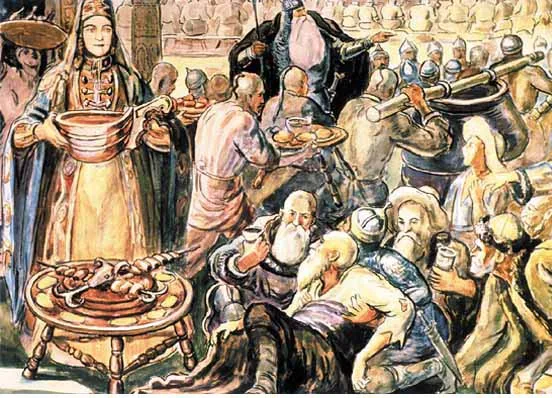
Long before anyone wrote down Circassian history, they sang it. Around fires in mountain villages, elders recited the tales of the Narts — a race of heroes who fought giants, outwitted gods, and built a civilization so magnificent that even the divine forces envied it. These stories, the Nart Sagas (Нарт хъыбарыжьхэр), form the oldest and deepest layer of Circassian cultural identity.
The Nart epic cycle is shared across Caucasian peoples — Abkhazians, Ossetians, and Chechens all have their versions — but the Circassian corpus is among the richest. With hundreds of stories, dozens of major characters, and themes ranging from creation mythology to practical ethics, the sagas function as literature, philosophy, history, and moral instruction simultaneously.
Who Were the Narts?
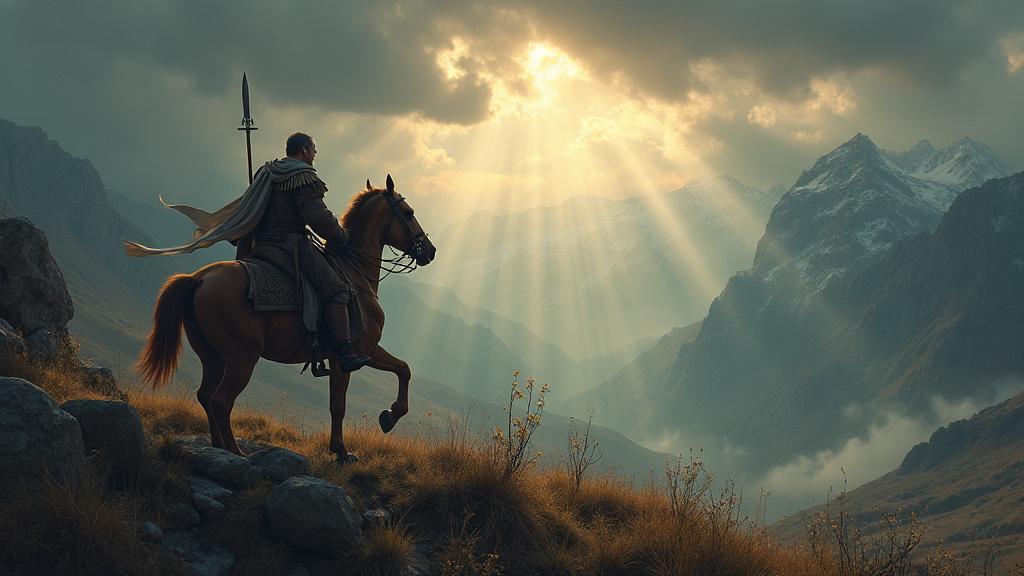
The Narts were a legendary race of heroes who inhabited the Caucasus in mythic prehistory. They were not gods — that distinction is critical. They were mortal but extraordinary: stronger, braver, more beautiful, and more flawed than ordinary humans. They aged, they suffered, they made catastrophic mistakes. And eventually, they perished.
The word "Nart" likely derives from the Proto-Circassian root meaning "eye" or "sun" — connecting the heroes to light and vision. Some scholars link it to the Indo-European root for "hero" or "man," suggesting very ancient origins that predate the separation of Caucasian and Indo-European language families.
The Narts lived in a society that mirrored — and idealized — actual Circassian social structure. They had councils of elders, warrior codes, hospitality obligations, and gender roles that reflected Adyghe Xabze values. Reading the sagas tells you what Circassians aspired to be.
The Major Characters
Satanaya — The Great Mother
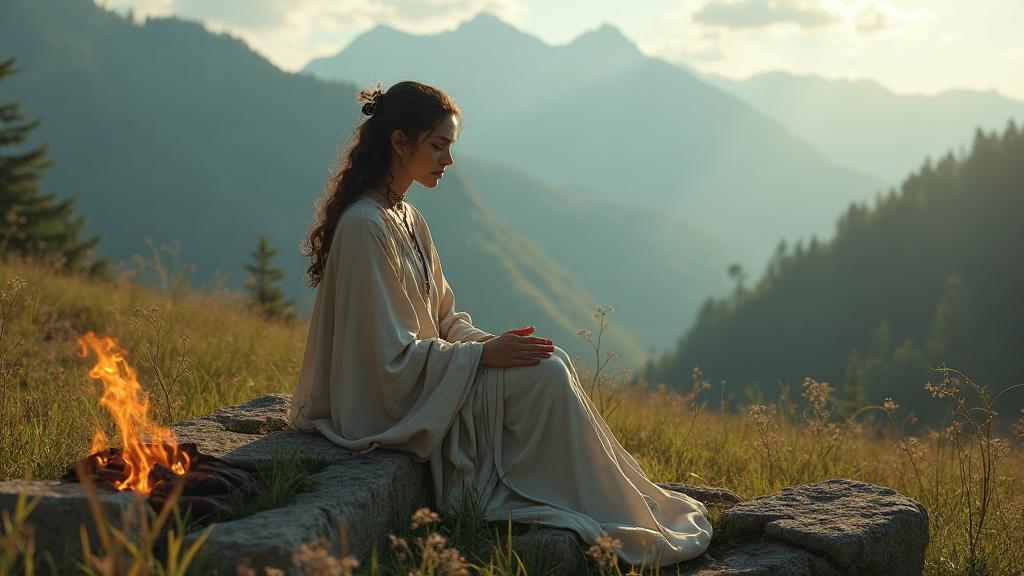
Satanaya (Сэтэнай) is the heart of the entire cycle. She is the Narts' matriarch — not a passive mother figure but a strategist, advisor, healer, and seer whose wisdom repeatedly saves the heroes from their own recklessness. When the warriors ride off on doomed quests, it is Satanaya who devises the plan that rescues them. When famine threatens, she finds the solution. When gods send plagues, she negotiates the cure.
Her birth story varies by telling, but most versions present her as supernaturally beautiful and preternaturally intelligent. She doesn't fight with swords — she fights with knowledge, and in the Nart universe, knowledge consistently outperforms strength.
Satanaya's role provides crucial evidence about women's status in ancient Circassian society. Her authority is not derived from a male figure. She leads through competence, and the male heroes — including the mightiest warriors — defer to her judgment without complaint. Scholars argue this reflects a pre-Islamic social structure where women held significant public authority.
Sosruko — The Fire Thief
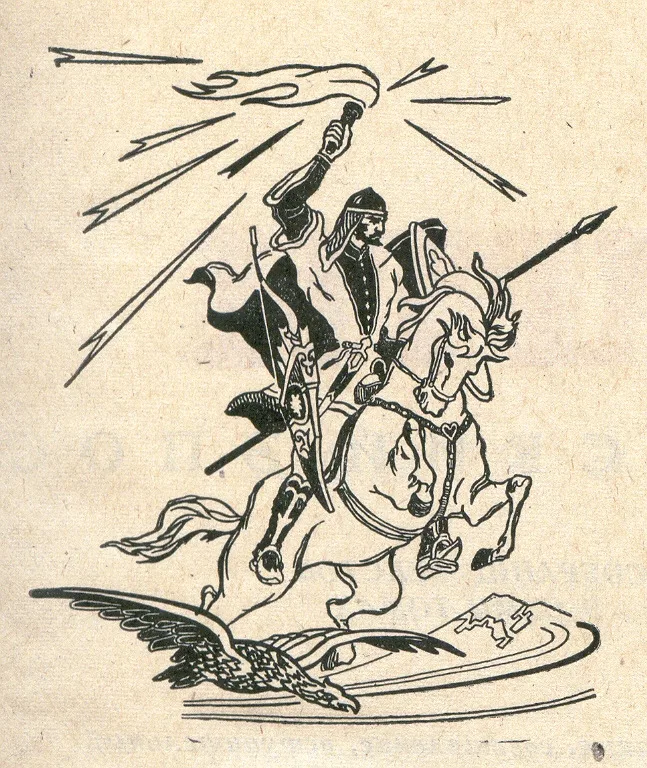
Sosruko (Сосрыкъуэ) is the Circassian Prometheus — the hero who steals fire from the gods and gives it to the Narts. But his story is more nuanced than simple theft. Born from a stone impregnated by a shepherd's desire (the birth myths are wonderfully strange), Sosruko is half-divine, half-human, and fully an outsider.
His body is made of steel, forged by the divine blacksmith Tlepsh. But his knees — where Tlepsh held him with tongs during the forging — remain vulnerable. This flaw becomes his doom, echoing Achilles' heel in Greek mythology so closely that scholars have debated whether the stories share a common ancestor.
Sosruko's cycle includes his battles with giants, his journey to the underworld, his competition with rival Nart clans, and his eventual betrayal by jealous heroes who expose his weakness. His stories teach that courage alone is not enough — the hero also needs community loyalty, and when that fails, even the strongest fall.
Tlepsh — The Divine Smith
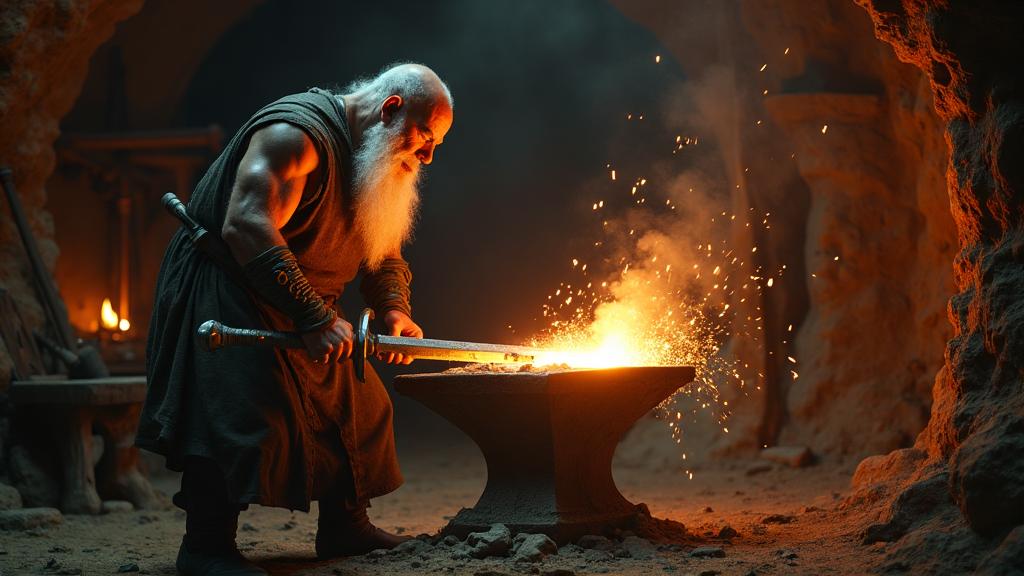
Tlepsh (Лъэпщ) is the Nart blacksmith, a figure of immense importance in a culture that revered metalworking. He forges the heroes' weapons, heals their wounds through metallurgical magic, and creates the tools that allow civilization to function.
Tlepsh's forge is the creative center of the Nart world. Characters come to him for weapons, advice, and physical transformation. He represents the Circassian reverence for craftsmanship and the belief that making things — practical, beautiful, functional things — is a form of heroism equal to battlefield valor.
The importance of smithing in the sagas reflects historical reality. Circassian metalwork, including weapons and the iconic tamga symbols, was renowned across the Caucasus and Middle East. The smith occupied a special social position — respected, slightly feared, and considered to possess knowledge bordering on the supernatural.
Pataraz — The Unstoppable Warrior
Pataraz (Патэрэз) is pure martial energy. Where Sosruko is clever and conflicted, Pataraz is direct. He fights everything — giants, gods, other Narts, natural forces. His stories read like action sequences: relentless, violent, and strangely beautiful in their choreography.
But Pataraz is not mindless. His cycle includes moments of reflection, grief, and moral choice. He avenges his father's death but questions whether vengeance solves anything. He conquers enemies but struggles with peacetime. He represents the warrior class's deepest anxiety: What am I when there is nothing to fight?
Major Themes
The Tension Between Individual Glory and Community Need
The Narts are heroes, but the sagas consistently warn against unchecked individualism. When a hero acts alone — ignoring council advice, pursuing personal glory at communal expense — disaster follows. The message aligns perfectly with Xabze's emphasis on collective responsibility.
The Relationship with Nature
The Narts don't dominate nature — they negotiate with it. Trees, rivers, mountains, and animals have voices and agency in the sagas. Heroes who respect natural forces succeed; those who exploit them fail. This ecological consciousness feels remarkably modern, though it reflects the practical reality of living in a mountain ecosystem where human survival depended on environmental balance.
Death and Legacy
The Narts are mortal, and the cycle ends with their extinction. The specifics vary by telling, but most versions describe a choice: the gods offer the Narts either eternal life with obscurity or mortal glory with eternal fame. They choose fame. They choose to be remembered through stories rather than to survive in anonymity.
This choice resonates powerfully for a people who experienced genocidal displacement. The Narts' decision to live through memory — through narrative — parallels the Circassian diaspora's commitment to cultural survival through storytelling.
The Oral Tradition
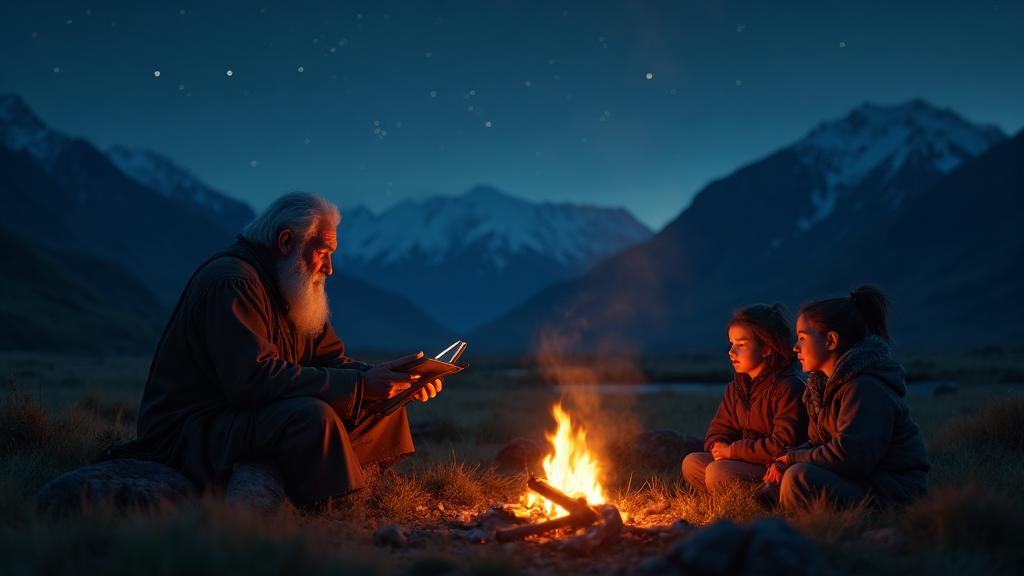
For most of their history, the Nart sagas existed only in oral performance. Professional storytellers (jeguako) memorized vast portions of the cycle and performed them at gatherings, weddings, and seasonal festivals. The performance was not simple recitation — it involved music, vocal modulation, gestures, and audience interaction.
The oral tradition meant the stories were never frozen. Each teller adapted, emphasized, and sometimes invented. A Kabardian version of Sosruko's fire-theft differs from a Shapsug version, which differs from an Abadzekh version. This variation is not a flaw — it is a feature. The cycle is alive, responsive to the community that tells it.
Written collection began in the 19th century, primarily by Russian ethnographers, and continued through Soviet-era scholarship. The most comprehensive collections — by scholars like Asker Hadaghat'la and Zainab Kardangusheva — run to multiple volumes. But specialists insist that written versions capture only a fraction of the living tradition.
Why the Nart Sagas Matter Today
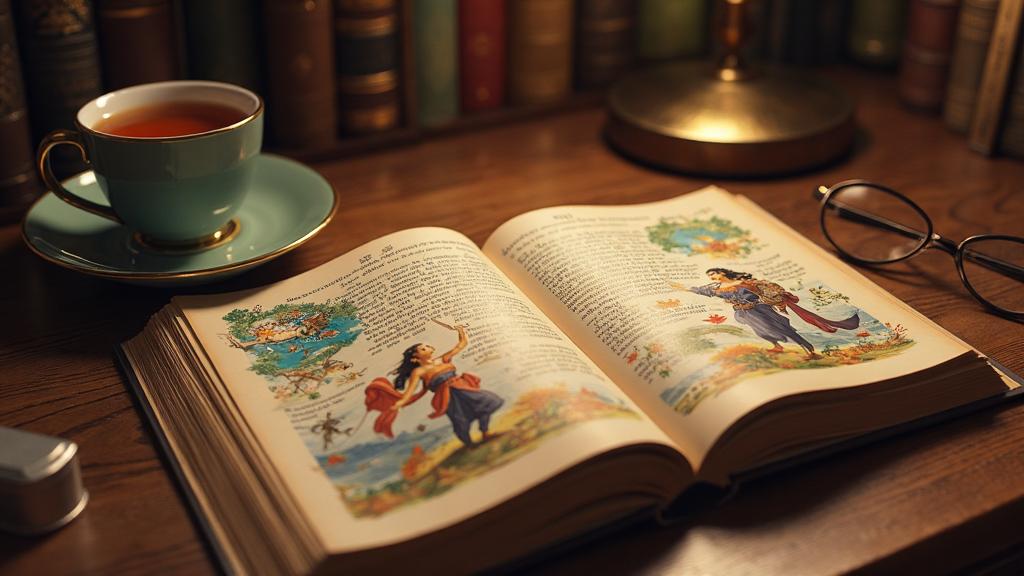
In an era where Circassian language erosion threatens cultural continuity, the Nart sagas serve as an anchor point. They are the one cultural artifact that every Circassian community — regardless of tribe, country, or dialect — recognizes as foundational.
For young Circassians in the diaspora, the sagas offer something that history books cannot: mythic belonging. History tells you what happened to your people. Mythology tells you who your people are — what they value, what they fear, what they dream about. When a teenager in Amman reads about Satanaya outsmarting a god through intelligence rather than force, they encounter a value system that connects them to something older and larger than their individual experience.
The sagas also contribute to global literary scholarship. Comparative mythologists have identified striking parallels between Nart stories and Greek, Norse, and Indo-Iranian mythology — suggesting either common Proto-Indo-European roots or very ancient cultural exchanges across the Caucasus land bridge between Europe and Asia.
Recent years have seen a creative renaissance around the Nart sagas. Graphic novels, animated series, video game concepts, and contemporary literature are reinterpreting the stories for new audiences. These adaptations face the classic tension between accessibility and authenticity, but the best ones demonstrate that myths are meant to be retold — that retelling is exactly how they stay alive.
The Narts chose fame over immortality. Their descendants have honored that choice by refusing to let the stories die — carrying them across oceans, through wars, into languages the original tellers never imagined, and into a digital future where a campfire tale can reach every Circassian on earth simultaneously.