Circassians in Jordan: Honor, Nation-Building and Identity
When Amman was little more than a cluster of ruins, Circassian families were already there — rebuilding. Jordan's Circassian community didn't just settle in a new country; they helped found it, and their role in the kingdom's identity runs deeper than most people realize.
From Exile to a New Homeland
The story of Circassians in Jordan begins with one of the most tragic events in their history — the 1864 exile from the Caucasus. Following the devastating Russo-Circassian War, which lasted over a century, the Russian Empire systematically expelled the Circassian (Adyghe) people from their ancestral homeland in the North Caucasus mountains.
Hundreds of thousands of Circassians were forced onto overcrowded ships crossing the Black Sea to the Ottoman Empire. Many perished during the journey — from disease, starvation, and shipwrecks. Those who survived were resettled across Ottoman territories, from the Balkans to the Levant.
Some of these displaced families arrived in the lands of modern-day Jordan — a region that, at the time, was largely undeveloped and sparsely populated. The Ottoman authorities encouraged Circassian settlement in strategic locations to secure borders and develop agriculture.
But what began as displacement soon became something extraordinary — they didn't just settle — they built an entire nation alongside the local population.
🇯🇴 Jordan's Circassian Role
Circassians were among the founders of Amman in 1878
The community has special constitutional representation in Parliament
Circassians traditionally serve as royal palace guards
Jordan's community maintains strong cultural institutions
Founders of Modern Amman
When Circassians arrived in the late 19th century, Amman was nearly abandoned — little more than ancient Roman ruins surrounded by empty hills. The site of the once-great Philadelphia of the Decapolis had been uninhabited for centuries.
In 1878, the first group of Circassian settlers — primarily from the Shapsugh tribe — established themselves around the Roman amphitheater and the banks of the Seil Amman stream. They were soon joined by families from the Abzakh, Kabardian, and other Adyghe sub-groups.
What Circassians Built:
Homes and infrastructure — stone houses, roads, and public buildings rose from the ruins
Agriculture and water systems — they introduced advanced farming techniques and irrigation from the Caucasus
Organized communities — Circassian social structure (Adyghe Xabze) provided governance before formal state institutions existed
Markets and trade — they established the first commercial centers that would become downtown Amman
Security and stability — their military traditions made the region safe for further settlement
Because of this, Circassians are widely recognized as founders of modern Amman — a fact acknowledged by the Jordanian government and celebrated in the nation's history. Today, Amman is a capital city of over 4 million people, and its origin story begins with those first Circassian families.
Integration Without Losing Identity
Jordan is one of the rare places in the world where Circassians achieved a powerful and admirable balance:
Full integration into society — participating in every aspect of Jordanian life
Strong preservation of culture — maintaining language, traditions, and identity across 160+ years
Political participation — guaranteed parliamentary representation with dedicated Circassian seats in the Jordanian House of Representatives
Economic contribution — Circassians are prominent in business, banking, medicine, engineering, and law
They became government officials, military leaders, business figures, and cultural guardians — earning deep respect from all segments of Jordanian society. This model of integration without assimilation is studied by diaspora communities worldwide.
Circassians & the Hashemite Kingdom
One of the most iconic and prestigious roles of Circassians in Jordan is serving as the Royal Guards (الحرس الملكي الشركسي) of the Hashemite Kingdom.
This tradition dates back to the founding of the Emirate of Transjordan in 1921, when King Abdullah I recognized the loyalty, discipline, and martial heritage of the Circassian community. He appointed Circassians as his personal guard — a tradition that continues to this day under King Abdullah II.
Discipline and loyalty — the Circassian Guard is known for impeccable military bearing
Traditional attire — guards wear the iconic Cherkesska (traditional Circassian coat) during ceremonial duties
Symbol of trust — their role represents the deepest bond of trust between the Circassian community and the Hashemite dynasty
Ceremonial role — they guard the Royal Palace, participate in state ceremonies, and escort foreign dignitaries
This role is not merely symbolic — it reflects generations of mutual loyalty and respect between the Circassian people and the Jordanian monarchy. The Royal Guard is a source of immense pride for the entire Circassian community worldwide.
Main Circassian Communities in Jordan
Circassians in Jordan are concentrated in several historic communities, each with its own character and history:
Amman — the capital and largest Circassian community, home to the Circassian Charity Association and multiple cultural institutions
Wadi Sir (وادي السير) — one of the earliest Circassian settlements, known for its strong preservation of traditions and dialect
Naour (ناعور) — a historically agricultural community southwest of Amman with deep Circassian roots
Sweileh (صويلح) — a growing suburb of Amman with a significant Circassian population
Jerash (جرش) — settled alongside the famous Roman ruins, Circassians here are known for their distinct Kabardian heritage
Zarqa (الزرقاء) — home to Circassian families who contributed to the development of Jordan's second-largest city
Russeifa (الرصيفة) — another community with historic Circassian presence
Each of these communities maintains its own cultural associations, dance groups, and social networks. Together, they form a cohesive national community estimated at 100,000 to 170,000 people — one of the largest and best-organized Circassian diasporas in the world.
Culture That Is Still Alive
In Jordan, Circassian culture is not a museum exhibit — it is lived daily. Unlike many diaspora communities where traditions have faded over generations, Circassians in Jordan have maintained a remarkably vibrant cultural life.
Core Cultural Elements:
Adyghe Xabze (Адыгэ Хабзэ) — the ancient Circassian code of honor, respect, and social conduct that governs family life, hospitality, and community relations
Traditional weddings — elaborate multi-day celebrations with specific rituals, traditional clothing, and community-wide participation
Dance and folklore (Wuj / Удж) — Circassian dance groups perform at national events, international festivals, and community gatherings. The dance is characterized by its athleticism, grace, and precision
Language preservation — the Adyghe language is actively spoken in homes, taught in community schools, and used in cultural events
Traditional cuisine — dishes like Haliva (حليوة), Shashlik, Gebur, and Circassian chicken remain staples at family gatherings
Music — traditional Circassian music featuring the shichepshine (fiddle) and pkhachich (clapper) accompanies dance performances
Weddings: A Living Tradition
Circassian weddings in Jordan remain among the most authentic in the world. They feature traditional clothing — the groom in a black Cherkesska with silver gaziri (cartridge holders) and the bride in a stunning white Adyghe dress. The wedding follows structured rituals rooted in Adyghe Xabze, including the symbolic "stealing of the bride," the formal procession, and community-wide dancing that can last through the night.
The Circassian Language in Jordan
Jordan is considered one of the most successful diaspora countries for Circassian language preservation. Many families maintain a bilingual household — speaking Adyghe at home and Arabic in public life. Community-run language schools supplement this, and the language is increasingly being preserved through digital tools, social media content, and online education platforms.
Famous Circassians in Jordan
Circassians in Jordan are not known for loud publicity — but they have played extraordinary roles in building and shaping the modern Jordanian state. Their contributions span politics, military, business, culture, and public service.
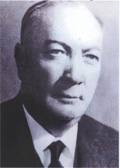
Sa'id al-Mufti
3x Prime Minister of Jordan
Political Leaders
Sa'id al-Mufti (سعيد المفتي) — Served as Prime Minister of Jordan multiple times (1950, 1955, 1956). One of the most influential Circassian political figures in the Arab world. He played a critical role in Jordan's early state-building and constitutional development.
Abdul Munim al-Rifai (عبد المنعم الرفاعي) — Prime Minister and diplomat who represented Jordan on the international stage
Ahmad al-Lawzi (أحمد اللوزي) — Prime Minister of Jordan (1971–1973), oversaw critical period of national development
Military Leaders
Wasfi Mirza — Senior military figure representing the strong Circassian presence in Jordan's armed forces
Field Marshal Habis al-Majali — While ethnically Arab, worked closely with Circassian officers who formed a significant portion of Jordan's military leadership
Circassian Royal Guard commanders — Generations of Circassian officers have led the prestigious Royal Guard unit
Cultural and Community Leaders
Amjad Qsous (أمجد قسوس) — Prominent cultural activist and author who has documented Circassian heritage in Jordan
Circassian Charity Association leaders — The longest-running Circassian organization in the Middle East, founded in Amman in 1932, has been led by distinguished community figures for nearly a century
Dr. Mohydeen Quandour — Internationally recognized Circassian scholar and community advocate
Business and Professional Leaders
Circassians are prominently represented in Jordan's banking sector, real estate development, medical profession, and engineering
Multiple Circassian families are among Jordan's leading business dynasties
Circassian professionals serve in senior positions across government ministries, universities, and international organizations
Parliamentary Representation
Jordan's electoral law guarantees dedicated seats for Circassians and Chechens in the House of Representatives — recognizing their historic contribution to the nation. This constitutional provision ensures that the Circassian voice remains part of Jordan's democratic process.
Real Stories from the Community
From Refugees to Royal Guards
Families that arrived with nothing more than the clothes on their backs in the 1870s and 1880s now have great-great-grandchildren serving in the Royal Guard of Jordan. The journey from stateless refugee to trusted guardian of the King is perhaps the most powerful symbol of the Circassian story in Jordan.
Language at Home
Many families follow a cherished tradition: "Адыгабзэ унэм — عربي برة" — "Adyghe at home, Arabic outside." Grandmothers insist on speaking only Circassian with grandchildren, ensuring that the language — one of the oldest in the world — survives into the next generation.
Dance as Identity
Young Circassians in Jordan join dance groups (فرق الرقص الشركسي) from an early age. These groups perform at national celebrations, international festivals, and community events. For many young people, dance is not just entertainment — it is the most visible expression of identity and pride. Jordan's Circassian dance troupes are considered among the finest in the global diaspora.
The Elders' Gatherings
In Circassian homes across Jordan, weekly gatherings of elders (Хасэ / حاسة) maintain the tradition of community consultation. These informal councils discuss community affairs, resolve disputes, and pass down oral history — a living link to the Caucasus homeland.
Associations & Cultural Institutions
Circassians in Jordan maintain one of the most organized institutional networks in the entire diaspora:
Circassian Charity Association (الجمعية الخيرية الشركسية) — Founded in 1932, based in Amman. The oldest and most prominent Circassian organization in the Middle East. Runs cultural programs, language classes, and community services.
Al-Ahli Club (النادي الأهلي) — A sports and cultural club with deep Circassian roots, fielding teams in multiple sports
Circassian Cultural Academy — Offers Adyghe language courses, history classes, and cultural workshops for children and adults
Dance and folklore troupes — Multiple professional and semi-professional groups that represent Jordan internationally
Youth organizations — Engaging the younger generation in heritage preservation through modern approaches including social media and digital platforms
Women's associations — Circassian women's groups that preserve traditional crafts, cuisine, and organize community events
These institutions ensure that culture is preserved, practiced, and passed forward — not as a relic, but as a living tradition.
Unique Strength of Jordan's Circassians
What makes the Circassian experience in Jordan unique among all diaspora communities worldwide:
Strong Identity + Full Integration — fully part of the country while maintaining a distinct cultural identity for 160+ years
Language Preservation — Adyghe is better preserved in Jordan than in most other diaspora countries, with active intergenerational transmission
Institutional Support — organized community with long-term vision, professional associations, and dedicated cultural spaces
State Recognition — constitutional representation in parliament and the iconic Royal Guard role
Historical Significance — recognized as founders of the capital city, a distinction unmatched in any other diaspora country
Community Cohesion — strong inter-community bonds maintained through marriages, events, and shared institutions
The Future
The new generation of Circassians in Jordan is educated, globally connected, and deeply proud of their roots. They are building on the legacy of their ancestors while embracing modern tools:
Digital heritage preservation — building family trees, digitizing archives, and creating online language resources
Global diaspora connection — connecting with Circassians in Turkey, Israel, Syria, Europe, and the United States through social media and cultural exchanges
Return to the homeland — some young Jordanian Circassians have visited or even relocated to the Caucasus, reconnecting with ancestral villages in Adygea, Kabardino-Balkaria, and Karachay-Cherkessia
Academic research — Circassian scholars in Jordan are producing groundbreaking work on Adyghe linguistics, history, and cultural anthropology
Final Thought
In Jordan, Circassians are not just a minority — they are founders, guardians, and builders.
From rebuilding the ruins of ancient Amman into a thriving modern capital, to standing at the gates of the Royal Palace in traditional Cherkesska, to serving as Prime Ministers and shaping the nation's laws — their story is one of honor, loyalty, and an identity that never fades.
The Circassian community in Jordan stands as living proof that exile does not have to mean the death of identity. 160 years after the exile, the Adyghe spirit in Jordan burns brighter than ever.
Famous Circassians in Jordan — Expanded
🎭 Arts, Entertainment & Media
Nadia Sakkijha (نادية سكجها) — Award-winning Jordanian fashion designer of Circassian origin, known internationally for her haute couture collections blending Circassian motifs with modern design
Ashraf Barhom (أشرف برهوم) — Acclaimed actor of Circassian descent who has appeared in major Hollywood productions including Kingdom of Heaven and Agora
Mais Shalash (ميس شلش) — Prominent Jordanian TV presenter and media personality of Circassian heritage, known for hosting major cultural programs
Nart Circassian Dance Troupe — Jordan's premier Circassian performance group, regularly representing Circassian culture at international festivals and royal events
Lana Mamkagh (لانا ممقاغ) — Visual artist whose work explores Circassian identity and displacement themes, exhibited across the Middle East and Europe
Aysegul Barhom — Documentary filmmaker who has produced works on Circassian heritage preservation in Jordan and the diaspora
⚽ Sports
Mahmoud Shelbayeh (محمود شلباية) — Former captain of the Jordanian national football team, one of the most celebrated Circassian athletes in Jordanian sports history
Omar Bzayigh (عمر بزيغ) — Professional footballer who played for multiple Jordanian Premier League clubs
Circassian Sports Club (النادي الشركسي) — One of the oldest sports clubs in Jordan, founded in Amman, with competitive teams in football, basketball, and martial arts. The club has been a breeding ground for national-level athletes for decades
Tamara Barhom — Rising star in Jordanian equestrian sports, continuing the deep Circassian tradition of horsemanship
Ahmad Habjoka (أحمد حبجوقة) — Former president of the Jordan Olympic Committee and prominent sports administrator of Circassian origin who helped bring international sporting events to Jordan
🏛️ Business, Academia & Public Service
Yousef Habjoka (يوسف حبجوقة) — Leading Jordanian industrialist and businessman of Circassian descent, involved in major infrastructure and development projects across Jordan
Dr. Sufyan Ababneh-Quandour — Renowned cardiologist and medical researcher who has contributed to advancing healthcare standards in Jordan
Hazem Shakhshir (حازم شخشير) — Senior banking executive who has held leadership positions in Jordan's major financial institutions
Dr. Amira Bzayigh — University professor and researcher specializing in Circassian linguistics and cultural preservation at the University of Jordan
The Qsous (قسوس) family — A prominent Circassian business dynasty with interests spanning real estate, hospitality, and commerce across Jordan
The Bzayigh (بزيغ) family — Well-known in Jordan's pharmaceutical and medical sectors
Dr. Izzat Habjoka — Engineer and former government advisor who contributed to Jordan's urban planning and infrastructure development
Nael Habjoka — Prominent attorney and legal scholar who has served in various judicial advisory roles in the Kingdom
📌 Circassians in the Jordanian Parliament
The Jordanian constitution guarantees three parliamentary seats for Circassians and Chechens, ensuring permanent political representation. Over the decades, these seats have been held by distinguished community leaders who have championed not only Circassian causes but broader national development. Circassian parliamentarians have been instrumental in legislation related to cultural heritage, minority rights, and Jordan's modernization.
Frequently Asked Questions
How many Circassians live in Jordan?
Approximately 170,000–200,000 Circassians live in Jordan, primarily in Amman, Wadi Al-Sir, Naur, Sweileh, and Zarqa.
What role do Circassians play in Jordanian society?
Circassians hold a constitutionally protected role in Jordan with guaranteed parliamentary seats. They serve prominently in the military (including the Royal Guard), government, and business.
When did Circassians first arrive in Jordan?
The first Circassian settlers arrived in 1878, founding what would become the modern city of Amman. They were among the earliest settlers of the area that became the Hashemite Kingdom of Jordan.
What Circassians in Jordan Say
"My family has been in Amman since 1878. We are Jordanian in every way — but when the Islamey plays, something ancient wakes up inside us."
— Hatem, 52, Amman
"I learned Adygabze from my mother, Arabic from school, and English from the internet. But only one of those languages makes me cry when I hear it sung."
— Dina, 26, Wadi Al-Sir
"The Royal Guard isn't just a job for Circassians — it's a trust that goes back to the founding of the kingdom. We take that seriously."
— Aslan, 38, Naur
Sources & References
Jaimoukha, Amjad. <strong>The Circassians: A Handbook</strong>. New York: Palgrave Macmillan, 2001.
Richmond, Walter. <strong>The Circassian Exodus: Indigenous Peoples, Movement and the Making of the Eastern Mediterranean</strong>. Oxford: Oxford University Press, 2013.
Natho, Gwendolyn. <strong>Circassian Culture and Folklore: A Comprehensive Reference</strong>. Jefferson, NC: McFarland & Company, 2009.
Balanovsky, Oleg, et al. "The Circassian population, a genetic outlier among the peoples of the Caucasus." <em>BMC Evolutionary Biology</em> 11, no. 1 (2011): 176. doi:10.1186/1471-2148-11-176.
Kaya, Mehmet. <strong>The Shadow of the Sultan: The Middle East in the Shadow of the Ottoman Empire's Decline</strong>. London: Tauris Parke Paperbacks, 2005.
Shami, Noureddine A. "The Circassians of Jordan: A Historical and Sociological Study." <em>Journal of Ethnic and Migration Studies</em> 24, no. 3 (1998): 509-525. doi:10.1080/1369183X.1998.9978090.
Henze, Paul B. <strong>Circassia: Independent, Democratic, and Free</strong>. Washington, D.C.: Council for Foreign Affairs, 1992.
Paris, Jean. <strong>La langue Circassienne: Étude comparative</strong>. Paris: Éditions du CNRS, 1974.
Colarusso, John. <strong>Circassian Syntax</strong>. Leiden: Brill, 2000.
Jordan National Archives. Various documents pertaining to ethnic minorities and nation-building initiatives. (Access details vary based on specific research needs).