Who Are Circassians? Adyghe People, History, Tribes and Culture
Who are the Circassians? Ask a hundred people on the street and most will not have an answer. Yet this indigenous nation — who call themselves Adyghe (Адыгэ) — numbers between 5 and 8 million people worldwide, has shaped the history of empires from Cairo to Moscow, and maintains one of the most sophisticated ethical codes of any civilization on earth. This article is your complete guide to the Circassian nation: who they are, where they come from, what defines them, and why their story matters today more than ever.
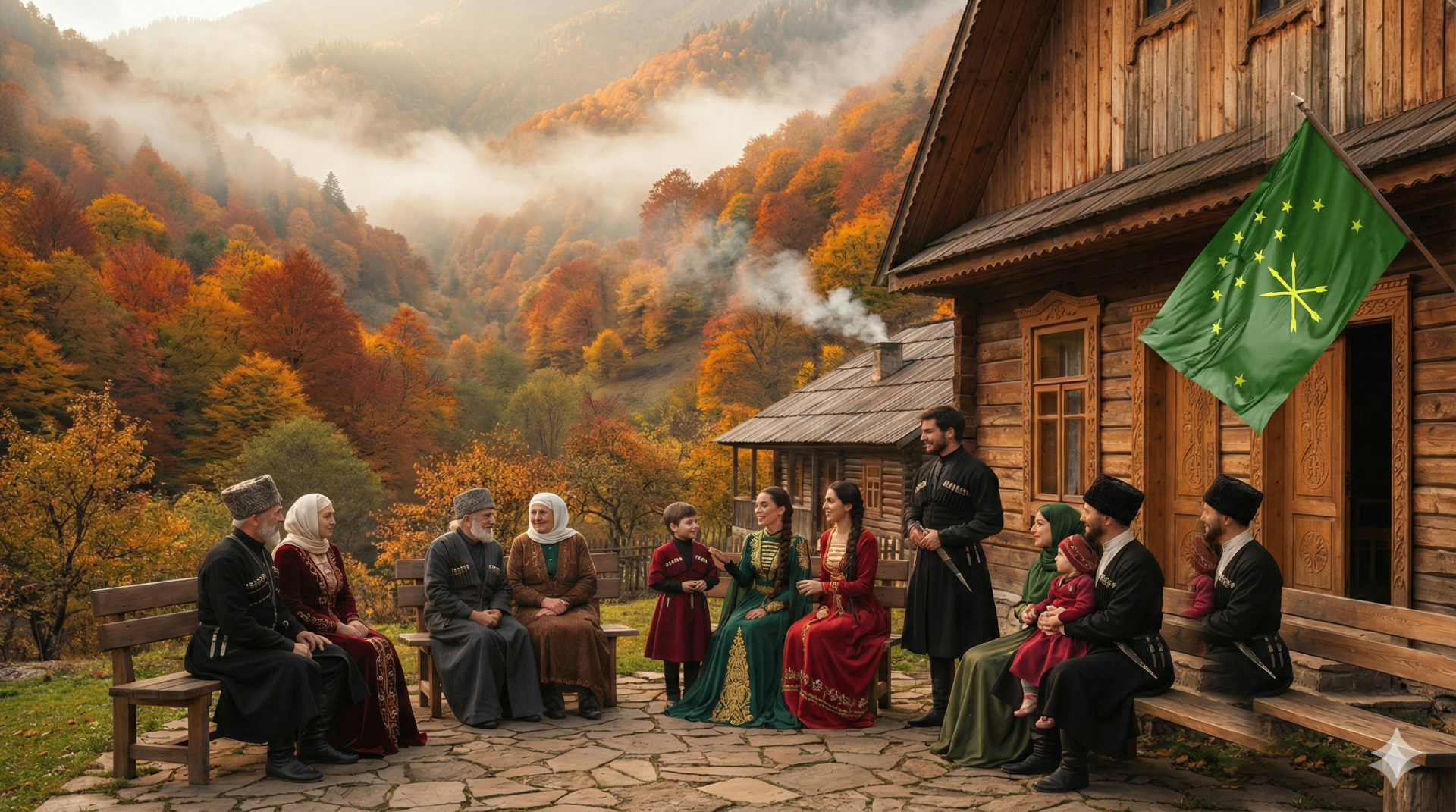
Who Are the Circassians? An Introduction to the Adyghe People
The Circassians, or Adyghe as they call themselves, are an indigenous people of the Northwest Caucasus. They are one of the oldest continuously identifiable ethnic groups in Europe, with archaeological evidence suggesting habitation in the region for over 6,000 years. The name "Circassian" comes from external designations — the Turkic Çerkes and the medieval Latin Circassi — while the people themselves use Adyghe (Адыгэ), meaning "people of the light" or "noble people" in their own language.
Circassians are not a single homogeneous group but rather a confederation of twelve distinct tribes, each with its own dialect, territory, and traditions, united by a common language family, shared customs, and the overarching moral code known as Adyghe Xabze. Today, the majority of Circassians live in diaspora — primarily in Turkey, Jordan, Syria, and the United States — while roughly 700,000–800,000 remain in the ancestral homeland across the republics of Adygea, Kabardino-Balkaria, and Karachay-Cherkessia within the Russian Federation.
The Circassian Homeland: North Caucasus Origins
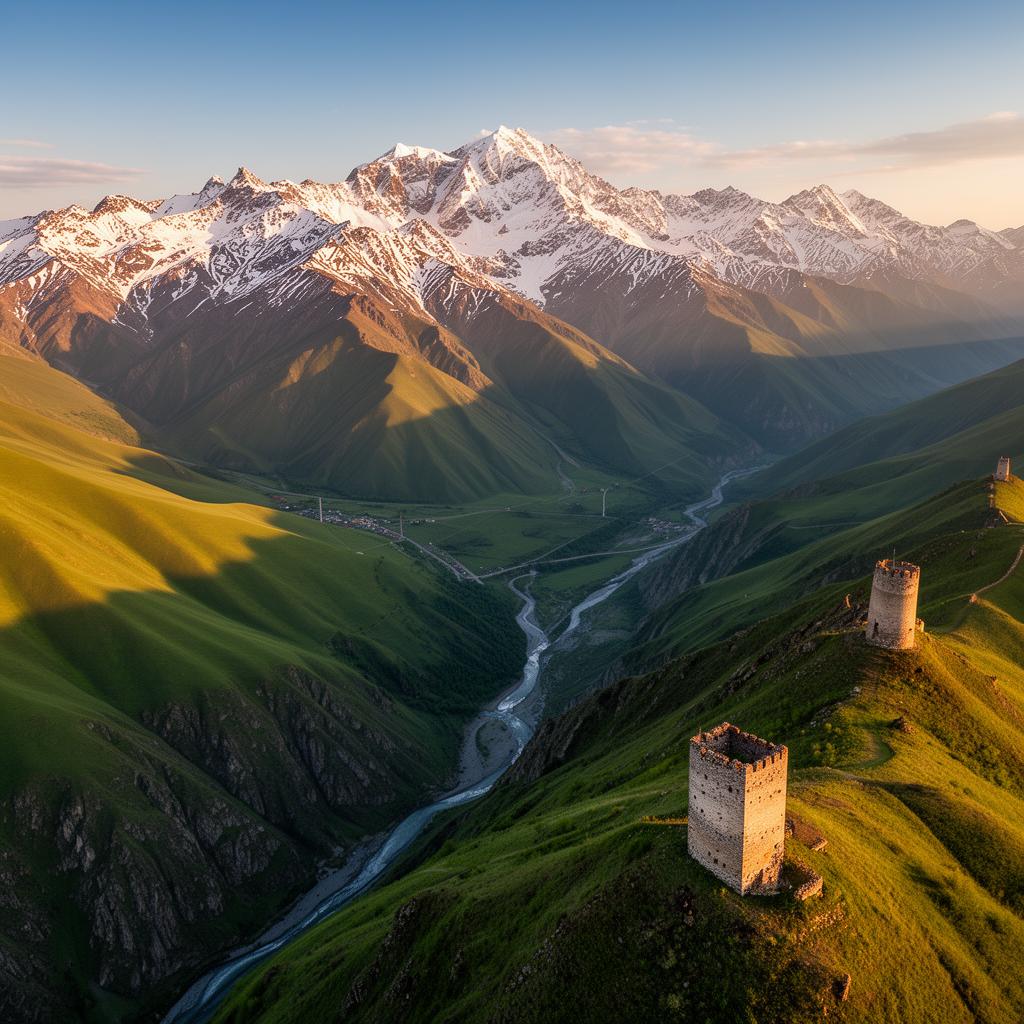
The Circassian homeland stretches along the northeastern shore of the Black Sea and into the western Caucasus Mountains. This dramatic landscape — from the subtropical coast near modern-day Sochi to the alpine peaks of Mount Elbrus (5,642m), the highest mountain in Europe — shaped every aspect of Circassian life. The terrain provided natural fortifications that allowed Circassians to resist foreign domination for centuries, while the fertile valleys supported agriculture, horse-breeding, and the sophisticated village life that visitors from the ancient Greeks onward consistently admired.
Greek geographers including Strabo and Herodotus wrote about the peoples of the Caucasus coast, noting their skilled seamanship and trade networks. The Bosporan Kingdom (5th century BC) maintained close relations with Circassian coastal tribes. Later, Genoese and Venetian trading posts dotted the coast from the 13th to 15th centuries, establishing commercial ties that brought Circassian goods — and, regrettably, enslaved warriors — to markets across the Mediterranean. These warriors would go on to found the Mamluk Dynasty in Egypt, ruling from Cairo for over a century.
History Timeline: Key Events in Circassian History
Understanding Circassian history requires tracing a timeline that spans millennia. Here are the defining moments that shaped the nation:
Ancient and Medieval Period (3000 BC – 1500 AD)
c. 3000 BC: Archaeological evidence of the Maykop culture in the Northwest Caucasus, considered ancestral to modern Circassians and noted for advanced metallurgy
5th century BC: Greek colonies interact with coastal Circassian tribes; Strabo describes the "Zygii" and "Kerketai"
4th–6th century AD: Christianity spreads among Circassian tribes through Byzantine missionaries
13th century: Circassian warriors are recruited into the Mamluk military caste in Egypt
1382–1517: The Burji (Circassian) Mamluk Dynasty rules Egypt and Syria, producing 23 sultans
The Russo-Circassian War (1763–1864)
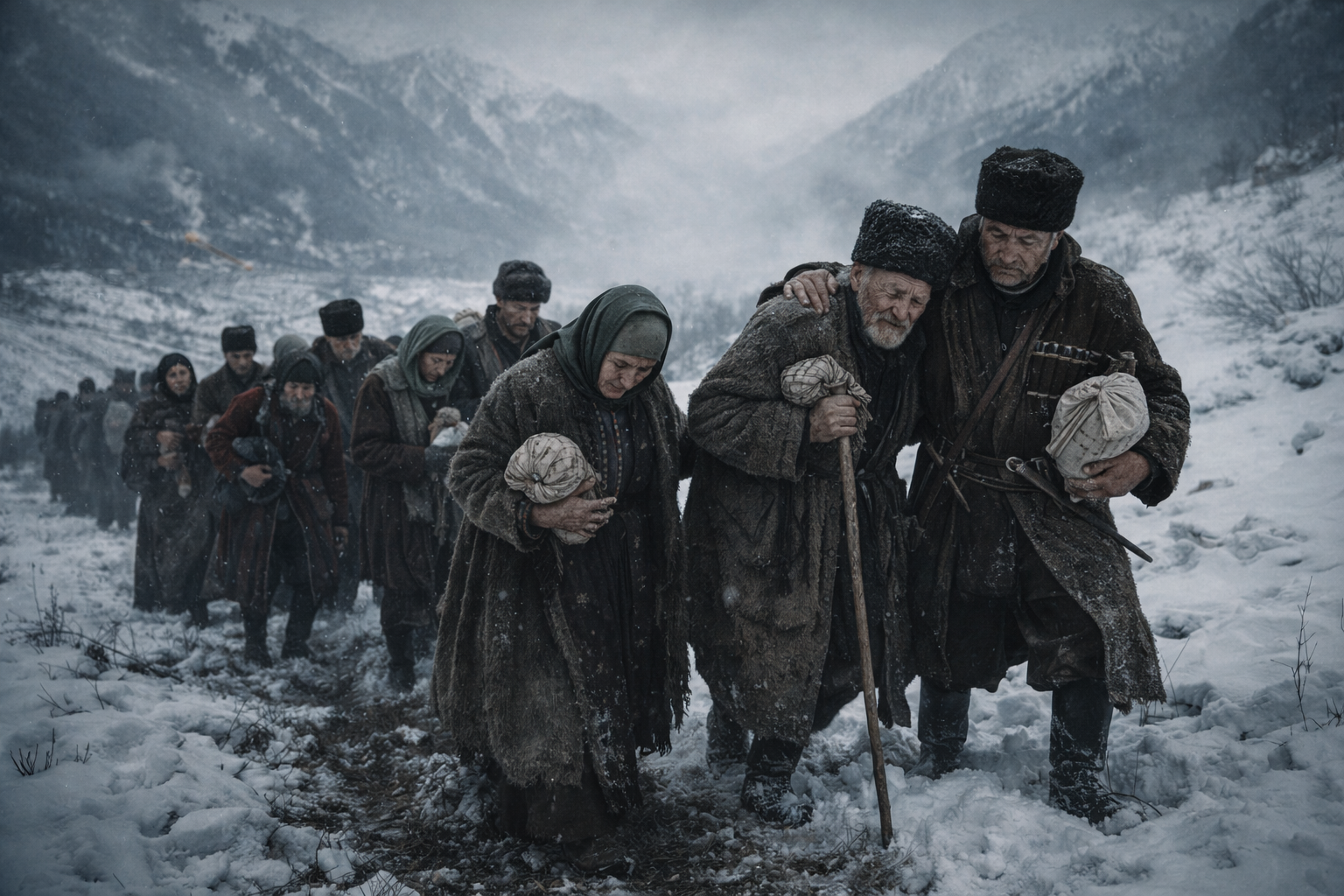
The most devastating chapter in Circassian history is the century-long war against the expanding Russian Empire. Beginning with the construction of the Mozdok fortress in 1763, Russia sought to subjugate the Caucasus. The Circassians mounted fierce resistance under leaders like Mansur Ushurma and tribal confederations, but were ultimately overwhelmed by superior numbers and industrial weaponry.
The war culminated in the Circassian Genocide of 1864, when Russian forces systematically expelled the Circassian population. The Battle of Sochi in 1864 marked the final organized resistance. Estimates suggest that up to 1.5 million Circassians were killed or displaced. Survivors were forced onto overcrowded Ottoman ships; thousands perished at sea from disease and drowning. This event is commemorated annually on May 21st as the Circassian Day of Mourning.
Modern Era (1864–Present)
1864–1920s: Mass resettlement across the Ottoman Empire; formation of diaspora communities
1921–1922: Soviet Union creates Adyghe, Kabardino-Balkarian, and Karachay-Cherkess autonomous regions
1991: Collapse of the Soviet Union; Circassians in the homeland gain limited autonomy within Russia
2011: Georgia becomes the first country to officially recognize the Circassian Genocide
2014: The Sochi Winter Olympics held on the site of the 1864 final battle, sparking international awareness of Circassian history
The Twelve Circassian Tribes
The Circassian nation is composed of twelve major tribes, each represented by a star on the Circassian flag. The three crossed arrows in the flag's center symbolize the unity of these tribes. For a detailed exploration, see our complete guide to the twelve Adyghe tribes.
Kabardians (Къэбэрдей) — The largest tribe, historically dominant in the eastern Caucasus, known for their political sophistication and princely system
Shapsug (Шапсыгъ) — Coastal tribe near the Black Sea, one of the last to resist Russian conquest
Abdzakh (Абдзах) — Mountain-dwelling tribe renowned for fierce independence and democratic governance
Bzhedug (Бжъэдыгъу) — Settled along the Kuban River, known for agricultural expertise
Temirgoy (Кlэмгуй) — Central tribe with strong warrior traditions
Besleney (Бэслъэней) — Eastern tribe closely related to the Kabardians
Natukhay (Натыхъуай) — Northwestern coastal tribe, among the first to face Russian expansion
Hatuqway (Хьатыкъуай) — Known for skilled horsemanship and trade
Zhaney (Жаней) — Historically important in diplomacy and intertribal relations
Yegeruqway (Еджэрыкъуай) — Allied closely with the Temirgoy
Mamkhegh (Мамхыгъ) — Smaller tribe with distinct cultural practices
Ubykh (Убых) — Famous for having one of the most complex phonological systems of any human language; the last native speaker, Tevfik Esenç, died in 1992
You can explore which tribe your family belongs to through our family names database and ancestry research tools.
The Circassian Diaspora: A Nation Scattered Across the World
The 1864 genocide created one of the 19th century's largest forced migrations. Today, over 90% of all Circassians live outside their ancestral homeland. The major diaspora communities include:
Turkey — The Largest Community
With an estimated 3–7 million people of Circassian descent, Turkey hosts the largest diaspora. Communities are concentrated in provinces like Düzce, Kayseri, Samsun, and Tokat. Despite significant assimilation pressures, hundreds of Circassian villages maintain cultural practices, and Istanbul serves as a hub for Circassian cultural organizations.
Jordan — Nation Builders
Circassians were among the founders of modern Amman, arriving in the 1870s. The Jordanian Circassian community holds a constitutionally protected role, with reserved seats in parliament and the prestigious Royal Circassian Guard. The community numbers approximately 170,000.
Syria — Resilience Under Fire
The Syrian Circassian community, centered in the Golan Heights (particularly Quneitra) and Damascus, has faced extraordinary challenges through decades of conflict. Despite displacement, the community has maintained remarkable cultural cohesion.
Europe, Israel, and the Americas
Smaller but vibrant communities exist in Germany (Europe's largest, ~40,000), the United States (~10,000, mainly New Jersey and California), and Israel (~4,000 in the villages of Kfar Kama and Rehaniya). Browse Circassian associations worldwide to find communities near you.
Circassian Culture and Identity
Adyghe Xabze — The Circassian Moral Code
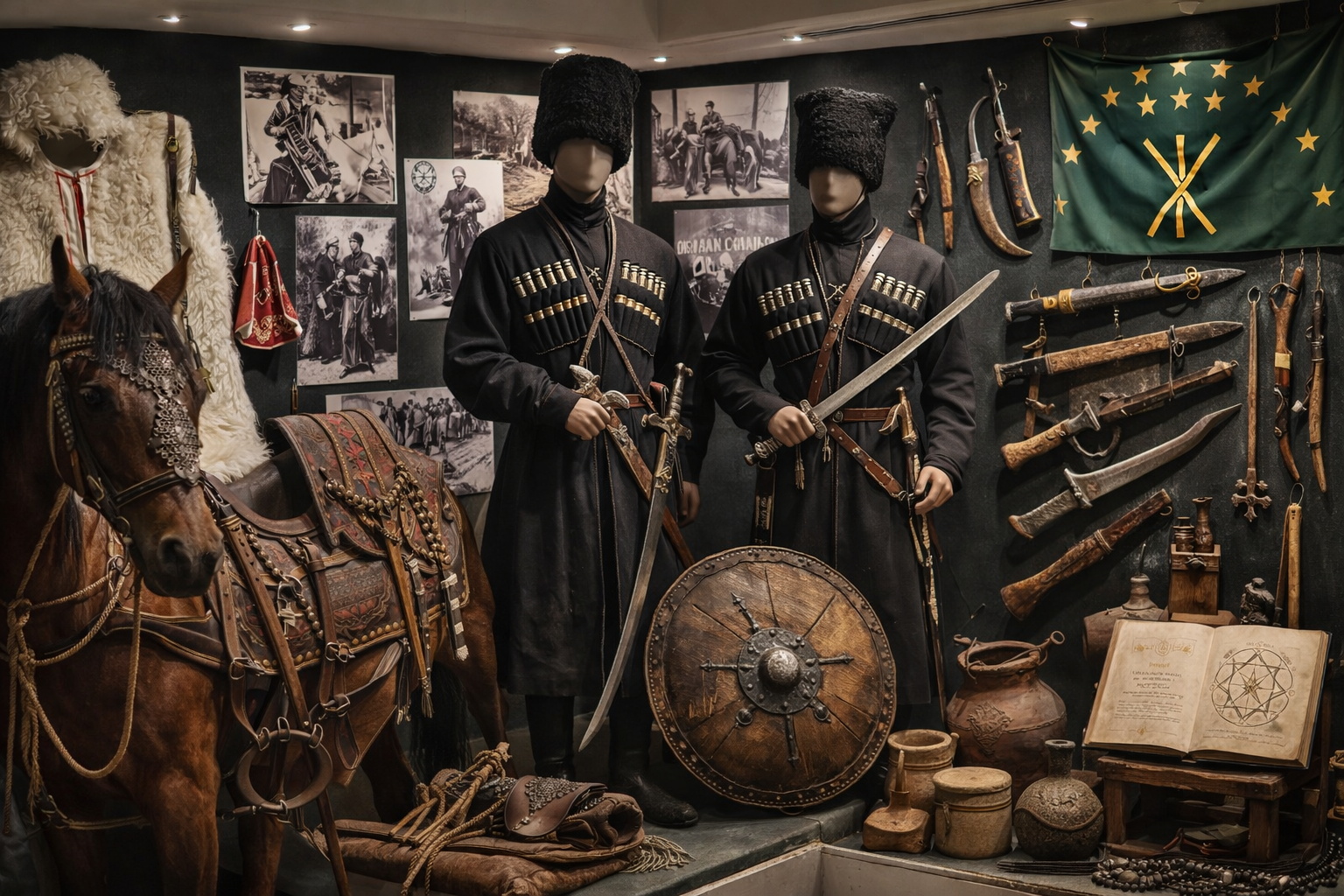
Adyghe Xabze is the unwritten ethical code that has governed Circassian society for centuries. It encompasses rules of hospitality (a guest is sacred and must be protected even at the cost of one's life), respect for elders, honor, modesty, and courage. This code served as the Circassian constitution long before written laws and continues to influence social behavior across the diaspora.
The Circassian Language: Adyghabze
The Circassian language belongs to the Northwest Caucasian language family and is famous for its extraordinary phonetic complexity — over 62 distinct consonant sounds in some dialects. The two main branches are Western Circassian (Adyghe) and Eastern Circassian (Kabardian). UNESCO classifies both as endangered languages. Digital tools like the Adyghe-English dictionary and language teacher directory are helping preserve it for future generations.
Music, Dance, and Arts
Circassian music and dance are among the most distinctive artistic traditions of the Caucasus. The Wuj (Удж) dance showcases extraordinary athleticism — male dancers perform on their toes while female dancers glide with otherworldly grace. Traditional instruments include the shichepshin (a two-stringed bowed instrument) and the pshina (accordion). Tamga symbols — unique family emblems — represent the visual arts tradition and can be explored through our family database.
Cuisine
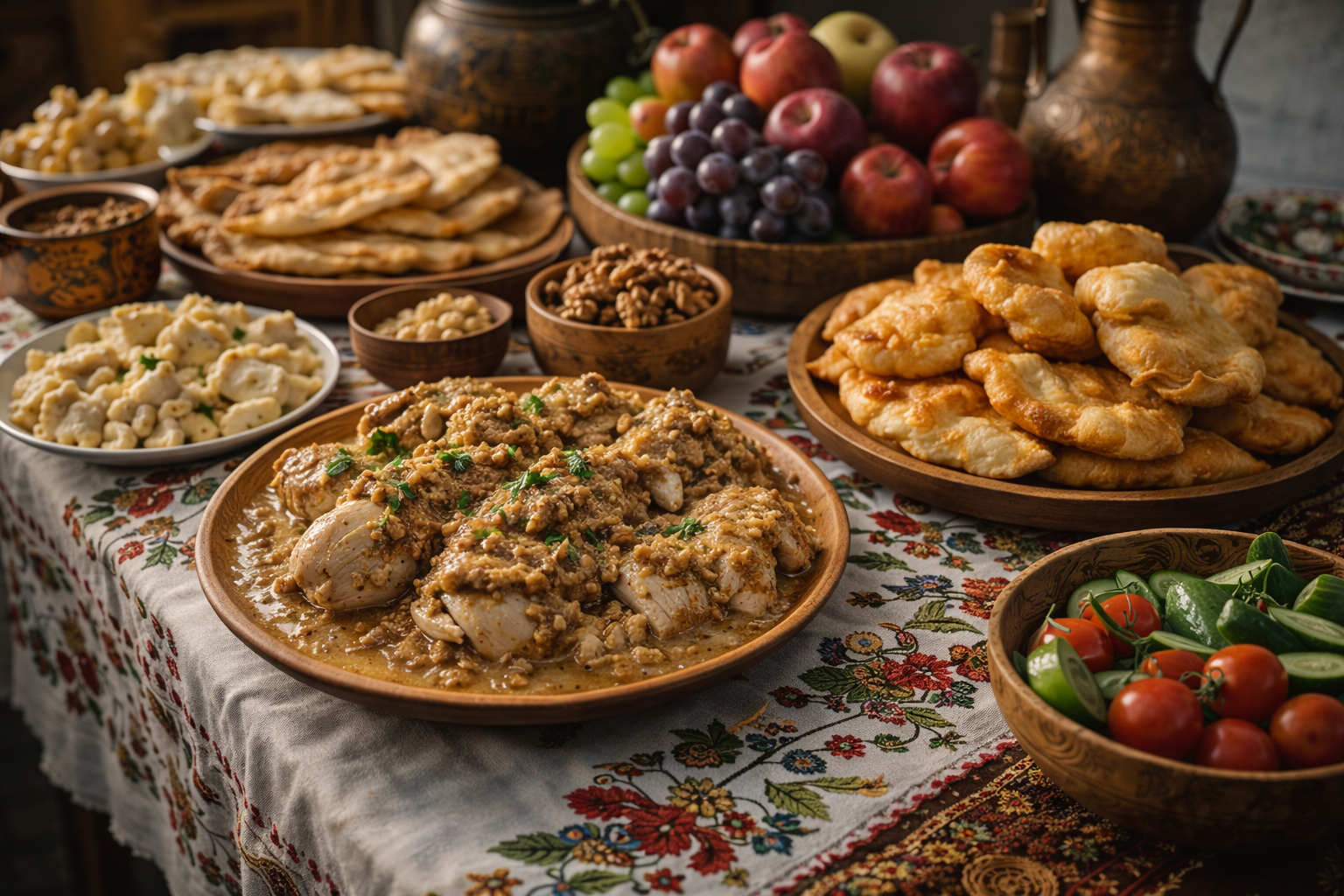
Circassian cuisine reflects the agricultural traditions of the Caucasus. Signature dishes include Circassian chicken (chicken in walnut sauce), haliva (millet or cornmeal porridge), laqum (fried dough), and shkhynh (fermented dairy). Food is central to hospitality — the Circassian table is a social institution governed by strict etiquette.
The Modern Situation: Challenges and Revival
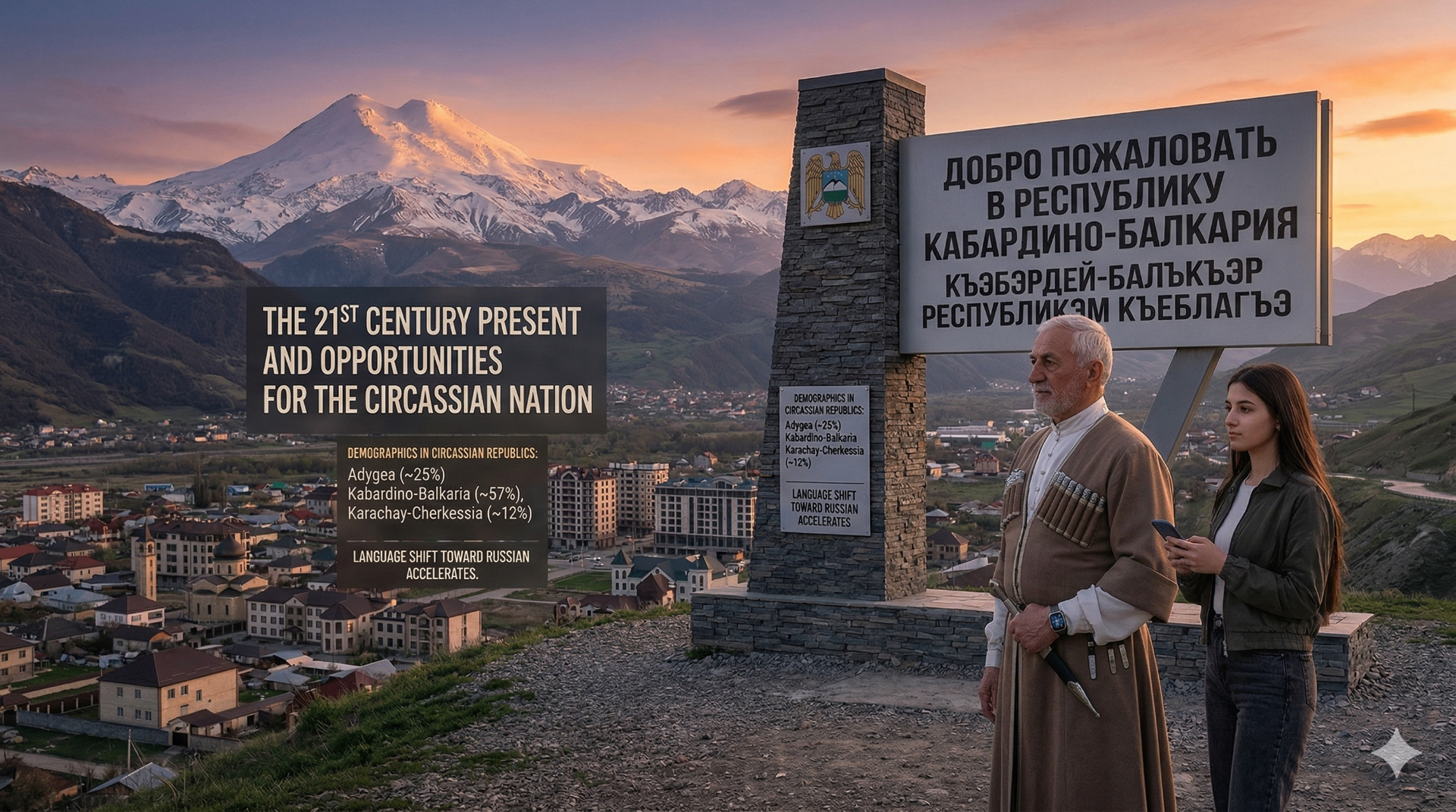
The 21st century presents both threats and opportunities for the Circassian nation. In the homeland, Circassians are minorities in their own republics — ethnic Circassians constitute roughly 25% of Adygea's population, 57% of Kabardino-Balkaria's, and 12% of Karachay-Cherkessia's. Language shift toward Russian accelerates with each generation.
In the diaspora, assimilation is the primary concern. In Turkey, decades of nationalist policies discouraged minority languages, and many younger Circassians no longer speak Adyghe. However, a cultural renaissance is underway: social media has connected diaspora communities as never before, cultural festivals draw thousands, young people are rediscovering their heritage through DNA testing and family tree research, and organizations like the Circassian associations are professionalizing their outreach. The Circassian Unity Roadmap outlines a strategic vision for community strengthening.
Key modern challenges include:
Language preservation: Both Adyghe and Kabardian are classified as endangered by UNESCO's Atlas of the World's Languages in Danger
Genocide recognition: Only Georgia (2011) has officially recognized the Circassian Genocide at a state level
Return rights: Diaspora Circassians have limited legal pathways to return to the ancestral homeland
Cultural continuity: Maintaining traditions, language, and wedding customs across generations in diverse host countries
The Nart Sagas: Mythology and Oral Tradition
The Nart Sagas represent the mythological backbone of Circassian culture. These epic tales feature heroes like Sosruko (a Prometheus-like figure born from stone), Satanay (the wise mother-goddess), and Tlepsh (the divine blacksmith). Scholars have drawn parallels between the Nart Sagas and Greek mythology, suggesting ancient cultural exchange across the Black Sea. The oral tradition of sharing these stories has been vital in preserving cultural knowledge, especially within diaspora communities.
DNA, Genealogy, and Tribal Identity
Modern genetic research has opened new avenues for understanding Circassian origins and migration patterns. Through DNA analysis, individuals can discover their haplogroup connections to specific tribes. Common Circassian Y-DNA haplogroups include G2a, J2, and R1a, each associated with different tribal and regional origins. You can research your family's heritage through our family names database and build a digital family tree to document your lineage.