Circassian Heritage Museums: Locations, History and Cultural Centers
Circassian heritage museums preserve the history, artifacts, and cultural identity of the Adyghe people.
These museums exist across the Caucasus and diaspora communities such as Kfar Kama and Maykop, protecting traditions shaped by exile, migration, and survival.
In a glass case in Kfar Kama, there's a hand-embroidered bridal dress from the 1920s. In Maykop, a collection of bronze-age artifacts from the same soil Circassians have lived on for millennia. These museums don't just preserve objects — they preserve what it means to be Adyghe.
Preserving Circassian History Through Museums
Across the global Circassian diaspora, a network of heritage museums and cultural centers serves as the collective memory of a people scattered across more than 50 countries. These institutions — from the Caucasus homeland to Amman, Kfar Kama, and Istanbul — are far more than repositories of old artifacts. They are living laboratories of identity, places where Circassian culture is studied, celebrated, and transmitted to new generations.
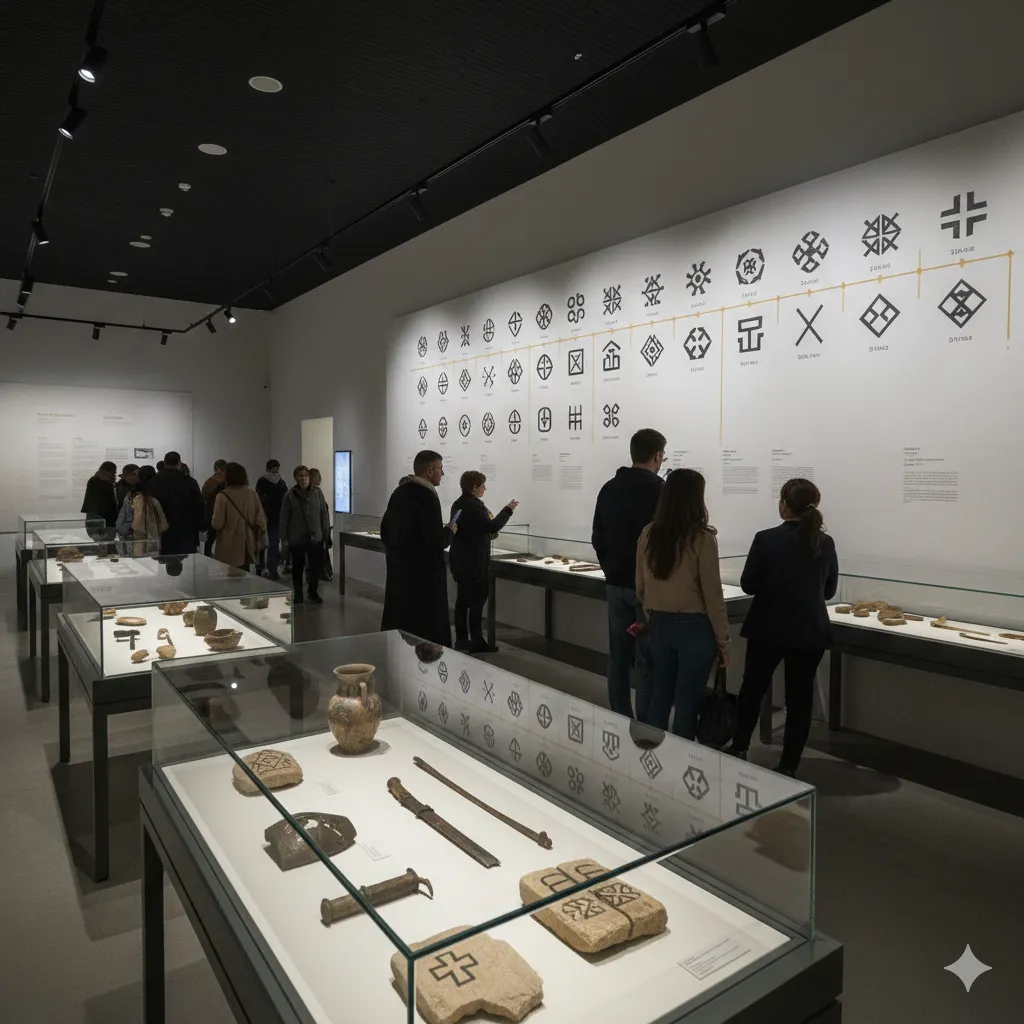
In an age where digital culture increasingly dominates, these physical spaces offer something irreplaceable — the ability to stand before genuine artifacts, to touch (sometimes literally) the objects that your ancestors crafted, wore, and wielded. For the Circassian heritage movement, museums are both anchors to the past and bridges to the future.
🏛️ Museums Worth Visiting
Circassian heritage museums exist in Russia, Turkey, Jordan, Israel, and beyond
Collections preserve costumes, weapons, manuscripts, and oral histories
Many museums operate with limited funding and volunteer staff
Digital archiving is expanding access worldwide
Circassian museums play a central role in preserving cultural identity across generations.These Adyghe museums connect diaspora communities to their historical roots.
Where can I visit a Circassian museum?
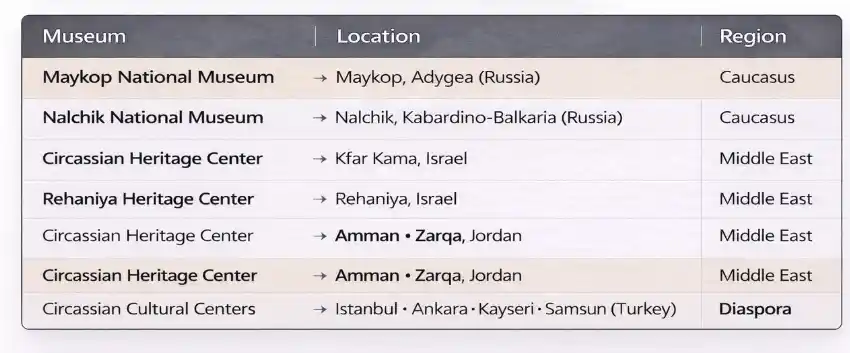
Turkey: The Largest Circassian Diaspora
Turkey hosts the largest Circassian diaspora in the world, with millions of people of Circassian descent living across the country. As a result, many cultural centers, associations, and heritage spaces have been established to preserve Adyghe identity and traditions.
In major cities such as Istanbul, Ankara, Kayseri, and Samsun, Circassian cultural centers organize exhibitions, educational programs, and community events. These spaces often include small museum-style collections featuring traditional clothing, historical photographs, musical instruments, and family artifacts.
Unlike formal state museums in the Caucasus, many of these institutions operate as community-driven cultural hubs. They play a critical role in maintaining language, customs, and collective memory among diaspora generations.
Through workshops, archives, and cultural events, Circassian communities in Turkey continue to preserve and transmit their heritage, ensuring that traditions remain alive far beyond the Caucasus homeland.
The National Museum of the Republic of Adygea
Located in Maykop, the capital of the Republic of Adygea in Russia's North Caucasus, this is arguably the most important Circassian museum in the world. Established in 1926, it houses an extensive collection spanning thousands of years of Circassian civilization:
Archaeological finds — Including the famous Maykop Gold, Bronze Age treasures dating to the 4th millennium BCE
Medieval weaponry — Swords, chainmail, and kinzhal daggers from the warrior tradition
Traditional textiles — Embroidered garments with tamga symbols and tribal motifs
Ethnographic collection — Household items, musical instruments, and agricultural tools
Documentary archives — Maps, letters, and official documents from the Russo-Circassian War
Photographic collection — Rare 19th-century photographs of Circassian life
The museum also hosts rotating exhibitions and cultural events that bring together scholars, artists, and community members from across the Circassian republics of Adygea, Kabardino-Balkaria, and Karachay-Cherkessia.
The Kabardino-Balkarian National Museum (Nalchik)
The Kabardino-Balkarian National Museum in Nalchik is one of the most important Circassian museums in the North Caucasus, preserving Kabardian heritage, history, and cultural identity. The museum features:
Kabardian tribal artifacts — Including ceremonial objects specific to the Kabardian tribe, historically the largest and most influential Circassian group
War memorials — Exhibitions documenting Circassian resistance during the Russo-Circassian War
Traditional music collection — Including rare recordings of traditional songs and instruments
Costume gallery — Elaborate displays of the cherkesska and women's ceremonial dress
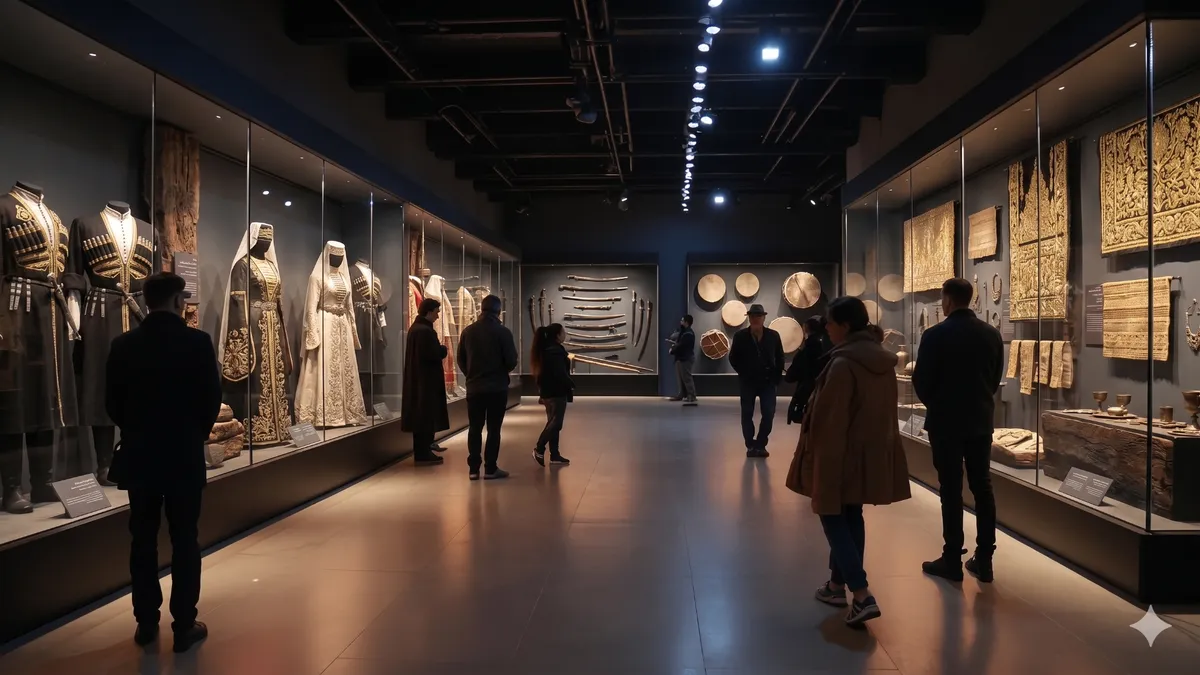
Diaspora Museums: Keeping Memory Alive Abroad
The Circassian Heritage Center, Kfar Kama (Israel)
The Kfar Kama Heritage Center is a remarkable example of grassroots cultural preservation.
The museum is located inside a preserved 19th-century Circassian house in Kfar Kama
It displays traditional clothing, weapons, and rare cultural artifacts from the Caucasus. Built largely through community fundraising, the museum reflects strong local preservation efforts.
Museums like Kfar Kama are often located in preserved 19th-century Circassian houses. Visitors can explore traditional tools, costumes, and historical artifacts.
This museum tells the story of the Shapsug Circassians who settled in Palestine in the 1870s. Its collection includes:
Original settlement photographs — Documenting the first decades of village life
Imported Caucasian artifacts — Items families carried during the deportation
Marriage and genealogy records — Supporting family tree research
Traditional weaponry — Silver-inlaid daggers and ceremonial swords
The Jordan Circassian Heritage Museum (Amman)
Jordan is home to one of the most important Jordanian Circassian community in the world, established after the exile of Circassians from the Caucasus in the late 19th century. Today, cities such as Amman and Zarqa serve as key centers of Circassian cultural life.
While Jordan does not have large state-run museums dedicated exclusively to Circassian history, several cultural centers and community institutions preserve this heritage through exhibitions, archives, and educational programs. These spaces highlight the role of Circassians in the founding of modern Amman and their continued influence in Jordanian society.
Visitors can explore collections of traditional clothing, historical photographs, family records, and cultural artifacts that reflect both the Caucasus origins and the diaspora experience. Many of these institutions are community-driven, focusing on preserving language, customs, and identity across generations.
Through cultural events, workshops, and heritage initiatives, Circassian institutions in Jordan continue to keep Adyghe traditions alive — not only as history, but as a living and evolving culture.
Istanbul Circassian Cultural Centers
Turkey hosts the largest Circassian diaspora in the world, with an estimated 3-7 million people of Circassian descent. Istanbul alone has several cultural centers and galleries, including:
Kafkas Vakfı (Caucasus Foundation) — Exhibitions on Caucasian history and culture
Çerkes Dernekleri (Circassian Associations) — Community spaces with rotating exhibitions
Private collections — Several prominent Circassian families maintain private museums
What You'll Find in a Circassian Museum
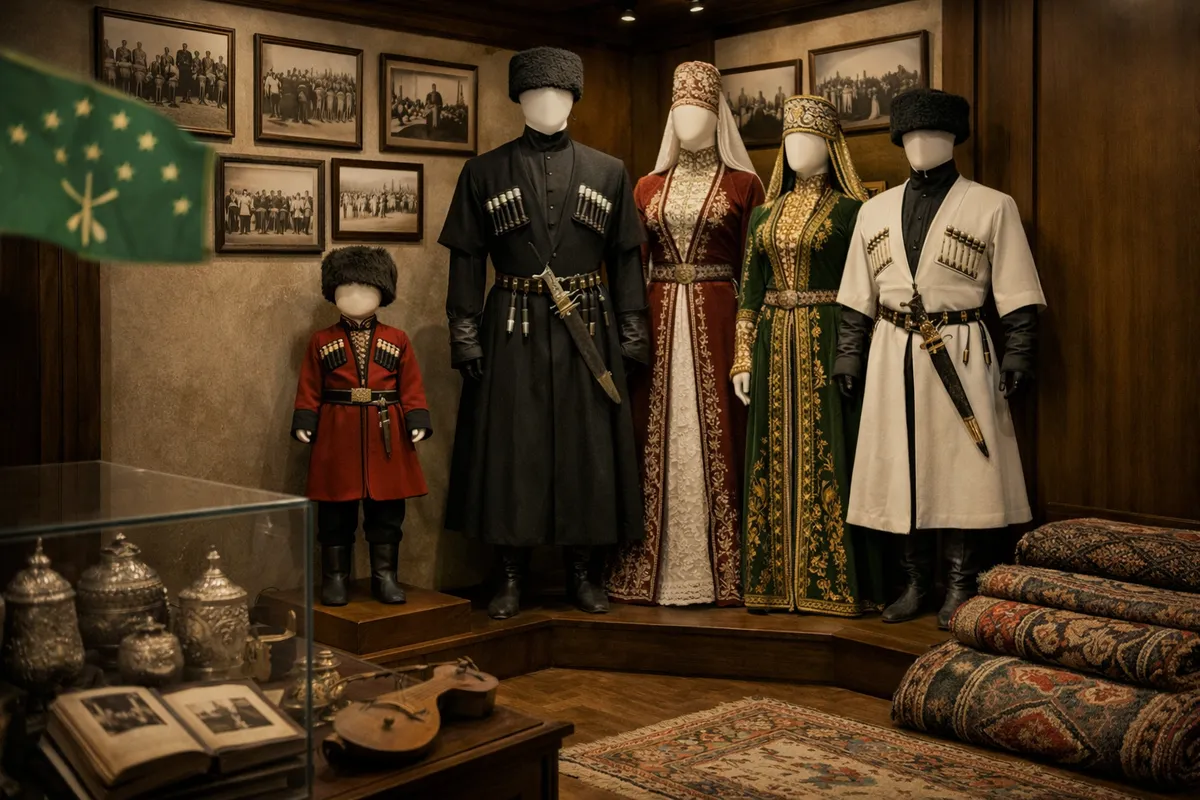
Despite their geographic diversity, Circassian museums worldwide tend to feature similar categories of artifacts that define the core elements of Circassian identity:
The Cherkessk and Traditional Costume
The cherkesska (черкеска) — the iconic long coat with gazyr cartridge pockets across the chest — is the centerpiece of any Circassian museum. These garments are often:
Hand-tailored from fine wool or silk
Adorned with silver gazyrs, belts, and decorative accessories
Tribally distinctive — Each Circassian tribe had variations in style and ornamentation
Color-coded by occasion — Black for formal events, white for celebrations, grey for everyday wear
Weaponry and Martial Culture
The warrior tradition is central to Circassian identity. Museums typically display:
Kinzhal daggers — Often with silver or gold inlaid handles and scabbards
Shashka sabers — The distinctive Circassian cavalry sword, later adopted by the Russian Cossacks
Chainmail armor — Demonstrating advanced metalworking skills
Bows and arrows — From the earlier period of Circassian warfare
Horse tack — Elaborately decorated saddles, bridles, and stirrups
Tamga Symbols and Tribal Identity
Many museums feature dedicated sections on tamga symbols — the unique geometric marks that identify each Circassian family and tribe. These symbols appear on:
Carved wooden doors and house frames
Metal stampings on weapons and tools
Embroidered textiles
Gravestones and memorial markers
Digital Museums and Virtual Archives
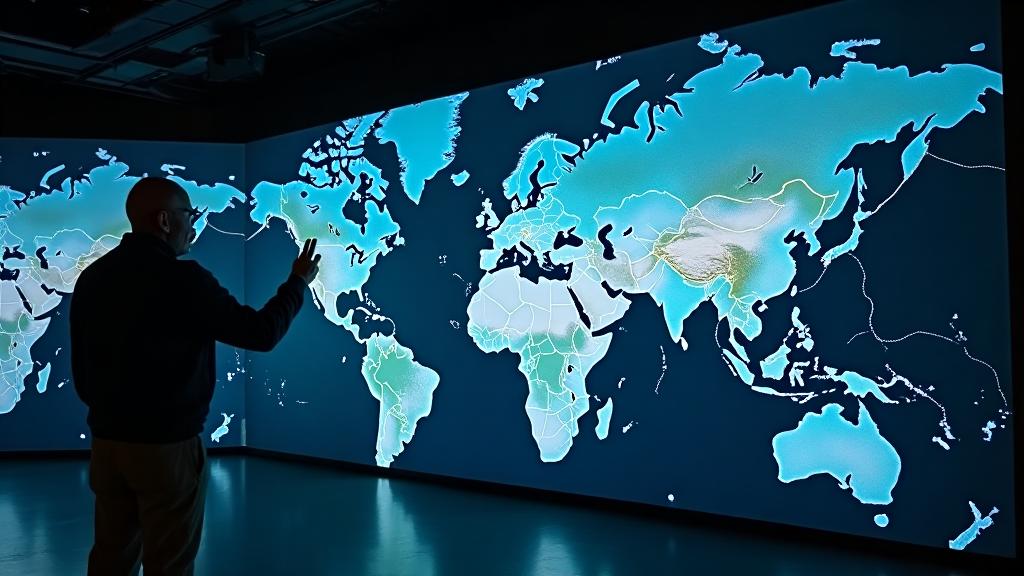
The digital revolution has opened new possibilities for Circassian heritage preservation. Several initiatives are now digitizing collections and creating virtual museum experiences:
3D artifact scanning — Creating detailed digital replicas of fragile historical objects
Online archives — Searchable databases of photographs, documents, and recordings
Virtual tours — Allowing diaspora members to explore museums remotely
Social media documentation — Community-driven efforts to photograph and catalog private family collections
Oral history projects — Recording and archiving elder narratives before they are lost
Digital platforms are also contributing to heritage preservation by allowing families to document genealogies, photographs, and cultural records.
Preservation Challenges
Despite their importance, Circassian museums face significant challenges:
Funding limitations — Many museums operate on modest budgets, relying on community donations and volunteer labor
Climate and storage — Historic textiles, leather, and paper require controlled environments that many smaller institutions cannot afford
Expertise gaps — Professional museum curation, conservation, and cataloguing skills are scarce in smaller diaspora communities
Political sensitivities — In some countries, exhibitions about the genocide and deportation face restrictions
Scattered collections — Many important artifacts remain in private family hands, inaccessible to researchers and the public
Language barriers — Multilingual labeling and documentation is essential but labor-intensive
How to Support Heritage Museums
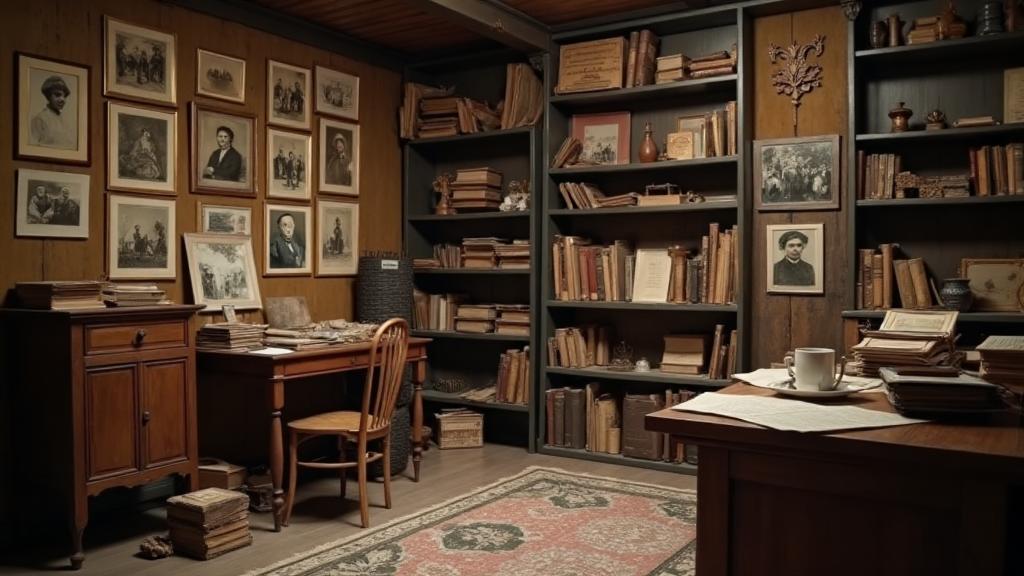
Whether you're Circassian or simply passionate about cultural preservation, there are meaningful ways to support these institutions:
Visit — Tourism revenue directly supports museum operations
Donate artifacts — If your family has historical items, consider lending or donating to a museum
Volunteer — Museums need help with translation, digitization, and event organization
Financial support — Even small donations help with preservation and exhibition costs
Share knowledge — Document family stories, photographs, and objects on platforms like Adyghe.net
Advocate — Support government funding for Circassian cultural institutions
What Visitors Say
"I saw my family's tamga on a shield from the 1800s. I had only ever seen it drawn by my grandfather on a napkin. Seeing it in bronze — I couldn't stop shaking."
— Nart, 36, visiting from Jordan
"These museums are not about the past. They are arguments for the future — proof that we existed, that we mattered, that we still do."
— Dr. Asya, cultural historian, Nalchik
Frequently Asked Questions
Where can I visit a Circassian museum?
Major Circassian heritage collections exist in Maykop (Republic of Adygea), Nalchik (Kabardino-Balkaria), Kfar Kama (Israel), and Amman (Jordan). Several cultural associations also maintain smaller exhibitions.
What kind of artifacts do Circassian museums display?
Collections typically include traditional clothing, weapons (kinzhal daggers, swords), jewelry, embroidery, tamga symbols, household items, bronze-age archaeological finds, and historical photographs documenting pre-exile village life.
Can I donate family artifacts to a Circassian museum?
Most Circassian museums and cultural centers welcome donations of historical items. Contact the museum directly — many actively seek family photographs, documents, traditional clothing, and objects from the diaspora.
Explore more about Circassian heritage, families, and history on
CircassianWeb,.
Sources & References
National Museum of the Republic of Adygea — adyg-museum.ru
Kfar Kama Circassian Heritage Center — kfrkarma.org.il
Bram, Chen. "Museums and Diaspora Identity: The Case of Circassians in Israel." Museum Anthropology, 2010.
Jaimoukha, Amjad. "Material Culture." The Circassians: A Handbook. Palgrave Macmillan, 2001.