Nart Sagas: The Complete Guide to Circassian Mythology and Epic Heroes
Long before Circassian history was written down, it was sung. In mountain villages of the North-West Caucasus, elders and professional performers recited the deeds of the Narts — a race of heroes who fought giants, bargained with gods, stole fire for their people and finally chose to be remembered rather than to live forever. These stories, known in Adyghe as Нарт хъыбархэр (Nart tales) and in scholarship as the Nart Sagas or Nart epic, are the oldest and deepest layer of Circassian cultural memory.
This guide explains who the Narts were, introduces the main heroes and heroines, summarises the best-known stories, and shows how the epic was performed, collected, studied and kept alive in the homeland and the diaspora. It ends with answers to the questions people ask most often, and a list of reliable sources for further reading.
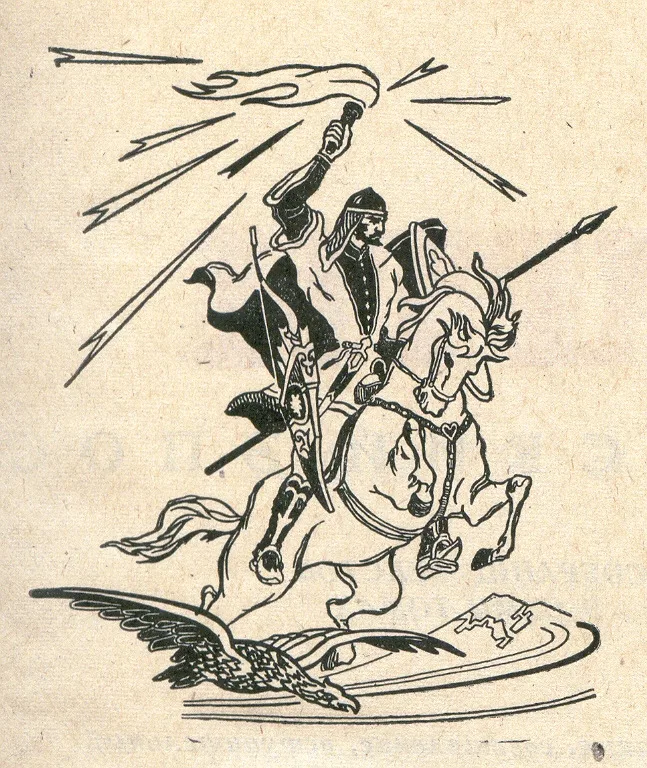
Sosruko carrying fire to the Narts. Illustration from Askar Hadaghatlh's edition of the Adyghe Nart epic. Source: Wikimedia Commons (public domain).
What Are the Nart Sagas?
The Nart Sagas are a cycle of myths, legends, heroic tales and songs about a legendary people called the Narts. They are not a single book with one author. They are a large body of oral literature, told in many versions, which grew over centuries and was written down only from the nineteenth century onwards.
The epic is shared by several peoples of the Caucasus. Circassians (Adyghe, including Kabardians), Abkhazians and Abazins, Ossetians, Karachays and Balkars, Chechens and Ingush all have Nart traditions. Each people tells the stories in its own language, with its own names and emphasis. The Circassian corpus is among the largest and richest of them, and many scholars regard the North-West Caucasus as one of the oldest centres of the tradition.
For Circassians, the sagas have always been more than entertainment. They are at the same time:
Mythology — stories about creation, the gods and the origin of fire, metal, grain and drink.
Heroic epic — the adventures of warriors, horsemen and wise women.
Moral instruction — models of honour, hospitality, modesty and loyalty that match the code of Adyghe Xabze.
Collective memory — a portrait of an ancient society, its councils, feasts and ideals.
Who Were the Narts?
The Narts were a legendary community of heroes who lived in the Caucasus in a mythic age. They were not gods. They were mortal people, but stronger, braver and more extraordinary than ordinary humans. They were born, grew old, quarrelled, made serious mistakes and, in the end, disappeared from the world.
Nart society looks very much like an idealised version of traditional Circassian society. The Narts meet in a council of men, the Xase (Хасэ), where disputes are settled and courage is tested. They hold great feasts, compete in horse races and archery, and honour guests. Women, especially the matriarch Satanay, hold real authority. Reading the sagas, one sees what Circassians admired and what they feared becoming.
The origin of the word "Nart" is debated. Proposed explanations include links to Iranian words meaning "man" or "hero" and to native Caucasian roots. No explanation is accepted by all scholars, and it is best to treat the etymology as an open question.
The Gods of the Nart World
Above the Narts stands a pantheon of gods. In the Circassian versions, the supreme god is Tha (Тхьэ), and the gods hold their own feasts and councils. Some of the most important divine figures are:
Tlepsh (Лъэпщ) — the divine smith, god of metal and craftsmanship.
Sozeresh (Созэрэщ) — patron of agriculture and the household, honoured at the end of the year.
Thaghaledj (Тхьэгъэлэдж) — god of fertility and crops.
Amish (Амыш) — protector of herds and domestic animals.
Shible (Шыблэ) — god of thunder and lightning.
Psatha (Псэтхьэ) — god of the soul and of life.
Mezitha (Мэзытхьэ) — lord of the forests and of wild game.
Relations between gods and Narts are tense. The gods guard secrets such as fire and the sacred drink sana, and the Narts repeatedly win these gifts through courage or cunning. Many stories turn on this contest between human daring and divine power.
The Main Heroes and Heroines
Satanay — The Wise Mother of the Narts
Satanay (Сэтэнай) is the heart of the whole cycle. She is the mother and foster-mother of heroes, the keeper of the household and, above all, the wisest of the Narts. When the warriors are trapped, starving or deceived, Satanay finds the solution. She heals, advises, foresees danger and sometimes tricks gods and giants.
Her power comes from intelligence, not weapons. The strongest Nart warriors listen to her and accept her judgement. Many writers have pointed to Satanay as evidence of the high respect for women in traditional Circassian society, a theme that remains strong in Circassian identity today.
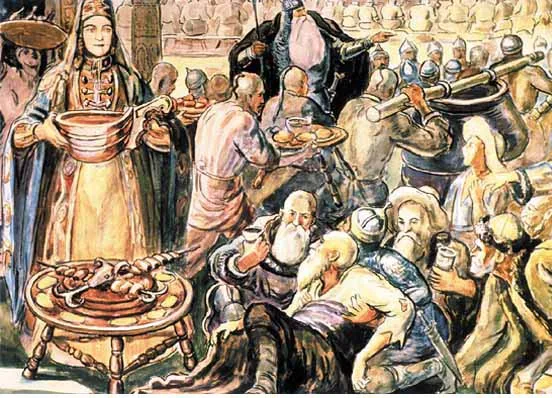
"The Feast of Satana" by the Ossetian painter Makharbek Tuganov — the same matriarch, known to Circassians as Satanay, at the centre of a Nart feast. Source: Wikimedia Commons (public domain).
Sosruko — The Fire-Bringer
Sosruko (Сосрыкъуэ, also written Sawseruquo or Sosruquo) is the most famous Nart hero. In the best-known Circassian version, a shepherd sees Satanay by the river and his longing falls on a stone. Satanay keeps the stone, and from it the child Sosruko is born. The smith Tlepsh takes the boy from the stone with tongs and tempers his body in water until it becomes as hard as steel — everywhere except his knees (or, in some tellings, his thighs), where the tongs held him.
Sosruko is clever, restless and often an outsider among the Narts. His greatest deed is bringing fire to his people. In one famous story the Narts are freezing on a winter campaign; Sosruko rides to a giant who guards the only fire, defeats him by wit and strength, and carries the flame back. Because of this, Sosruko is often compared to Prometheus in Greek mythology.
His death is equally famous. His rivals learn the secret of his weak knees. During a contest with the giant wheel Zhan-shkh'o (Жан-шэрх, in some versions Jan-Sherkh), the wheel strikes his knees and he falls. Even dying, Sosruko is presented as a hero whose fame outlives his body. Scholars have long compared this weak spot with the heel of Achilles.
Tlepsh — The Divine Smith
Tlepsh (Лъэпщ) works at a forge on the edge of the world. He makes the Narts' swords, armour and tools, heals wounds and transforms heroes, as he did with Sosruko. Smiths enjoyed great respect in traditional Circassian society, and the importance of Tlepsh reflects a culture that valued metalwork, weapons and fine craftsmanship. In some stories Tlepsh searches for the edge of the world, and learns that his skill has limits.
Badinoko — The Proud Warrior
Badinoko (Бэдынокъуэ) is a strong, proud and sometimes stubborn warrior. His stories deal with honour, rivalry and the duties of a guest and host. He represents the noble warrior who must learn that courage without restraint can bring disaster.
Pataraz (Batraz) — The Steel Hero
Pataraz (Пэтэрэз), known to Ossetians as Batradz, is a hero of terrible strength who avenges his father and fights enemies, giants and even gods. His cycle shows the warrior's dilemma: what is a fighter for when there is nothing left to fight?
Ashamez — The Musician of the Narts
Ashamez (Ащэмэз) owns a magic pipe. When he plays one end, nature blossoms and people rejoice; the other end brings death and winter. The story of Ashamez is one of the clearest expressions of the Circassian belief that music has real power over life — a belief that also explains the honoured place of musicians and singers.
Other Figures
The cycle includes many more characters: Wazirmes (Уэзырмэс), an elder hero and husband of Satanay in some versions; Shabatnoko; Yeminezh (Емынэж), a giant enemy of the Narts; Lady Malechipkh and other powerful women; and the magical horse Tkhozhey (Тхъожьей), Sosruko's companion. Horses in the sagas often speak, advise and save their riders.

Mount Elbrus, known to Circassians as Oshhamakho (Іуащхьэмахуэ). Mountains, rivers and passes of the Caucasus form the landscape of many Nart stories. Photo: JukoFF, Wikimedia Commons (public domain).
Famous Stories from the Cycle
How Sosruko Brought Fire
The Narts are on a long winter campaign. Snow covers the land and their fire has gone out. Only a giant on a distant hill has fire. Sosruko rides to him and, through a contest of riddles and strength, takes a burning brand and returns. The Narts survive. The story celebrates courage used for the community, not for personal glory.
The Sacred Drink and the Feast of the Gods
In several stories a Nart hero is invited to, or forces his way into, the feast of the gods, where the drink sana is served. The Narts try to obtain this drink for humanity. These tales explain the origin of wine and of the ritual feast, which remained central to Circassian social life.
The Seeds of Millet
One tradition tells how a Nart brought millet, the ancient grain of the Caucasus, to his people from the gods. Like the fire story, it explains the origin of something essential to life and shows the Narts as civilisation-builders.
The Death of Sosruko
Envious Narts and an old woman, sometimes identified as a witch, discover Sosruko's weak knees. The giant wheel is rolled against him and breaks his legs. Lying wounded, Sosruko asks that his fame continue. Many versions say he is buried alive, and that he will one day return.
The Choice of the Narts
At the end of the cycle the Narts grow arrogant and challenge the gods. They are offered a choice: a long life without fame, or a short life with eternal glory. They choose glory. In some versions they lose their strength, leave the world, or perish together. The lesson is that a people can survive through memory and story. For Circassians who lived through the war and exile of the nineteenth century, this ending carries a particular meaning.
Major Themes
Honour and Community
Nart heroes are celebrated, but the sagas warn repeatedly against pride and selfishness. When a hero ignores the council, insults a guest or seeks glory at the expense of others, disaster follows. These lessons match the values of Xabze: respect for elders, protection of guests and responsibility to the community.
Wisdom Over Strength
In story after story, intelligence defeats brute force. Satanay's advice saves the warriors; Sosruko wins by wit as much as by his steel body. The epic teaches that a wise mind is the strongest weapon.
Respect for Nature
Mountains, rivers, trees and animals have voices and power. The heroes negotiate with nature rather than simply conquering it. This reflects life in a mountain landscape where survival depended on balance with the environment.
Fame and Mortality
The Narts know that they will die. Their goal is to be remembered well. This concern with a good name runs through Circassian culture, from family honour to the preservation of surnames and genealogy.
How the Sagas Were Performed
For most of their history, the Nart Sagas lived only in oral performance. They were told and sung at feasts, weddings, gatherings and long winter evenings. Some stories were spoken in prose; others were sung as pshinatle (пшыналъэ), epic songs accompanied by instruments such as the shichepshin (шыкIэпшынэ), a bowed string instrument, and the wooden clapper pkhachich (пхъэкIыч).
Professional singers and entertainers, known as jeguako (джэгуакIуэ), carried the stories from village to village. Their performances included music, changes of voice, gestures and dialogue with the audience. Every performer shaped the material, so the same story differs between Kabardian, Shapsugh, Abdzakh, Bzhedugh and other tellings. This variation is a sign of a living tradition, not a mistake.
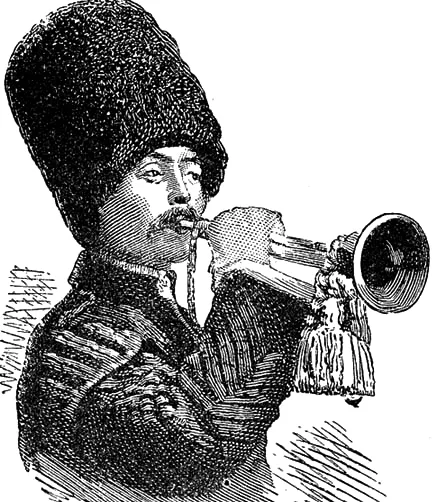
A Circassian musician in a nineteenth-century illustration. Music and song carried the Nart tradition for centuries. Source: Wikimedia Commons (public domain).
Collecting and Studying the Sagas
Written collection began in the nineteenth century. Early recorders included Circassian scholars such as Shora Nogmov (1794–1844), whose history of the Adyghe people draws on oral tradition, and later Russian and Circassian ethnographers. In the Soviet period, systematic expeditions recorded thousands of texts.
Important milestones include:
1951 — publication in Moscow of a major Kabardian Nart edition in Russian translation ("Нарты. Кабардинский эпос").
1968–1971 — publication in Maikop of the seven-volume Adyghe Nart corpus Нартхэр, edited by the scholar Askar Hadaghatlh (Аскэр Хьэдэгъэтлэ), the largest collection of Circassian Nart texts.
Georges Dumézil — the French scholar who published Légendes sur les Nartes (1930) and later works comparing the Nart epic with Indo-European myths.
John Colarusso — the Canadian linguist whose English translation Nart Sagas from the Caucasus (Princeton University Press, 2002) brought the Circassian, Abaza, Abkhaz and Ubykh stories to an international audience. A revised selection appeared in 2016 as Nart Sagas: Ancient Myths and Legends of the Circassians and Abkhazians.
Scholars have noticed many parallels between the Nart Sagas and other traditions: Prometheus and the stealing of fire, Achilles and his single weak spot, and even the Arthurian legend of a dying hero whose sword is thrown into water — a motif found in the Ossetian story of Batradz. Some researchers see these as signs of very ancient contact between peoples of the steppe and the Caucasus. Others argue for independent development. The debate continues, but it shows how important the Nart epic is for the study of world mythology.
The Nart Sagas Today
The Nart tradition is still alive. In the Circassian republics of Kabardino-Balkaria, Adygea and Karachay-Cherkessia, Nart heroes appear in school books, theatre, music, sculpture, festivals and the names of streets, hotels and businesses. Writers and poets retell the stories, and artists continue to illustrate them.
In the diaspora — in Turkey, Jordan, Syria, Israel, Europe and the Americas — the sagas are told in cultural associations, dance ensembles and summer schools. They help young Circassians connect with their language and identity. In the Circassian village of Kfar Kama in Israel, a public square bears Sosruko's name and image.
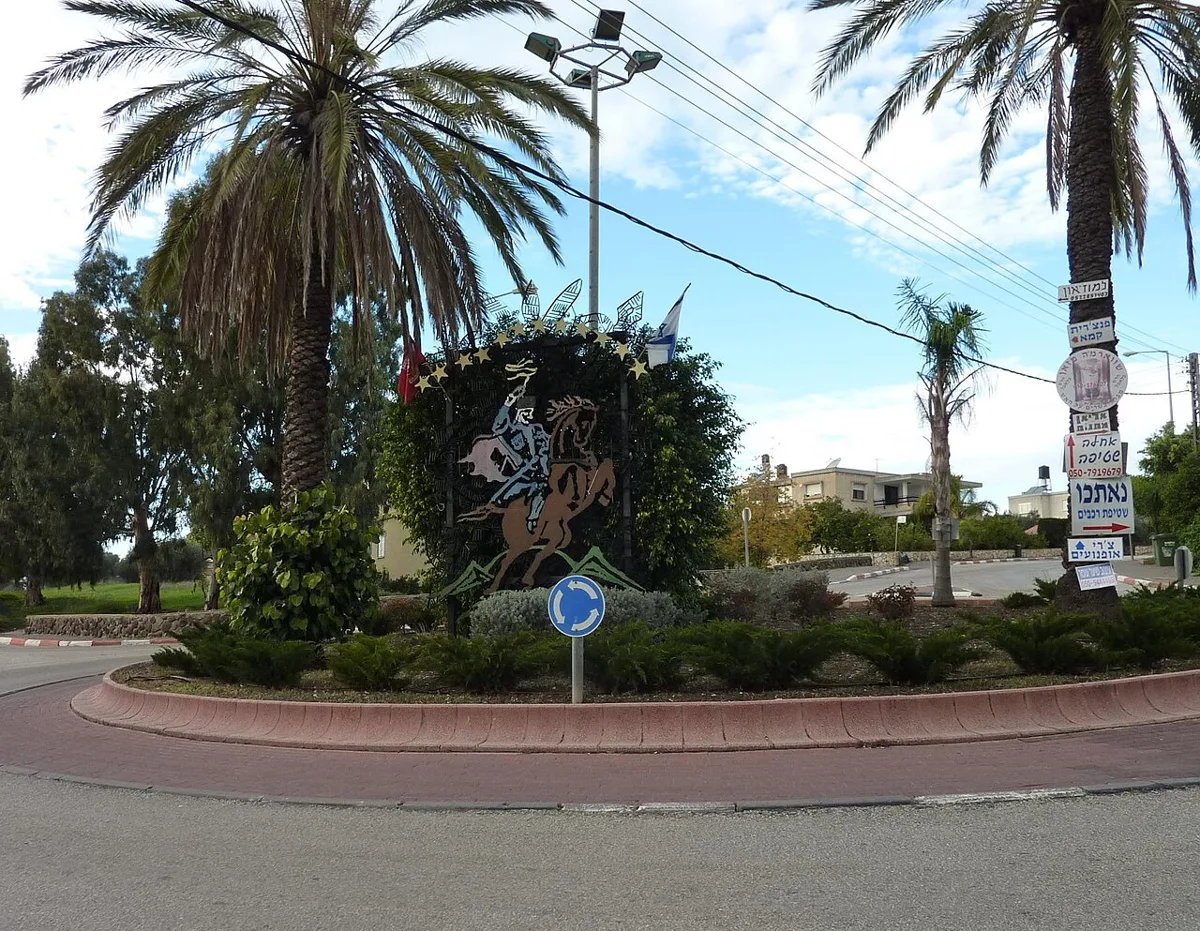
Sosruko Square in the Circassian village of Kfar Kama, Israel — a Nart hero in the everyday life of a diaspora community. Photo: Beco1977, Wikimedia Commons, CC BY-SA 3.0.
The wider Caucasus also keeps the Nart heroes in public life. In 2009 the National Bank of the Republic of Abkhazia issued a gold coin named "Nart", showing how strongly the epic remains part of regional identity.
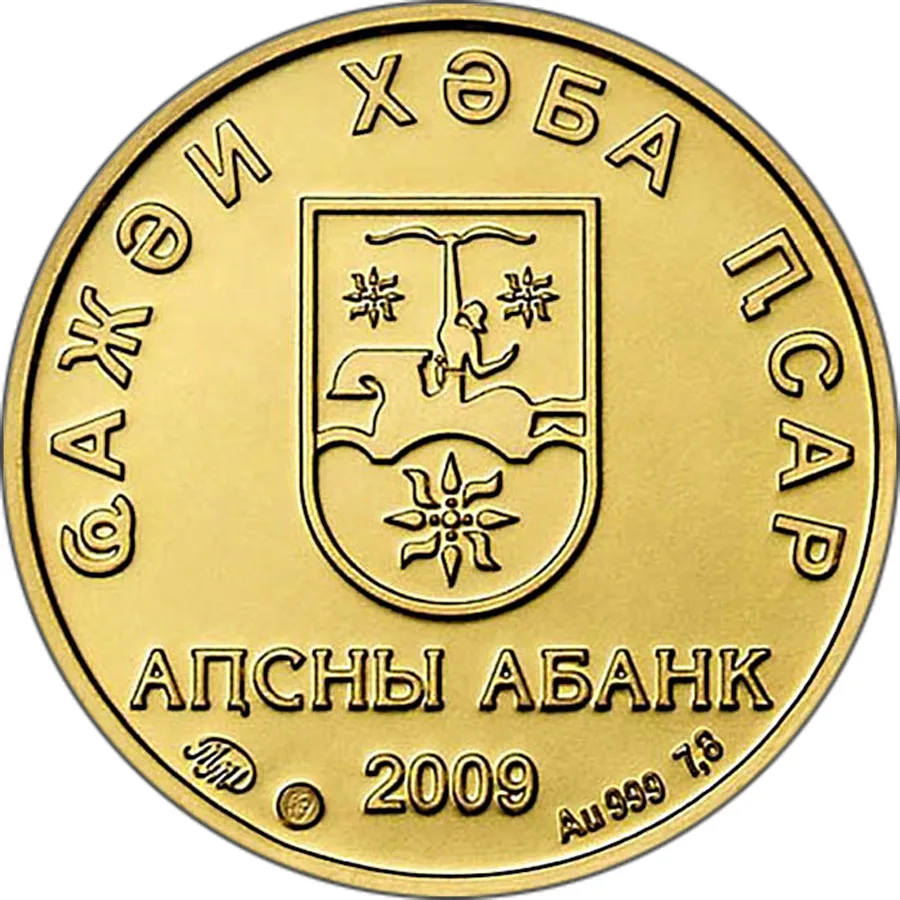
"Nart" gold coin, 25 apsars, issued by the National Bank of the Republic of Abkhazia in 2009. Source: Wikimedia Commons (public domain).
Online, platforms like CircassianWeb help families record their own stories, learn the Circassian language and explore Circassian history, so that the spirit of the Narts — memory as a form of survival — continues in new forms.
Frequently Asked Questions
What are the Nart Sagas?
The Nart Sagas are the ancient oral epic of the Circassian people and several neighbouring Caucasian peoples. They tell the stories of the Narts, a legendary race of heroes, together with their gods, enemies and adventures.
Are the Narts gods?
No. The Narts are mortal heroes. They are stronger and more extraordinary than ordinary people, but they age and die. The gods, such as Tha and Tlepsh, are separate beings.
Who is the most famous Nart hero?
Sosruko is the best-known Circassian Nart hero. He was born from a stone, tempered by the smith Tlepsh, brought fire to the Narts and was killed when a giant wheel struck his only weak spot, his knees.
Who is Satanay?
Satanay is the wise mother of the Narts. She advises the heroes, solves their problems and is respected by all of them. She is often seen as a symbol of the honoured position of women in Circassian tradition.
Which peoples share the Nart epic?
Circassians (Adyghe and Kabardians), Abkhazians, Abazins, Ossetians, Karachays, Balkars, Chechens and Ingush all have Nart traditions, each in their own language and version.
Is Sosruko the same as Prometheus?
Not the same, but similar. Both bring fire to humans. Scholars have compared the two stories for a long time, and they also compare Sosruko's weak knees with the heel of Achilles. Whether the stories share a common origin is still debated.
How old are the Nart Sagas?
No one knows exactly. The stories were passed down orally for many centuries before being written down in the nineteenth and twentieth centuries. Some elements are believed to be very ancient, but exact dates cannot be proven.
How were the sagas performed?
They were told in prose or sung as epic songs (pshinatle), often by professional performers called jeguako, with instruments such as the shichepshin and the pkhachich, at feasts and gatherings.
Where can I read the Nart Sagas in English?
The most widely available translation is John Colarusso's Nart Sagas from the Caucasus (Princeton University Press, 2002), and the shorter 2016 edition Nart Sagas: Ancient Myths and Legends of the Circassians and Abkhazians.
What is the largest Circassian collection of Nart texts?
The seven-volume Adyghe edition Нартхэр, edited by Askar Hadaghatlh and published in Maikop between 1968 and 1971.
Why are the Nart Sagas important for Circassians today?
They preserve the values, language and imagination of the Circassian people. After the war and exile of the nineteenth century scattered Circassians around the world, the sagas became one of the strongest links between communities and their shared heritage.
Sources and Further Reading
John Colarusso (trans.), Nart Sagas from the Caucasus: Myths and Legends from the Circassians, Abazas, Abkhaz, and Ubykhs, Princeton University Press, 2002.
John Colarusso, Nart Sagas: Ancient Myths and Legends of the Circassians and Abkhazians, Princeton University Press, 2016.
Askar Hadaghatlh (ed.), Нартхэр: Адыгэ эпос (Narts: Adyghe Epic), 7 vols., Maikop, 1968–1971.
Нарты. Кабардинский эпос (Narts: Kabardian Epic), Moscow, 1951.
Georges Dumézil, Légendes sur les Nartes, Paris, 1930; and Le livre des héros, Paris, 1965.
Shora Nogmov, History of the Adyghe People (first published 1861).
"Nart saga", Wikipedia — overview with further references.
Images: Wikimedia Commons, credited under each picture.
This article is part of the CircassianWeb culture series. Related reading: Circassian History · Adyghe Xabze · Circassian Language · Circassian Diaspora · Circassian Surnames