The Hatuqway (Hatukoy) Tribe: Resilient People of the Plains
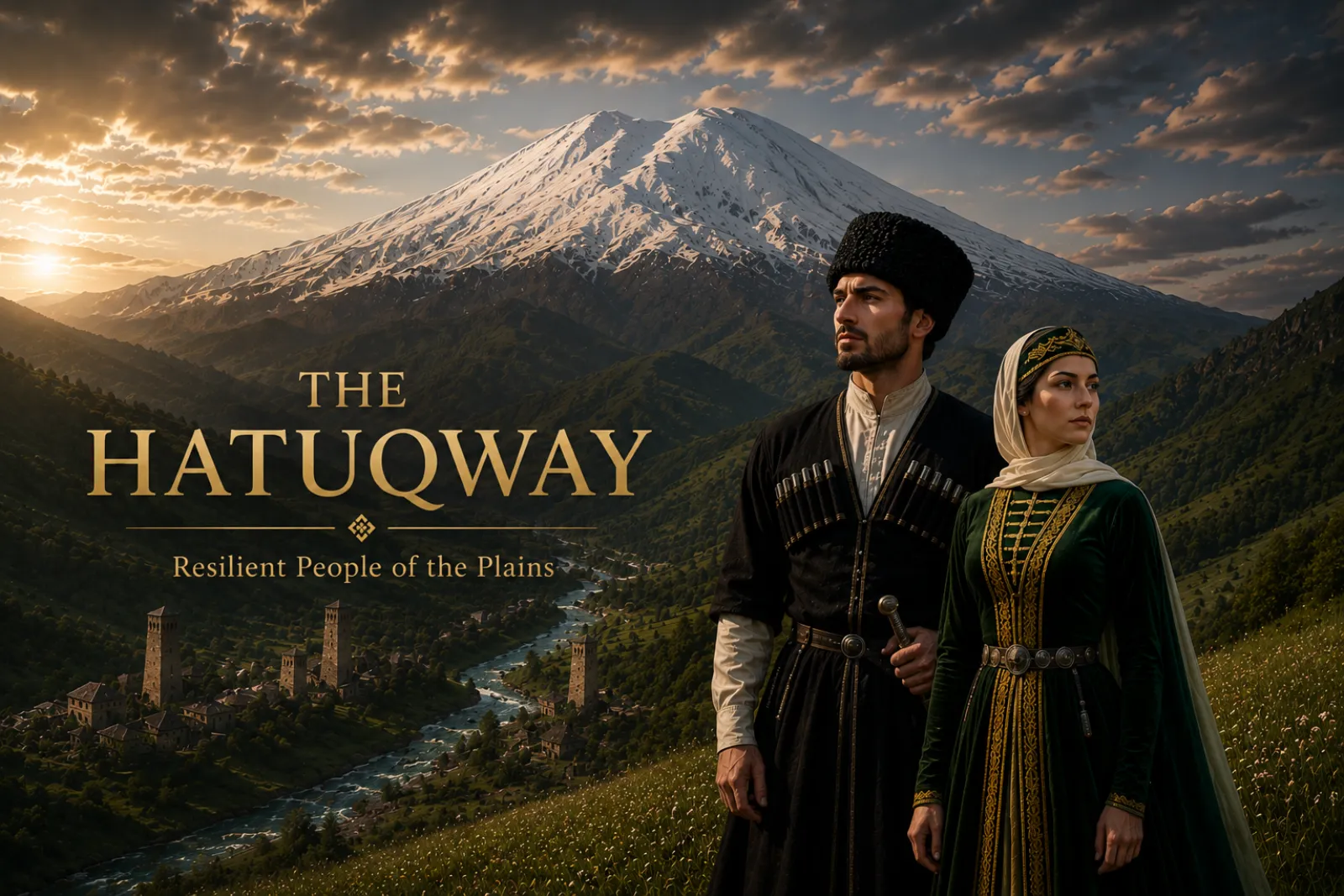
The Hatuqway (Hatukoy / Hatuqay) Tribe: Resilient People of the Plains
The Hatuqway, also known as Hatuqay or Hatukoy (Adyghe: Хьатыкъуай or Хьатыкъое), are one of the twelve foundational tribes of the Circassian (Adyghe) people. Their star is proudly displayed on the Circassian national flag among the other eleven, symbolizing unity, strength, and shared heritage. Renowned as resilient warriors of the plains, skilled horsemen, and steadfast custodians of tradition, the Hatuqway have endured conquest, displacement, and centuries of adversity while safeguarding their language, values, and identity.
Historically occupying the fertile lowlands and river valleys of the Northwest Caucasus — particularly between the Belaya (Shkhaguashe) and Pshish rivers, with earlier coastal settlements near the Taman Peninsula — they developed a society perfectly adapted to agriculture, horse breeding, and defensive warfare. Today, the vast majority of Hatuqway descendants live in the global diaspora, especially in Turkey, with smaller vibrant communities across the Middle East and beyond. A small but symbolic presence remains in their ancestral homeland, centered on the village of Khatukay in the Republic of Adygea, Russia. Their journey from independent principality to scattered yet culturally vibrant communities stands as a powerful testament to human endurance and cultural continuity.
Origins and Early History
The Hatuqway princely lineage connects directly to Inal the Great, the legendary 14th-century figure credited with unifying various Circassian groups. Prince Hatuqo (Hatuqwe), grandson of Inal and brother (or twin) to Boletoqo — founder of the Chemguy (Temirgoy) tribe — is the eponymous ancestor from whom the tribe takes its name.
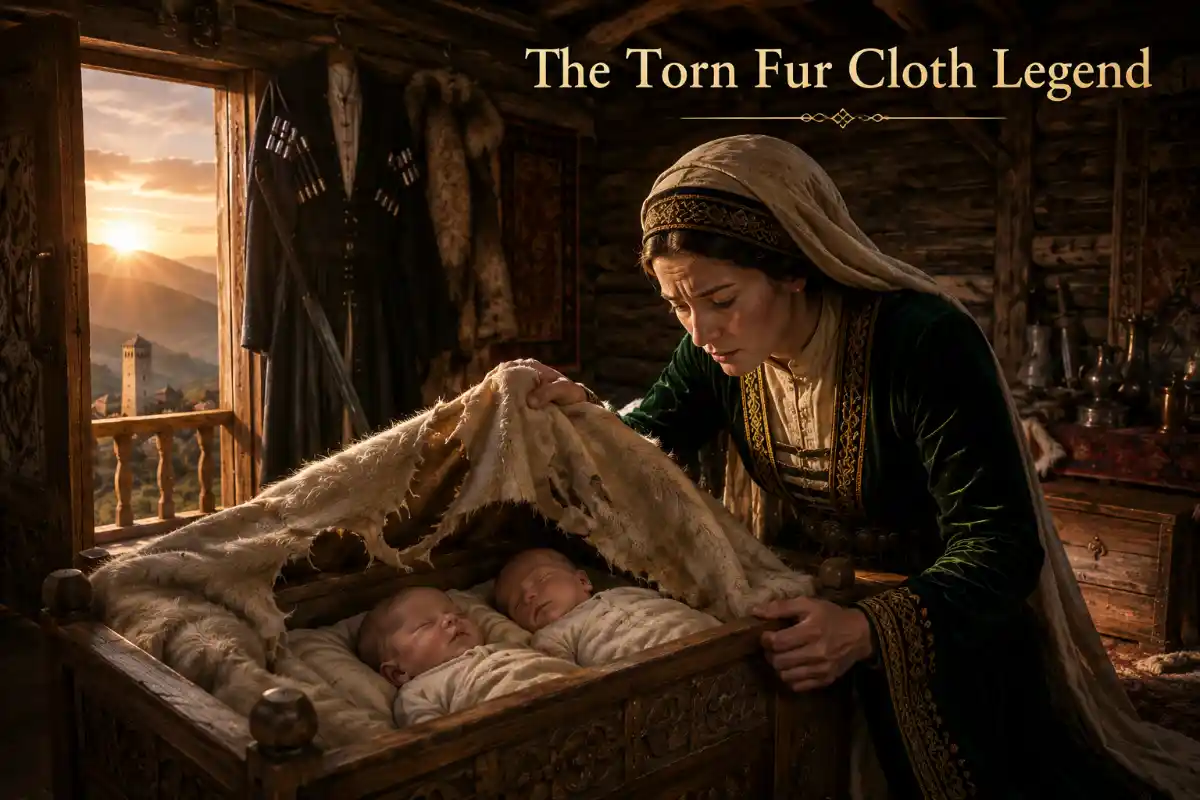
The defining origin legend, still told with pride in Hatuqway families, describes the symbolic separation: After the birth of twins Boletoqo and Hatuqo, they were placed together under one precious fur cloth during a cold night. By morning, the cloth had torn neatly in two. Their mother, interpreting this as an omen of destiny, cried out: “Woe unto you, Chemirgoy! They have torn you asunder!” Following inevitable disputes over leadership, Hatuqo migrated westward with his loyal followers, carving out an independent domain. The tribe later incorporated smaller neighboring groups, including elements of the Sobay, whose nobles integrated as Sobe-pshi (Princes of Sobay). This narrative underscores core Circassian themes of fate (nasep), autonomy, kinship, and the founding of new lineages.
The Hatuqway Principality and Martial Culture
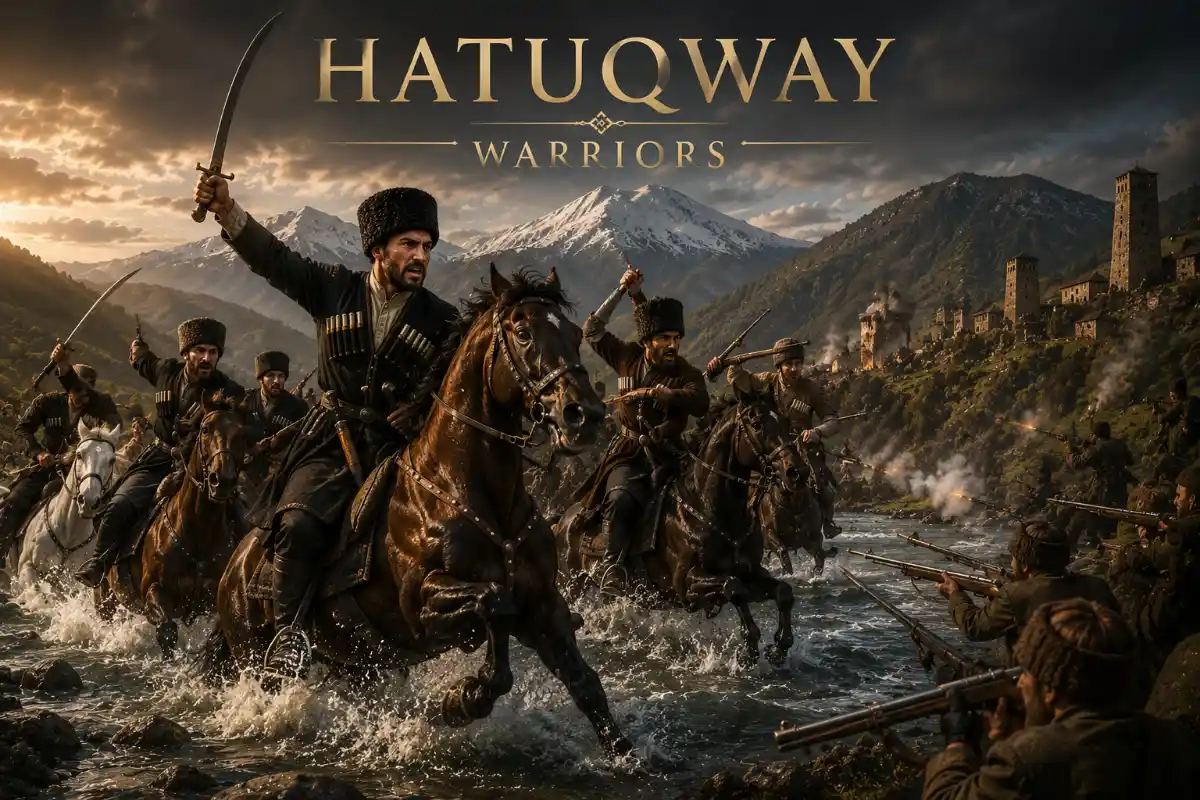
The independent Hatuqway Principality existed from approximately the 1330s until its dissolution in 1863. Governed primarily by princes of the Cherchanuqo family, it earned a reputation as one of the more martial and independent-minded Circassian polities. According to the 17th-century Ottoman traveler Evliya Çelebi, a single Hatuqway prince could mobilize up to 8,000 fully equipped warriors, supported by allied forces — a formidable army sustained by the tribe’s prosperous economy.
Agriculture thrived in the rich river plains, producing wheat, millet, and barley, while horse breeding produced renowned mounts prized across the Caucasus. The Hatuqway frequently repelled raids and tribute demands from the Crimean Khanate. A notable example occurred in 1551, when Prince Aledjuq (Elok) and allied warriors mounted a determined defense against a large-scale invasion by Khan Sahib I Giray. Utilizing hit-and-run tactics, ambushes in forested river valleys, and intimate knowledge of the terrain, they exemplified the classic Circassian style of mobile warfare.
Language and Dialect
The Hatuqay dialect belongs to the Western Circassian (Adyghe) language family and is classified within the Steppe dialect group. It shares features with Temirgoy, Bzhedug, and Abzakh while incorporating transitional elements from coastal dialects such as Shapsug and Natukhaj. Its complex consonant inventory and rhythmic qualities made it especially suitable for reciting epic poetry and Nart sagas.
While the dialect has declined in the Caucasus due to assimilation and Russian influence (with traces remaining in Khatukay village), it is better preserved in Turkish diaspora communities through family transmission and organized language classes.
Religion and Spiritual Life
Pre-Islamic Circassian spirituality was anchored in Xabze, a profound ethical and philosophical system governing honor, hospitality, social conduct, and humanity’s relationship with nature and ancestors. Christianity reached the region via Byzantine and Georgian missionaries but remained syncretic. The Hatuqway adopted Sunni Islam (Hanafi school) relatively early in the 17th century. Islam provided spiritual unity and moral framework during the dark years of Russian invasion. Modern Hatuqway communities are overwhelmingly Sunni Muslim yet continue to uphold many Xabze principles such as hospitality, respect for elders, and personal honor.
Russian Conquest, Genocide, and Diaspora
The Russo-Circassian War (1763–1864) brought existential catastrophe. Despite courageous resistance and occasional alliances with broader anti-colonial movements, Russian military superiority prevailed. In 1863 the principality was forcibly dissolved. The ensuing mass deportation (Muhajirism) to the Ottoman Empire resulted in tens of thousands of deaths from violence, disease, starvation, and drowning during treacherous Black Sea crossings. Entire Hatuqway villages, including Padisay and Dabraqway, were left desolate.
In exile, survivors demonstrated extraordinary resilience, rebuilding communities while preserving language and customs. Today the largest populations reside in Turkey, with active settlements in Kayseri (especially Pınarbaşı and Çörümşek), Bolu, Sakarya, Düzce, and Bozüyük.
Culture, Traditions, and Social Life (Expanded)
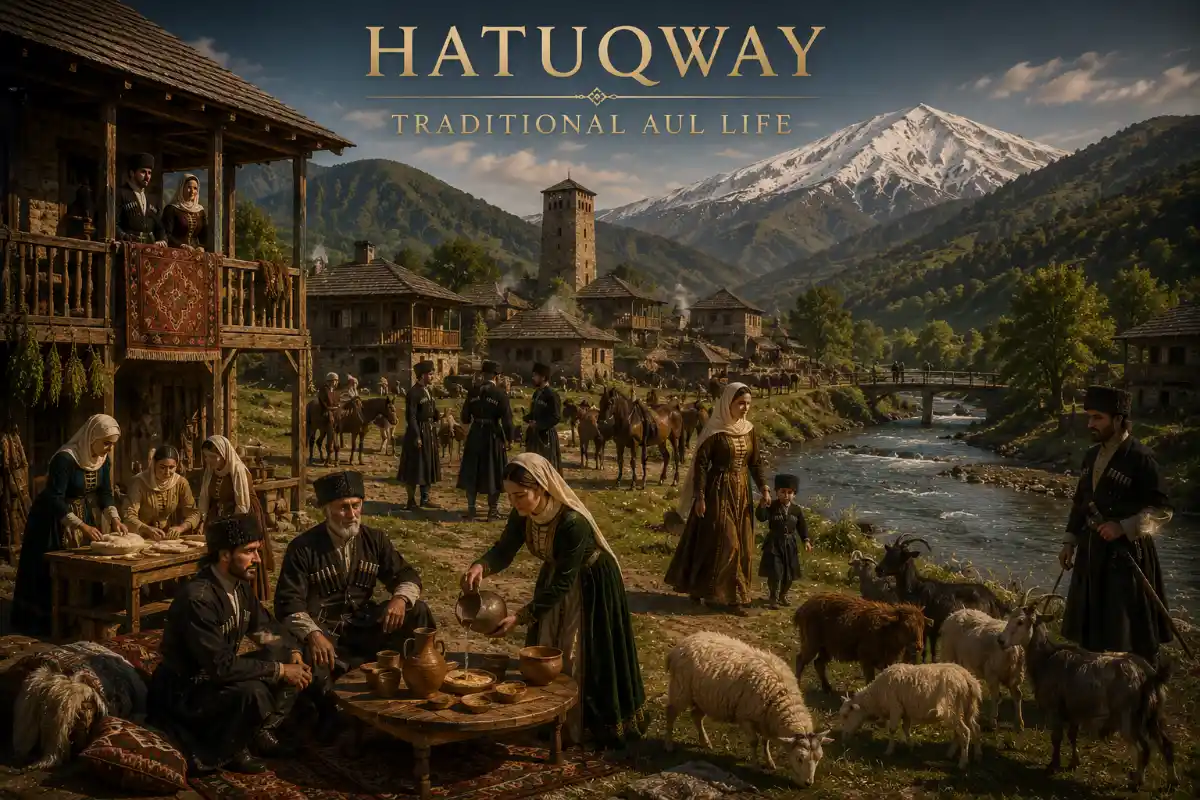
Hatuqway society was deeply rooted in Xabze, which dictated every aspect of behavior from seating arrangements at feasts to rules of revenge and reconciliation. Hospitality was elevated to a near-sacred duty — a guest was considered inviolable, and hosts would offer their best food, finest horse, or even personal safety to protect visitors.
Traditional Clothing: Men wore the iconic cherkesska coat adorned with gashtan cartridge loops, paired with wide trousers, soft leather boots, and papakha or kalpak hats. Daggers (kindjal) and curved shashka swords completed the warrior’s attire. Women’s dresses were elegant and elaborate, featuring rich fabrics, silver embroidery, coin necklaces, and ornate headdresses that signified status and family wealth.
Cuisine: Meals reflected the bounty of the plains. Staples included millet or corn porridge, fresh Circassian cheese (qway), walnut sauces (shibzhe), roasted or stewed mutton and beef, stuffed pies (haliva), and dishes sweetened with wild honey. Food was always communal, shared around low tables, symbolizing equality and generosity.
Music and Dance: The pshina (reed flute) and shichepshin (bowed string instrument) provided accompaniment for heroic ballads, laments, and love songs. The wij circle dances remain the living heartbeat of Hatuqway culture — men performing athletic leaps and sword-like arm movements while women move with graceful precision. These dances are performed at weddings, festivals, and cultural events worldwide.
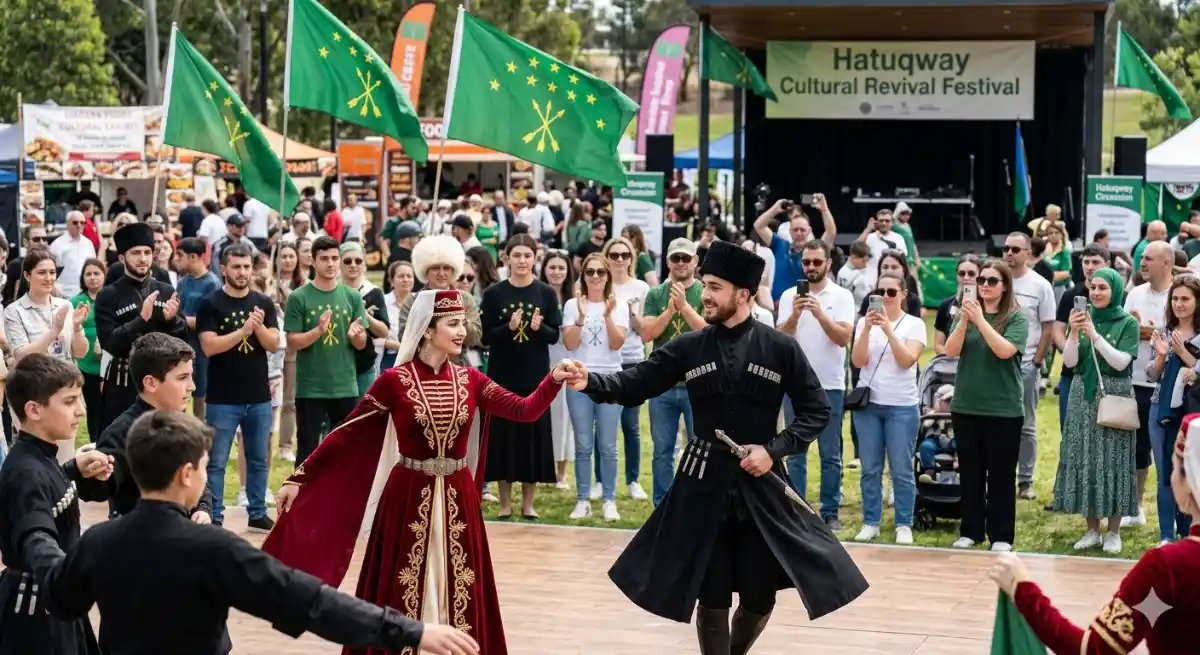
Social structure emphasized extended families living in large compounds (fəqʷe), with elders commanding great respect and clan lineages carefully tracked for marriage purposes.
Hatuqway Folklore and the Nart Sagas (Expanded)
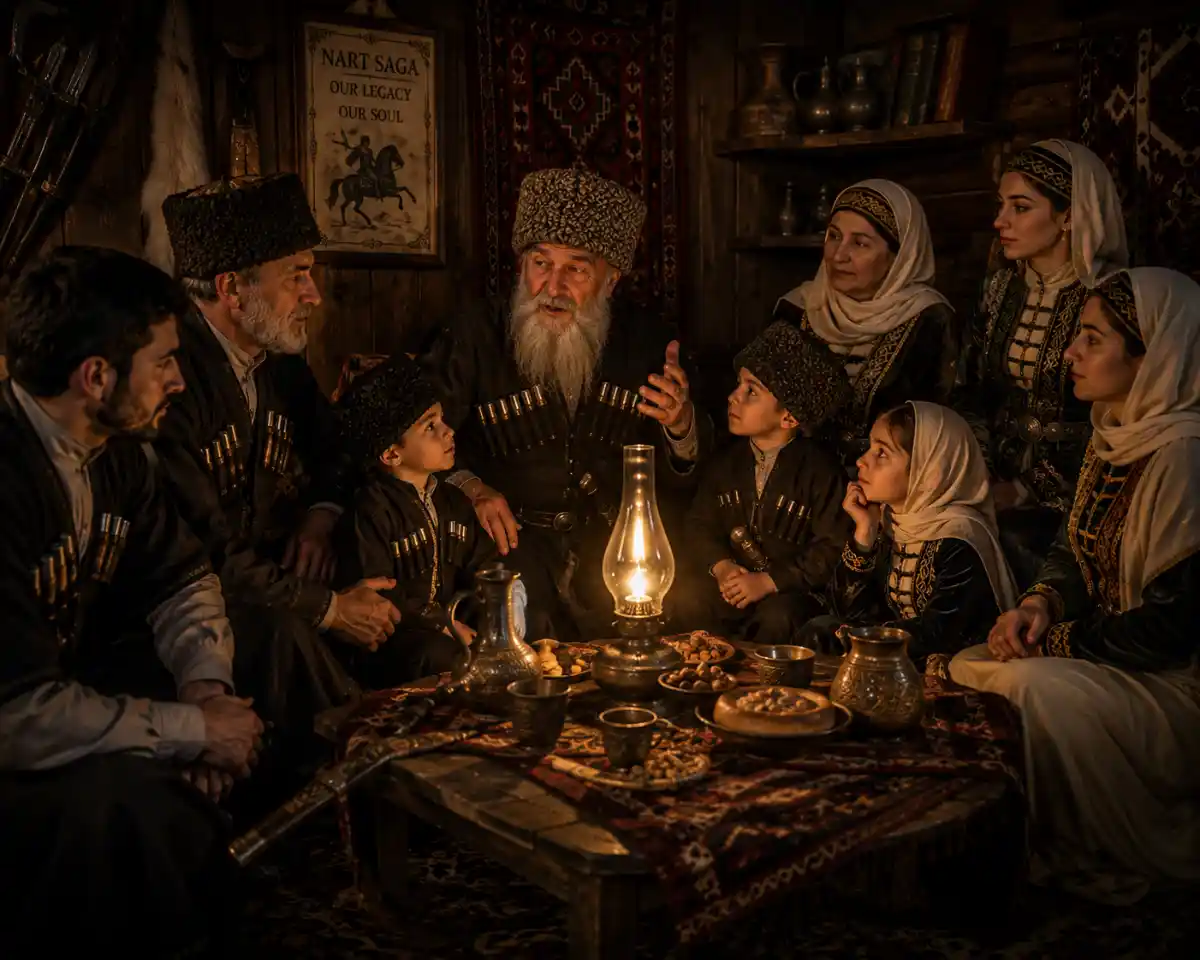
The Nart sagas represent the crown jewel of Hatuqway oral literature. These ancient tales of superhuman heroes preserved moral lessons, historical memory, and cultural identity for centuries.
The Torn Fur Cloth Legend
(As detailed in Origins section)
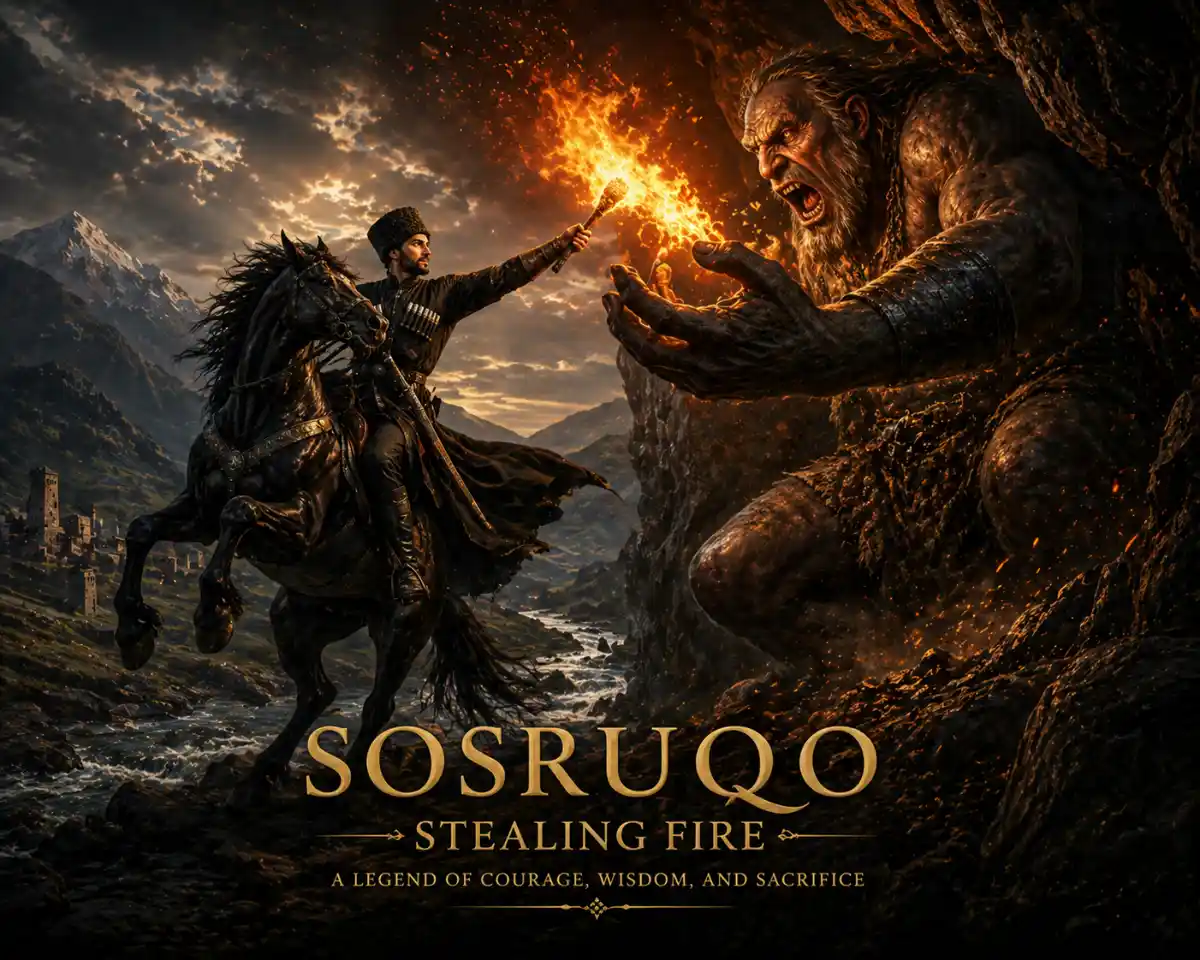
The Saga of Sosruquo
(Detailed retelling as previously provided — stone-born hero tempered by Tlepsh, stealer of fire from a giant, tragic fall due to hubris.)
Additional Notable Saga: The Wisdom of Lady Setenaya and the Magic Apple
Lady Setenaya, the wise and eternally youthful matriarch of the Narts, plays a central role in many tales. In one beloved cycle, she creates or blesses a magical apple that grants not only physical beauty but proper manners, wisdom, and moral character to those who consume it. When arrogant young Narts cause chaos through rudeness and poor conduct, Setenaya uses her cunning and sorcery to restore order, teaching that true strength lies in wisdom and humility rather than mere physical power. Hatuqway storytellers often highlighted her role as a mediator and strategist, reflecting the important advisory position of women in traditional society.
Other sagas feature the fiery avenger Batraz, who burns with inner steel and enacts justice against tyrants, and the divine blacksmith Tlepsh, whose forge produces weapons of legend.
These stories, performed with musical accompaniment at communal gatherings, reinforced values of resilience, cleverness in the face of superior force, and the dangers of unchecked pride — themes that resonated deeply with the Hatuqway’s own history.
Current Status and Diaspora Life
Today, Hatuqway identity thrives through cultural associations, dance ensembles, language initiatives, and social media networks. In Turkey, compact village communities maintain strong ties. Younger generations participate in international Circassian youth forums, advocacy for genocide recognition, and modest repatriation projects to Adygea. Though challenges of assimilation and political barriers remain, the Hatuqway continue to embody their ancestral spirit of resilience.
Resources and Further Reading
For readers seeking deeper knowledge about the Hatuqway people, Circassian history, language, folklore, and diaspora experiences, the following selection offers authoritative and accessible materials. These resources combine academic scholarship, primary translations, oral history collections, and community-driven initiatives.
Core Academic and Reference Books:
Amjad M. Jaimoukha, The Circassians: A Handbook (Routledge, 2001; revised editions available). Widely regarded as the definitive English-language reference on Circassian history, tribes (including detailed notes on the Hatuqway), culture, and contemporary issues. Jaimoukha, a Circassian scholar, provides insider perspectives on Xabze, the Nart sagas, and the genocide.
John Colarusso, Nart Sagas from the Caucasus: Myths and Legends from the Circassians, Abazas, Abkhaz, and Ubykhs (Princeton University Press, 2002). An essential collection and scholarly translation of Nart epics, with variants relevant to Western Circassian (Adyghe) traditions including Hatuqway storytelling.
John Colarusso & Tamirlan Salbiev, Nart Sagas: Ancient Myths and Legends of the Circassians and Abkhazians. Offers additional depth with commentary on heroic cycles like those of Sosruquo and Lady Setenaya.
Amjad Jaimoukha, Circassian Culture and Folklore: Hospitality, Traditions, Cuisine, Festivals and Music. A richly illustrated exploration of living traditions, ideal for understanding daily cultural practices.
Asker Khadagatl’a (Hedeghel’e) multi-volume collections of Circassian Nart sagas and folklore (primarily in Adyghe/Russian). These represent the largest compiled corpus of oral traditions.
Historical and Specialized Works:
Evliya Çelebi’s Seyahatnâme (17th-century travelogue) — Primary source descriptions of Hatuqway princes, military strength, and customs.
Works on the Circassian Genocide and Muhajirism, including studies by scholars like Adel Bashqawi.
Rasim Rushdi’s The Tragedy of a Nation (1939) — An early English-language account by a Hatuqway-descended writer.
Online and Community Resources:
CircassianWeb.com — Excellent repository of tribal histories, genealogies, oral traditions, and Hatuqway-specific materials.
Circassian World (circassianworld.com) and the International Circassian Association websites.
Cultural organizations in Turkey (e.g., associations in Kayseri/Pınarbaşı, Bolu, and Sakarya), Jordan, and Israel’s Kfar Kama community.
Academic platforms such as Academia.edu for papers on Hatuqway history and diaspora studies.
YouTube channels and digital archives featuring Adyghe language lessons, wij dance performances, and Nart saga recitations.
These resources draw from centuries of oral tradition, traveler accounts, imperial archives, and modern ethnographic work, making them invaluable for both casual readers and serious researchers.
Image: Resources and Books
Artistic arrangement of open books on Circassian history, Nart saga collections, traditional artifacts, and a laptop displaying diaspora websites.
Frequently Asked Questions (FAQ)
Q: Where do most Hatuqway live today?
A: The largest Hatuqway communities are in the Republic of Turkey, particularly in compact villages around Kayseri (notably Pınarbaşı and the Çörümşek valley), Bolu, Düzce, Sakarya, Hendek, and Bozüyük. Smaller but active groups exist in Jordan, Syria (though affected by recent conflicts), Israel (especially the village of Kfar Kama), and other countries. A small symbolic remnant population continues to live in the village of Khatukay in the Republic of Adygea, Russia, serving as a living link to the ancestral homeland.
Q: Is their dialect still spoken?
A: Yes, though with varying degrees of vitality. The Hatuqay dialect of Adyghe is best preserved in Turkish diaspora villages through family conversations, cultural classes, and community events. In the Caucasus, it has largely merged with neighboring Temirgoy and other varieties due to historical assimilation pressures, but interest in language revitalization is growing among younger generations worldwide.
Q: What defines their cultural identity today?
A: Hatuqway identity is anchored in Xabze — the traditional Circassian code of honor, hospitality, respect for elders, and ethical conduct. Key expressions include performing the energetic wij circle dances, recounting Nart sagas (especially tales of Sosruquo and Lady Setenaya), preparing traditional cuisine, and upholding principles of courage and communal solidarity. Language preservation, music with instruments like the pshina, clan genealogies, and advocacy for Circassian rights and historical recognition further strengthen this vibrant identity across diaspora communities.
Q: What happened to the Hatuqway Principality?
A: The principality was dissolved during the final stages of the Russo-Circassian War in 1863–1864. Following Russian conquest, the majority of the population was forcibly deported to the Ottoman Empire in what Circassians call the genocide, ending organized territorial autonomy.
Q: How can people of Hatuqway descent trace their family history?
A: Through oral genealogies (tlexuc) passed down in families, clan names (such as branches of the Cherchanuqo princely line), village origins in Turkey or the Caucasus, and records maintained by diaspora cultural associations. Many families can trace roots to specific 19th-century muhajir (exile) settlements.
Q: Are there efforts to return to the homeland?
A: Yes. Modest repatriation initiatives exist, supported by cultural organizations and some individuals returning to Adygea. However, political, legal, and economic challenges limit large-scale returns. Many focus instead on cultural preservation and advocacy for the right of return.
Q: How do Hatuqway contribute to broader Circassian culture?
A: Through their rich variants of the Nart sagas, distinctive dialect features, martial historical legacy, and active participation in international Circassian festivals, dance ensembles, and scholarly work.
Conclusion
From the windswept plains of the Northwest Caucasus to villages across Turkey and beyond, the Hatuqway have transformed adversity into a living legacy of strength and cultural pride. As warriors, storytellers, dancers, and guardians of memory, they continue to shine — one bright star among twelve — reminding the world that true resilience is not the absence of hardship, but the courage to preserve one’s soul through it.
Their story is not merely one of the past; it is a continuing narrative of hope, identity, and endurance written by every new generation that chooses to dance the wij, tell the Nart sagas, and uphold the sacred duties of hospitality and honor.
Further Reading & References
- Wikipedia: Hatuqway people
- Britannica: Circassian people
- Britannica: Caucasian War
- JSTOR: Academic articles on the Circassians