Best Circassian Heritage Platforms (2026): Top Sites Compared
The Circassian community doesn't lack digital platforms — it lacks clarity about which ones actually deliver value. In 2026, whether you're tracing ancestry, learning Adyghabze, or connecting with diaspora communities, the platform you choose shapes the experience you get.
The Digital Race to Preserve Circassian Heritage
For a nation scattered across more than 50 countries, the internet is not a luxury — it is the lifeline that connects Circassians (Adyghe) to their roots. From family tree platforms to cultural archives, several websites have emerged over the past decade claiming to serve the Circassian diaspora. But not all platforms are created equal.
In this article, we compare the most prominent Circassian heritage platforms available in 2026, examining their features, accessibility, and commitment to the community. Whether you are searching for long-lost relatives, learning the Circassian language, or simply trying to understand your family's place in history, this guide will help you choose the right tool.
💻 Platform Comparison
Multiple digital platforms now serve the global Circassian community
Features range from genealogy and language learning to cultural archives
Platform quality varies significantly in depth, accuracy, and UX
The best platforms combine community features with educational depth
The Landscape: Who Are the Players?
Several platforms have attempted to digitize Circassian heritage. Here are the most notable ones:
Geni.com — A global genealogy platform with a Circassian aristocracy project
FamilyTreeDNA Circassian Group — Focused on DNA testing and genetic genealogy
Center for Circassian Studies (circassianstudies.org) — An academic research center
Various legacy Circassian websites — Older platforms with static content, many now offline or under reconstruction
Circassian Heritage Platform (this site) — A modern, all-in-one community platform
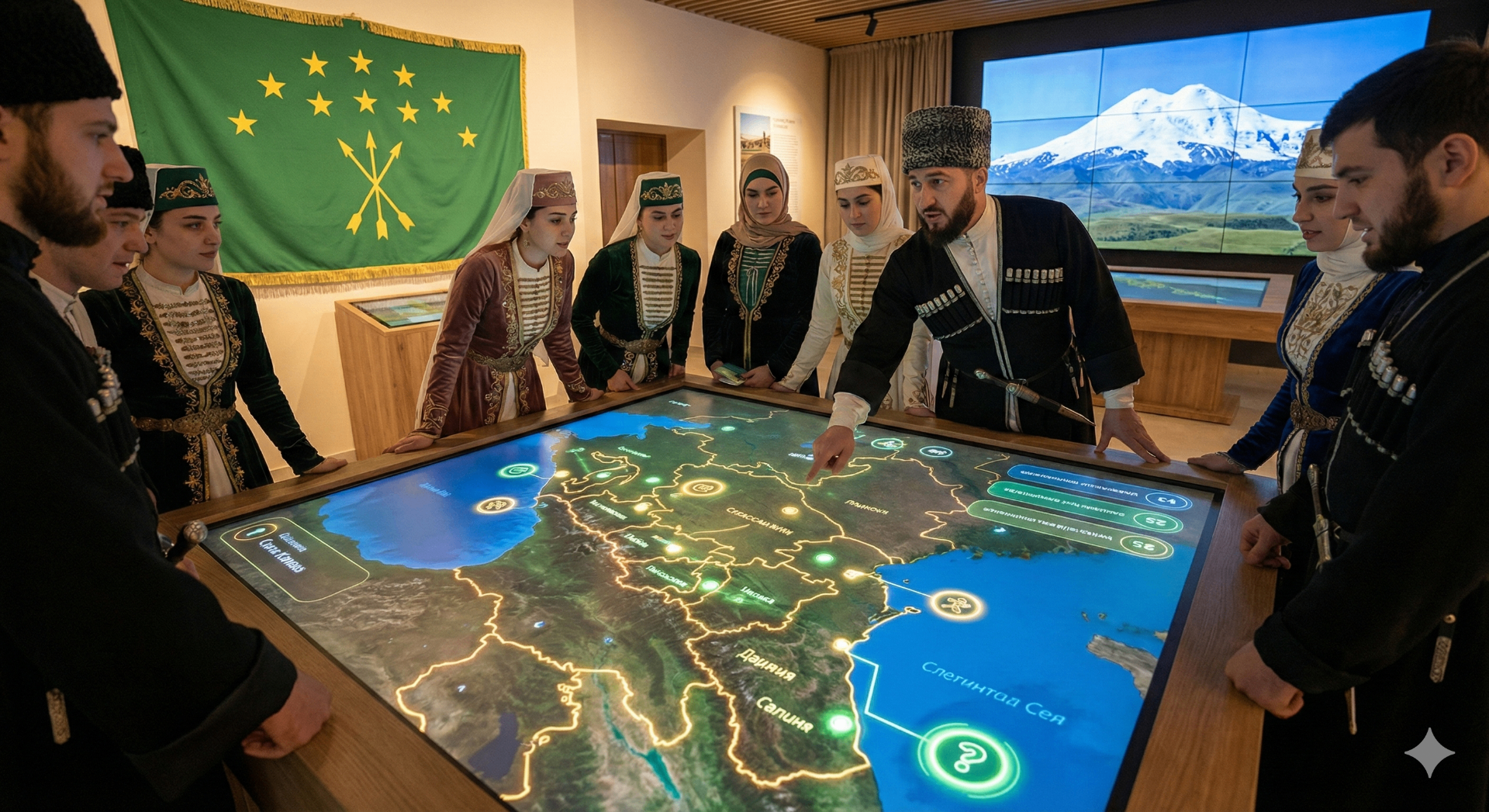
The three Circassian republics in the North Caucasus: Kabardino-Balkaria, Karachay-Cherkessia, and the Republic of Adygea
Feature-by-Feature Comparison
1. Family Tree Building
The heart of any genealogy platform is its family tree builder. Here is how each platform handles this critical feature:
Geni.com offers a powerful global tree builder, but it is not designed specifically for Circassian families. There is no tribal classification, no Adyghe naming conventions, and no support for Circassian languages. The Circassian aristocracy project is community-run and limited to historical figures.
FamilyTreeDNA does not offer a family tree builder at all — it focuses exclusively on DNA testing. While useful for genetic heritage, it cannot help you map your family relationships visually.
Legacy platforms offered basic tree creation but suffered from performance issues with large trees, lacked modern security features, and many are currently offline or rebuilding from scratch.
Circassian Heritage Platform was built from the ground up for Circassian families. Every tree supports tribal classification (Shapsug, Abzakh, Kabardian, Bzhedug, etc.), Circassian naming patterns, and relationship types specific to Adyghe culture. The interactive tree viewer handles hundreds of members smoothly, with features like spouse linking, photo galleries for each member, and document attachments. Most importantly, trees can be made public or private, giving families full control over their data.
2. Language & Localization
For a platform serving the Circassian diaspora, language support is not optional — it is essential.
Geni.com supports dozens of world languages but does not support Circassian (Adyghe) at all.
FamilyTreeDNA is English-only.
Center for Circassian Studies offers content in English and Turkish, with some Circassian academic papers.
Legacy platforms offered varying levels of multi-language support, typically 5–10 languages, but rarely included the Circassian language itself for their user interface.
Circassian Heritage Platform supports six languages including — crucially — Adyghe (Western Circassian) with over 900 translated UI strings. The platform also supports Arabic, Turkish, Hebrew, Russian, and English. Every button, menu, and notification speaks your language. The platform even includes a built-in Circassian dictionary with audio pronunciations, making it both a heritage tool and a language learning resource.
3. Community Features
Heritage is not just about data — it is about connection.
Geni.com has discussions and messaging, but they are generic and not focused on Circassian topics.
FamilyTreeDNA has a group page with basic forum functionality.
Center for Circassian Studies publishes academic content but offers no community interaction tools.
Circassian Heritage Platform provides a complete social ecosystem: tribal chat rooms where members connect by their sub-nation (Shapsug, Kabardian, Abzakh, etc.), private messaging with read receipts, a community research forum for historical discussions, video reels for cultural content sharing, and even a matchmaking system rooted in traditional Circassian customs of inter-family connection. No other platform combines genealogy with this level of community engagement.
4. Business Directory
Supporting Circassian-owned businesses strengthens the entire community.
Geni.com & FamilyTreeDNA — No business directory at all.
Legacy platforms maintained web directories with hundreds of links, but these were simple link lists with no reviews, ratings, or verification.
Circassian Heritage Platform features a verified business directory with categories, reviews, ratings, business hours, contact information, and even WhatsApp integration. Businesses can upload galleries, and users can bookmark their favorites. It is essentially a "Circassian Yellow Pages" — something no other platform offers at this quality.
5. Cultural Content & Blog
Preserving culture means creating and sharing knowledge.
Center for Circassian Studies excels here with academic publications, but content is behind an academic paywall or limited to summaries.
Legacy platforms had static articles about Circassian history, often outdated and rarely updated.
Circassian Heritage Platform maintains a living blog with in-depth articles on Circassian culture, history, the alphabet, diaspora communities, Xhabze traditions, and genealogy guides. Every article includes multi-language translations, reader engagement (likes, comments, sharing), and is optimized with SEO structured data so that Circassian content ranks higher on Google — increasing global visibility for Circassian heritage.
6. Events & Community Celebrations
Circassian life revolves around communal events — weddings, cultural festivals, and commemorations.
No other platform reviewed here offers a dedicated events system.
Circassian Heritage Platform provides a full community events calendar where users can create, share, and RSVP to events. Events support photo galleries, location tagging, comments, and sharing. Whether it is a local Adyghe night or an international commemoration of May 21st, the platform brings the community together.
7. Security & Privacy
Family data is among the most sensitive information a person can share online.
Geni.com has been criticized for making family trees public by default, with limited privacy controls for living people.
FamilyTreeDNA handles DNA data responsibly but has faced industry-wide scrutiny over law enforcement access.
Legacy platforms were built on older technology stacks with varying security standards.
Circassian Heritage Platform uses row-level security on every database table, meaning users can only access their own data unless they explicitly share it. Trees can be private or public. The platform includes user verification, content moderation, spam filtering with banned word lists, and an admin reporting system. Your family's history is protected.
The Comparison Table
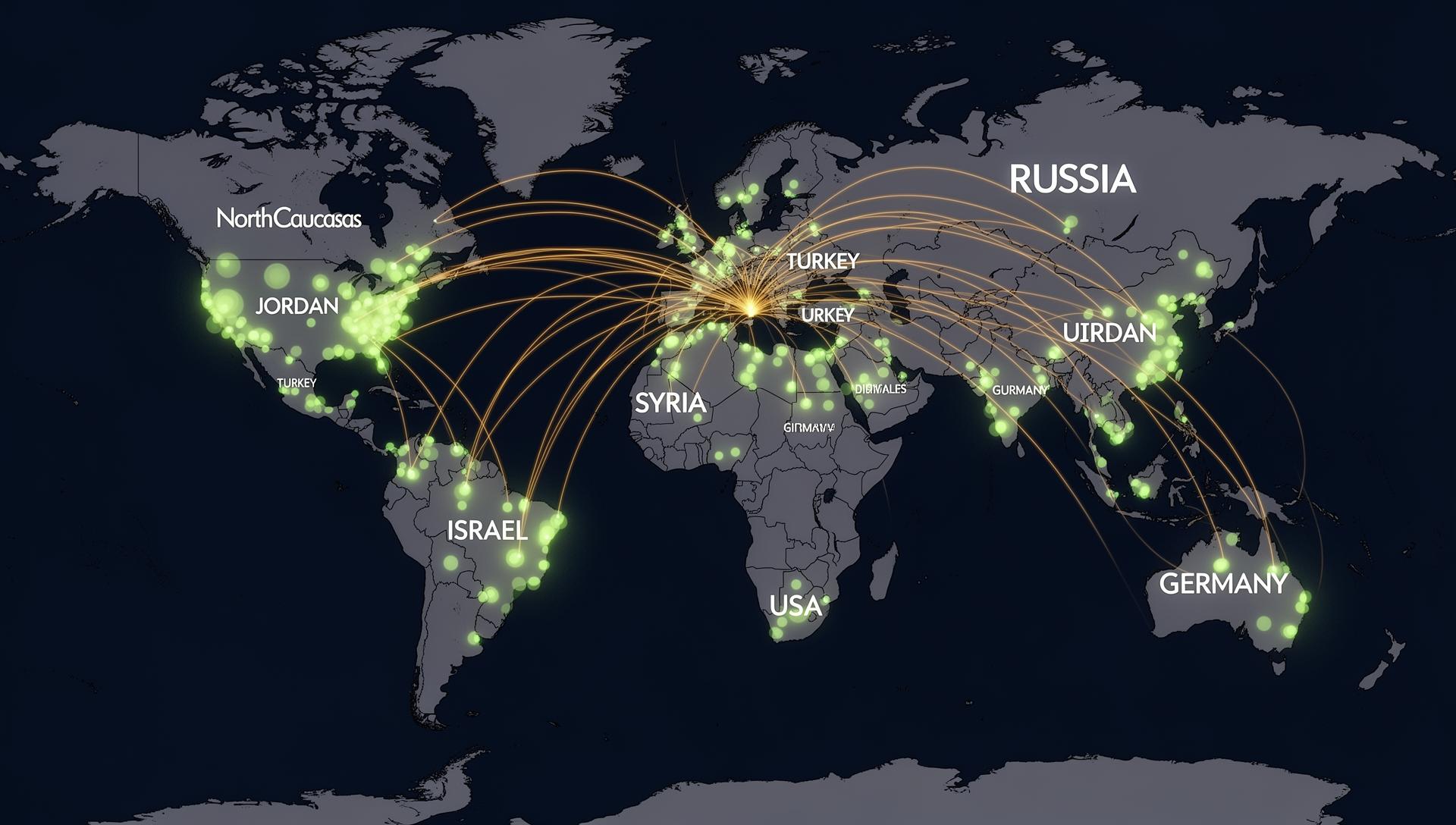
The Circassian diaspora spans over 50 countries — a digital platform must connect them all
What Makes a Great Circassian Heritage Platform?
After comparing these platforms, the ideal Circassian heritage platform must have these qualities:
Built for Circassians, by Circassians — Generic genealogy tools cannot capture the nuances of Adyghe family structures, tribal affiliations, and cultural practices.
Language-first — If a platform claims to serve Circassians but does not speak Adyghe, it is not truly serving the community.
Community, not just data — Family trees are meaningless without the stories, connections, and living relationships that surround them.
Free and accessible — Circassians are spread across dozens of countries with varying economic conditions. Heritage tools should not be locked behind paywalls.
Secure and private — Family data, especially for diaspora communities with complex political contexts, must be protected with modern security standards.
The Verdict
While platforms like Geni.com and FamilyTreeDNA serve important roles in global genealogy and DNA research, they were not designed for the specific needs of the Circassian community. Academic sites like the Center for Circassian Studies provide valuable research but lack the tools for everyday community engagement.
The Circassian Heritage Platform is the only platform that combines genealogy, community, language preservation, business support, and cultural content into a single, free, secure, and multilingual experience — purpose-built for the Adyghe people worldwide.
Your heritage deserves more than a generic tool. It deserves a home.
Explore Your Circassian Heritage
Frequently Asked Questions
What digital platforms exist for Circassians?
Key platforms include CircassianWeb (heritage tools, family trees, dictionary), various Facebook and Telegram community groups, YouTube channels for language and dance content, and regional association websites.
Why do Circassians need dedicated digital platforms?
With the community scattered across 40+ countries, digital platforms are the only way to maintain cross-border connections, preserve language, share cultural knowledge, and coordinate community efforts at scale.
How can I contribute to Circassian digital projects?
You can contribute through dictionary entries, family tree data, blog articles, and by sharing platform resources within your community.
Sources & References
Balanovsky, O. P., Dibirova, Z. G., Agdzhoyan, A. T., Yunusbayev, Y. B., Khusainova, R. I., Iskalderov, M. G., ... & Balanovska, E. V. (2011). Genetic structure of the North Caucasian populations. American Journal of Physical Anthropology, 144(4), 595-605. doi: 10.1002/ajpa.21475
Colarusso, J. (2005). A grammar of the Kabardian language. Brill.
Henze, P. B. (1992). Circum-Soviet Chess: A study of the Soviet Union’s European chess masters. Springer Science & Business Media.
Jaimoukha, A. (2001). The Circassians: A handbook. Psychology Press.
Kaya, A. (2005). The Circassian diaspora in Jordan: A case study of cultural persistence and adaptation. The International Journal of Middle East Studies, 37(4), 527-545.
Natho, G. K. (2009). The Circassian: A novel of the Caucasus. Xlibris Corporation.
Paris, J. (1974). Lexique du dialecte circassien (Adyghe). Association pour la diffusion de la pensée française.
Richmond, S. R. (2013). The Circassian and the Ubykh: A brief history. University of Washington Press.
Shami, S. (1998). The Circassians of Jordan: A case study of an ethnic minority adapting to change. Dar Al-Amal.