Шъхьэуэ Нэмыгъэ и Черкесская История: Товарообмен, Война и 1
For the Circassian people, the Black Sea was never just a body of water. It was a highway, a trading partner, a military frontier, and ultimately, the route of their greatest tragedy. The entire western edge of Circassia — hundreds of kilometers of coastline — bordered this inland sea, and that geographic reality shaped everything from economics to exile.
Understanding the Black Sea's role in Circassian history means understanding why Circassians became traders and warriors, why empires fought over their territory, and why the deportation of 1864 happened the way it did — across water, on ships, toward Ottoman shores.
Ancient Trade: Greeks, Romans, and the Circassian Coast
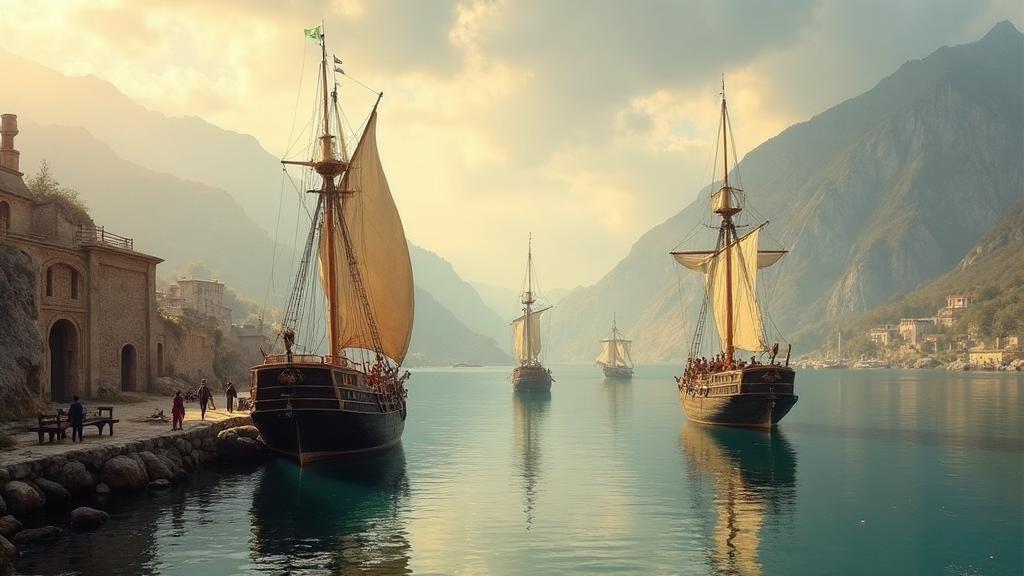
The Black Sea has been a crossroads of civilizations for at least 3,000 years. Greek colonists established trading posts along the Circassian coast as early as the 6th century BCE. The ancient Greeks called the sea Pontus Euxinus ("Hospitable Sea") — though they originally called it Pontus Axeinos ("Inhospitable Sea"), perhaps after encountering the fierce peoples of its northern and eastern shores.
Greek colonies at Gorgippia (modern Anapa), Hermonassa, and other coastal sites became hubs for exchanging grain, honey, wax, and hides from the Circassian interior for wine, olive oil, pottery, and metalwork from the Mediterranean world. This trade relationship lasted centuries and left its mark on Circassian material culture.
Archaeological evidence suggests that Circassian ancestors were active participants in this trade, not merely passive suppliers. Burial sites from this era contain imported Greek goods alongside locally produced items of remarkable craftsmanship, indicating a sophisticated society that engaged selectively with outside commerce.
The Byzantine and Genoese Periods
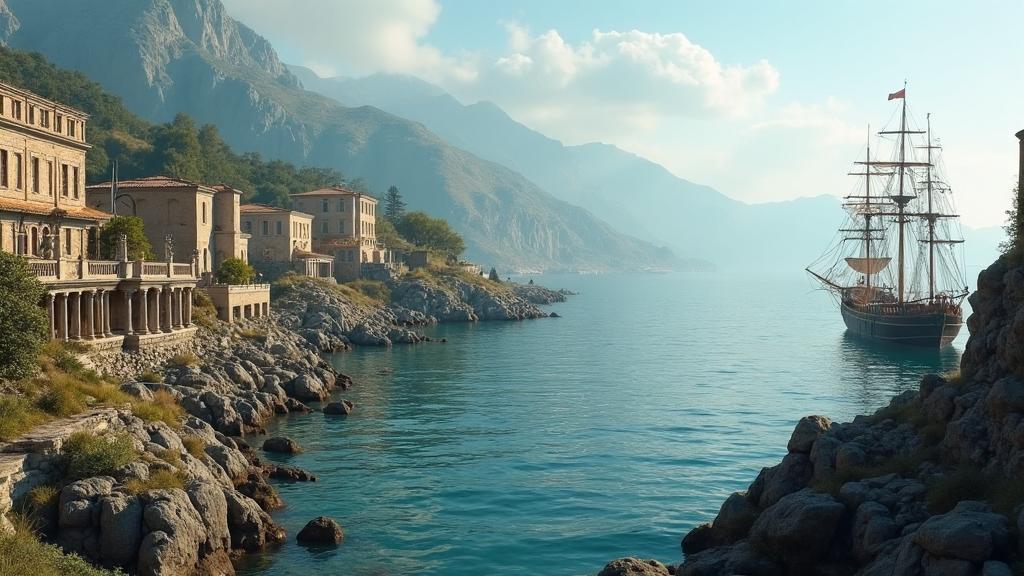
After the fall of Rome, the Byzantine Empire maintained trading relationships with the Circassian coast. Christianity reached many Circassian communities during this period — archaeological remains of medieval churches and Christian burial practices have been found throughout the northwest Caucasus.
In the 13th and 14th centuries, Genoese traders established a network of commercial outposts along the Black Sea, including several on the Circassian coast. These Italian merchants were particularly interested in the slave trade, which was one of the most controversial aspects of Black Sea commerce. Circassian slaves — prized for their physical appearance and martial abilities — were sold to the Mamluk Sultanate in Egypt, where they rose to form the ruling dynasty.
This connection between the Black Sea slave trade and the Mamluk dynasty is one of history's stranger ironies: a trade that began as exploitation ultimately produced a Circassian ruling class in Egypt that lasted from 1382 to 1517.
The Ottoman-Russian Rivalry
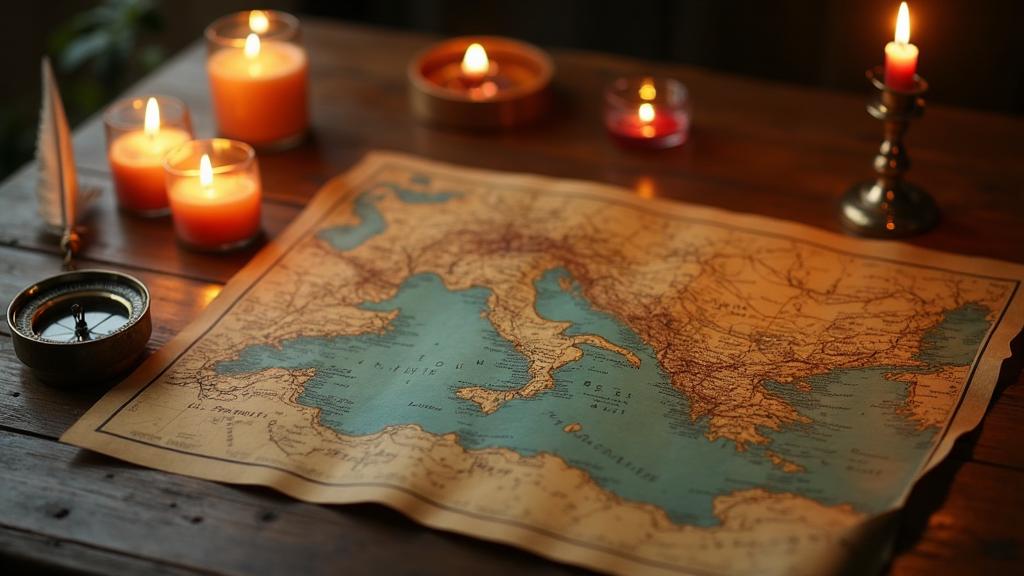
By the 16th century, the Ottoman Empire and Russia were engaged in a long-term contest for control of the Black Sea. This rivalry would define Circassian political life for the next three centuries.
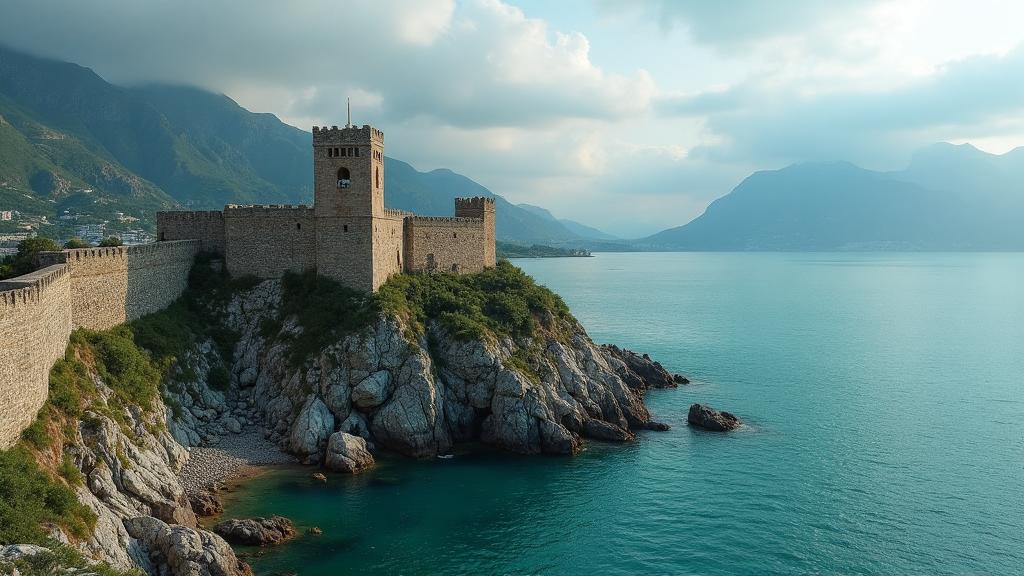
The Ottomans maintained fortresses along parts of the Circassian coast and cultivated alliances with Circassian tribal leaders. Many Circassians adopted Islam during this period, though the relationship was complex — Circassians were allies of convenience more than subjects. Ottoman influence was real but rarely absolute, and Circassian tribes maintained their internal autonomy.
Russia's drive southward intensified under Peter the Great and especially Catherine the Great. The Treaty of Küçük Kaynarca (1774) is often cited as a turning point — it gave Russia a stronger position on the Black Sea and set the stage for the long Russo-Circassian War.
For Circassians, the Black Sea became a lifeline to potential allies. Tribal leaders sent delegations to Istanbul, London, and Paris, seeking diplomatic and military support against Russian expansion. British and Ottoman ships occasionally supplied arms to Circassian fighters. The famous Vixen affair of 1836 — when a British schooner was seized by Russia for allegedly smuggling arms to Circassians — nearly triggered a war between Britain and Russia.
The Sea of Exile: 1864
The Black Sea's darkest chapter in Circassian history came with the mass deportation of 1863-1864. As Russian forces completed their conquest of the northwest Caucasus, hundreds of thousands of Circassians were driven to the coast and loaded onto ships bound for the Ottoman Empire.
The conditions were catastrophic. Ships designed for cargo were packed with families — men, women, children, and elderly. Food and water were inadequate. Disease spread rapidly in the confined spaces. Storms battered the overloaded vessels. Contemporary accounts describe bodies being thrown overboard daily.
Estimates of those who died during the sea crossing alone range from tens of thousands to over 100,000. Ottoman port cities like Trabzon, Samsun, and Sinop were overwhelmed by the flood of refugees. Temporary camps set up on the docks and in surrounding fields became scenes of mass death from cholera, typhus, and starvation.
The irony is haunting: the same sea that had connected Circassians to the wider world for millennia became the instrument of their separation from their homeland. Today, when Circassians gather at the coast on May 21 — the anniversary of the final defeat — they look out across water that their ancestors crossed in the opposite direction, never to return.
The Black Sea in Modern Circassian Memory
For the global Circassian diaspora, the Black Sea remains a powerful symbol. It represents both what was lost (the homeland on its eastern shore) and what connected (the maritime routes that tied Circassia to the broader world).
Modern developments have added new layers to this relationship. The 2014 Sochi Winter Olympics — held on what was once the heart of Circassian coastal territory — brought international attention to the unresolved legacy of 1864. Circassian activists used the global spotlight to advocate for recognition of the deportation as genocide.
Tourism along the Russian Black Sea coast has transformed the landscape. The areas around Sochi, Anapa, and Gelendzhik — all historically Circassian — are now resort destinations visited by millions. For diaspora Circassians who visit, the experience is bittersweet: the natural beauty remains, but the human landscape has been completely reshaped.
 Шъачэ (Sochi), Анапэ (Anapa), икIи Хъупщ (Gelendzhik)
— мы къалэхэр пстэури адыгэ хэкужъым щыщхэщ — иджыпсту ахэр зыгъэпсэхупIэ цIэрыIуэхэу мелуан бжыгъэхэр здэкIуэ щIыпIэхэщ. Хэхэс адыгэхэм папщIэ мы щIыпIэхэм я гупшысэр гущыкIыгъуэщ: щIыуэпсым и дахагъэр къэнащ, ауэ цIыхухэм я дунейр зэрыщыту зэблэхъуа хъуащ.
Шъачэ (Sochi), Анапэ (Anapa), икIи Хъупщ (Gelendzhik)
— мы къалэхэр пстэури адыгэ хэкужъым щыщхэщ — иджыпсту ахэр зыгъэпсэхупIэ цIэрыIуэхэу мелуан бжыгъэхэр здэкIуэ щIыпIэхэщ. Хэхэс адыгэхэм папщIэ мы щIыпIэхэм я гупшысэр гущыкIыгъуэщ: щIыуэпсым и дахагъэр къэнащ, ауэ цIыхухэм я дунейр зэрыщыту зэблэхъуа хъуащ.
Фи Адыгэ Лъапсэр Къэвгъэгъуэт
Хы ШIуцIэр — ар адыгэ тхыдэм и блэкIами и нобэми зэпхыпIэ хуэхъу лъэпсэщ — пасэрей алыдж щэхуэ-уэшхэм къыщыщIэдзауэ, Уэсмэн Пащтыхьыгъуэм и зэпхыныгъэхэмкIэ кIуэуэ, гъэпщылIыныгъэ (изгнание) трагедием нэс. Мы хы тхыдэм и кууагъыр зэхэщIыкIыныгъэм къывгурыIуэгъуэ къыхуищIынущ адыгэ хэхэсхэр (diaspora) дапхуэдэу зэрызэбгырыкIар икIи сыт щхьэкIэ адыгэ зэгухьэныгъэхэр нобэ здэщыIэ щIыпIэхэм зэрыщыIэр.
Фи унагъуэм и гъуэгуанэр къэвгъэгъуэт унагъуэ жыг (family tree) зэхэвгъэувэу. Фи лъынтхуэ лъапсэр (genetic heritage) DNA тесткIэ къэвгъэщIэ. Фи адыгэ лъэпкъым и Къэвказ хэкужъым теухуауэ нэхъыбэ зэвгъащIэ, икIи мы тхыдэхэр зыхъумэ адыгэ зэгухьэныгъэхэм (Circassian communities) фыпыщIэ.