Circassians in Syria: History, Communities and Identity
From the volcanic soil of the Golan Heights to the old neighborhoods of Damascus, Circassians in Syria have navigated colonial borders, civil war, and repeated displacement — all while holding onto a distinct identity forged over 150 years ago.
Introduction
Circassians in Syria are not just a diaspora community — they are a story of survival, identity, and continuity.
For over a century, Circassian families in Syria preserved their traditions, language, and social structure, even as history around them changed dramatically.
From quiet villages in the Golan Heights to neighborhoods in Damascus, their story is one of resilience and belonging.
🇸🇾 A Community Under Pressure
Circassians settled in Syria during the 1860s–1880s exile
The Golan Heights village of Quneitra was a major center
The civil war displaced many Circassian families for a second time
Community organizations continue cultural preservation despite challenges
A Story That Began With Exile
The presence of Circassians in Syria began in the late 19th century, after they were forced to leave their homeland in the Caucasus.
Many families arrived with almost nothing — traveling across the Black Sea, then moving through the Ottoman lands until they reached areas that are today part of Syria.
One of the most remembered stories passed through generations is how early Circassian settlers were placed in remote and often difficult lands, where they had to rebuild their lives from zero.
They built villages, created communities, and established a structured society based on their traditions.
The Golan Villages: A Lost Homeland Within a Homeland
Before later conflicts in the region, Circassians in Syria were especially known for their villages in the Golan Heights (Quneitra region).
Villages such as Bariqa and Beer Ajam became centers of Circassian life.
Life in these villages was organized, disciplined, and deeply rooted in tradition.
Elders tell stories of:
Strong community ties
Shared responsibilities
Strict respect for customs and etiquette
These villages were not just places to live — they were places where identity was preserved in its purest form.
Many families still carry memories of these villages, even after displacement.
Moving Toward Cities: Damascus as a New Center
Over time, many Circassians moved from villages to urban areas, especially Damascus.
In Damascus, the community adapted to city life while keeping its identity.
Certain neighborhoods became known for Circassian families, where traditions were still practiced inside homes, even as the outside world changed.
Older generations often describe how:
The language was spoken at home
Cultural rules were strictly followed
Weddings and gatherings maintained traditional structure
Today, Damascus remains the main center of Circassian life in Syria.
Culture That Lives in Daily Life
Circassian culture in Syria was never limited to festivals — it was part of everyday life.
Weddings
Circassian weddings in Syria are known for their structure and discipline. There is no chaos — everything follows tradition:
Order of dance
Respect between participants
Clear roles within the event
Dance and Music
Dance groups were common, especially among youth, performing traditional dances at events and celebrations.
Clothing
Traditional clothing, although not worn daily, remained an important symbol during celebrations.
Stories From Families
Many Circassian families in Syria carry similar stories:
Grandparents who remembered the homeland in the Caucasus
Parents who grew up in tightly connected communities
Children who are now rediscovering their identity
One common story shared across families is how elders would emphasize:
"Do not forget who you are, even if the world changes around you."
This sentence alone reflects the mindset that helped preserve identity across generations.
Community Life and Associations
Before recent challenges in Syria, Circassian community life was highly active.
There were:
Cultural clubs
Dance groups
Community gatherings
Organized events
Associations played a central role in:
Teaching traditions
Bringing people together
Preserving cultural knowledge
Language: Between Preservation and Loss
One of the strongest aspects of Circassian life in Syria was the preservation of the Adyghe language.
In many families:
Elders spoke fluently
Children understood or partially spoke
However, like many diaspora communities, language use has declined over time.
Today, there is a renewed awareness that language is a key part of identity.
Difficult Years and Displacement
In recent years, Circassians in Syria — like all Syrians — have faced significant challenges.
Many families:
Left their homes
Moved to other countries
Became part of a new wave of diaspora
This created a new reality: Circassians from Syria are now spread across multiple countries, carrying their identity with them.
Identity Today: Between Past and Future
Today, Circassians from Syria are:
Rebuilding communities abroad
Reconnecting with relatives
Trying to preserve their heritage
There is a growing awareness that identity must be actively protected.
One of the strongest tools today is: documenting family history.
Reconnecting Through Family Trees
For many Circassians from Syria, building a family tree is more than a tool — it is a way to reconnect what was lost.
It helps to:
Trace family origins
Connect relatives across countries
Preserve stories before they disappear
This is especially important for younger generations.
Famous Circassians from Syria
Despite the challenges of war and displacement, Circassians from Syria have made remarkable contributions across multiple fields — both within Syria and in the countries where they resettled.
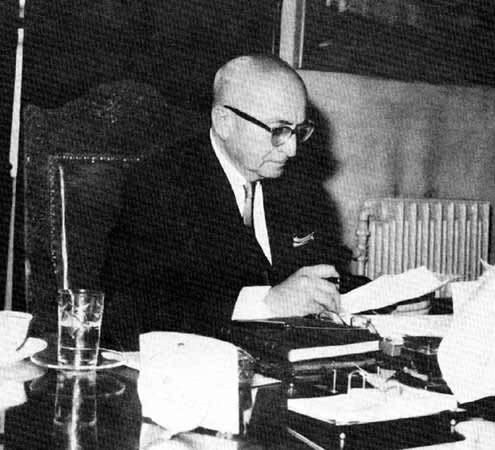
Khalid al-Azm Prime Minister of Syria
Political & Military Leaders
Muhammed Asad Pasha al-Jabri — Circassian-origin politician who served as a prominent Syrian statesman during the French Mandate era and helped shape Syria's path to independence
General Amin Abu Assaf — High-ranking military officer of Circassian descent who served in the Syrian armed forces
Khalid al-Azm (خالد العظم) — Prime Minister of Syria (multiple terms in the 1940s–50s), of partial Circassian lineage, one of Syria's most influential post-independence leaders
Nuri al-Shaghouri — Military commander from the Golan Heights Circassian community who served with distinction
Circassian officers in the Golan frontier — Circassian soldiers from Quneitra villages played a disproportionate role in defending the Golan Heights before 1967
Arts, Culture & Entertainment
Adham Sharkass — Syrian actor of Circassian descent who appeared in popular Arabic television dramas
Nart Dance Ensemble of Damascus — Founded in the 1950s, this troupe preserved Circassian dance traditions and performed across the Arab world before the Syrian conflict
Fatima Quneitra — Poet and author who wrote extensively about the Circassian experience in the Golan Heights, documenting village life before 1967
Muhannad Sharkasi — Contemporary visual artist whose work reflects on the dual displacement of Syrian Circassians — first from the Caucasus, then from the Golan
Damascus Circassian Cultural Center artists — Generations of musicians, dancers, and craftspeople who kept Adyghe arts alive in the Syrian capital
Sports
Zaur Sadiq (زاور صادق) — Professional footballer of Circassian origin who played for Syrian Premier League clubs
Ahmad Sharkass — Champion wrestler who represented Syria in regional competitions, continuing the Circassian tradition of martial sports
Circassian sports clubs in Damascus and Aleppo — These clubs fielded competitive teams in football and basketball, serving as community gathering points for decades
Majed Abu Assaf — Equestrian champion from the Golan Circassian community, known for his expertise in traditional Circassian horsemanship
Business, Academia & Public Service
Dr. Nart Bzhedug — Scholar of Circassian studies who documented the linguistic and cultural heritage of Golan Heights Circassians before the community's displacement
The Shoshan (شوشان) family — Prominent Damascus business family of Circassian origin, known for their contributions to Syria's commercial sector
Ismail Habip — Renowned architect of Circassian descent who designed notable buildings in Damascus
Dr. Zubeida Haganog — Medical pioneer, one of the first Circassian women physicians in Syria, who served in public health in the Quneitra region
The Abu Assaf family — Established agricultural and business enterprises in the Golan Heights and later became successful entrepreneurs after resettlement
Circassian merchants of Aleppo's souks — Circassian traders were well-known in Aleppo's historic markets for textiles, leatherwork, and metalcraft
Syrian Circassians in the Global Diaspora
After the Syrian civil war began in 2011, many Syrian Circassians resettled in Turkey, Jordan, Europe, and the Caucasus republics. Some notable achievements of this new diaspora wave include:
Syrian Circassian professionals establishing businesses and cultural organizations in Istanbul and Ankara
A significant number gaining repatriation rights to Adygea, Kabardino-Balkaria, and Karachay-Cherkessia
Syrian Circassian youth becoming leaders in diaspora advocacy organizations worldwide
Documentary filmmakers recording the stories of double displacement experienced by Golan Heights Circassians
Circassian Associations and Organizations in Syria
Circassian community life in Syria was among the most organized in the entire diaspora. Associations served as the backbone of cultural preservation, social cohesion, and collective identity for over a century.
The Circassian Charity Association of Damascus (الجمعية الخيرية الشركسية بدمشق)
Founded in 1948, this was the most prominent and influential Circassian organization in Syria. Located in the Muhajirin neighborhood of Damascus, it served as the central hub for the entire Circassian community in the country.
Key activities included:
Operating Adyghe language classes for children and youth every weekend
Hosting the renowned Nart Dance Ensemble, which trained generations of young Circassians in traditional dance
Organizing annual May 21st commemoration events for the Circassian Genocide
Managing a community library with books on Circassian history, culture, and language
Providing social assistance to Circassian families in need — including education scholarships
Hosting weddings, cultural evenings, and community celebrations following traditional Adyghe Xabze protocols
Publishing a community newsletter documenting Circassian activities across Syria
At its peak, the association had over 2,000 registered members and was a gathering point for Circassians from across Damascus, Aleppo, Homs, and the Golan region.
Circassian Cultural Club of Aleppo
Aleppo had a smaller but vibrant Circassian community, and their cultural club played a significant role in preserving identity in northern Syria.
Activities:
Youth dance training and performances at city festivals
Language preservation programs conducted by elder native speakers
Inter-community sports tournaments (football, basketball, wrestling)
Joint cultural events with Armenian and Kurdish community organizations in Aleppo
Quneitra Circassian Youth Association
Before the 1967 war displaced most Golan Heights residents, the Circassian villages of Quneitra had their own active youth association. Based primarily in Bariqa, it organized:
Traditional horseback riding events and equestrian competitions
Agricultural cooperatives that supported Circassian farming families
Evening gatherings where elders shared stories of the Caucasus homeland
Community defense training, reflecting the traditional Circassian warrior ethos
The Syrian-Circassian Women's Committee
Circassian women in Syria played a vital role in cultural transmission. The Women's Committee, active from the 1960s through 2011, focused on:
Teaching traditional Circassian cuisine — including haliva (حاليفة), pasta (щIэлэм), and shashlik preparation techniques
Organizing embroidery and traditional costume workshops
Running charity drives during Ramadan and Eid for underprivileged families
Mentoring young Circassian women in maintaining family traditions while pursuing education
Hosting annual mothers' appreciation events honoring elderly Circassian women
Post-2011 Diaspora Associations
After the Syrian civil war forced many Circassians to leave, new organizations emerged in host countries:
Syrian Circassians in Turkey Association (Istanbul) — Helped hundreds of families resettle, find housing, and navigate Turkish bureaucracy
Syrian Circassian Repatriation Committee — Advocated for the right of Syrian Circassians to return to the Caucasus homeland, successfully helping over 500 individuals gain residency in Adygea and Kabardino-Balkaria
Syrian Circassian Youth Network (Europe) — Online platform connecting young Syrian Circassians scattered across Germany, the Netherlands, and Sweden
Circassian Relief Fund for Syria — International fundraising initiative that provided emergency aid to Circassian families trapped in conflict zones
Circassian Villages and Settlements Across Syria
The Circassian presence in Syria was not limited to Damascus. At their peak, Circassian communities existed in multiple regions:
Quneitra Province (Golan Heights)
Bariqa (بريقة) — The largest and most well-known Circassian village in Syria, located in the Golan Heights. It was a thriving agricultural community with strong traditional governance.
Beer Ajam (بئر عجم) — A neighboring village with close family ties to Bariqa. Known for its orchards and farmland.
Mansura (المنصورة) — A smaller settlement where Circassian families maintained livestock and crops.
Mudairej — Located near Quneitra city, this village had a mixed population with a notable Circassian presence.
These villages were almost entirely depopulated during and after the 1967 Six-Day War, when residents fled to Damascus and other cities. The displacement of Golan Circassians remains one of the most painful chapters in the community's history.
Damascus and Suburbs
Muhajirin (المهاجرين) — This Damascus neighborhood, whose name literally means "the migrants," became the primary settlement area for Circassians. The Circassian Charity Association was headquartered here.
Rukn al-Din — Another Damascus district where many Circassian families established homes.
Dummar and Qudsaya — Newer suburbs where younger Circassian families moved in the 1990s and 2000s.
Aleppo
Aleppo hosted a smaller Circassian community, primarily engaged in trade and craftsmanship. Circassian families in Aleppo were known for their integration into the city's famous souk culture while maintaining their distinct identity at home.
Homs
A handful of Circassian families settled in Homs, maintaining connections with the larger communities in Damascus. They were primarily involved in agriculture and small business.
Circassian Cuisine in Syria: A Culinary Heritage
Circassian cuisine in Syria became legendary — not just within the community but among broader Syrian society. Many dishes became part of Syria's rich culinary landscape.
Signature Dishes
Haliva (حاليفة / ХьэлIыуэ) — A dense, savory pastry filled with cheese or potato, considered the quintessential Circassian dish. Every family had their own recipe variation.
Circassian Chicken (دجاج شركسي) — Poached chicken served with a rich walnut sauce. This dish became so popular that it spread throughout Syrian cuisine and is now served in restaurants across the Arab world.
Mamliga / Pasta (щIэлэм) — A corn-based dish similar to polenta, served with sauces made from garlic, red pepper, and butter.
Shashlik (شيش كباب شركسي) — Grilled meat skewers prepared in the traditional Caucasian style, different from the Arabic-style kebab.
Dried meat (Гъэгъэлъэ) — Preserved beef or lamb, a tradition brought from the Caucasus where long winters required food preservation techniques.
Food as Cultural Identity
For Circassian women in Syria, cooking was more than nourishment — it was an act of cultural preservation. Recipes were passed down orally from mothers to daughters, and the kitchen was considered a space where identity was reinforced daily.
Community gatherings always featured specific dishes served in a particular order, following Adyghe Xabze (traditional etiquette) regarding hospitality.
Traditional Circassian Dance and Music in Syria
Syria's Circassian community was renowned across the Arab world for its vibrant dance and music traditions. Dance was not merely entertainment — it was a fundamental expression of identity, discipline, and cultural values.
The Nart Dance Ensemble
Founded in Damascus in the 1950s, the Nart Dance Ensemble became the most famous Circassian cultural export from Syria. The troupe:
Performed at international festivals across the Arab world, Turkey, and Europe
Trained hundreds of young Circassians in traditional dance forms including Islamey, Wuj, Qafa, and Zafak
Preserved authentic choreography passed down from Caucasus-born elders
Served as a point of pride and community cohesion for decades
Musical Traditions
Pshina (accordion/harmonium) — The traditional Circassian instrument was played at every gathering and wedding
Shikepshin (шыкIэпшынэ) — A traditional two-stringed fiddle occasionally played by elder musicians
Vocal traditions — Songs celebrating bravery, love, nature, and the lost homeland were sung at gatherings
Wedding songs — Specific songs accompanied each stage of Circassian wedding ceremonies
Education and Intellectual Life
Circassians in Syria placed enormous value on education. Despite being a small minority, they produced a disproportionate number of professionals, academics, and intellectuals.
Educational Achievements
Circassian families in Damascus were known for sending their children to the best schools and universities
Many Circassian youth earned scholarships to study in Europe, the Soviet Union, and later in the Gulf countries
The community produced doctors, engineers, lawyers, military officers, and university professors at rates well above the national average
Several Circassian scholars contributed to Arabic literature and Syrian academic life while maintaining their ethnic identity
Language Education Efforts
The Circassian Charity Association ran weekend Adyghe language schools starting in the 1960s
Textbooks were imported from the Caucasus (Adygea and Kabardino-Balkaria) and adapted for Syrian Circassian students
Elder community members volunteered as language teachers, often working without pay out of commitment to cultural preservation
Despite these efforts, Arabic dominance in daily life gradually eroded Adyghe fluency among younger generations
The Circassian Guard Tradition in Syria
One of the most distinctive aspects of Circassian history in Syria and the broader Levant is the tradition of Circassian guards. From the late Ottoman period through the early decades of the Syrian Republic, Circassians were valued for their military discipline and loyalty.
Circassian soldiers served as personal guards for Ottoman governors and later for Syrian political leaders
The community's reputation for martial prowess and honor made them trusted protectors
Many Circassian men from Quneitra villages served in border defense units along Syria's frontiers
This military tradition contributed to a strong sense of community discipline and organization that persisted in civilian life
Circassian Traditions and Adyghe Xabze in Syria
The traditional Circassian code of conduct — Adyghe Xabze (Адыгэ Хабзэ) — was deeply embedded in Syrian Circassian life. It governed everything from family relationships to public behavior.
Key Principles Practiced in Syria
Respect for elders (нэхъыжьхэм пщIэ яхуэщIын) — Young people would stand when an elder entered the room and never sit in their presence without permission
Hospitality (хьэщIэ егъэлъэгъуэн) — Guests were treated with the highest honor. A Circassian home in Damascus was always ready to receive visitors with food and warmth
Avoidance customs (шъхьэукъоныгъэ) — Specific behavioral codes between in-laws, including the tradition where a bride would not speak in the presence of her father-in-law for a period after marriage
Community dispute resolution — Elders served as mediators in family and community conflicts, following traditional arbitration methods
Gender roles with mutual respect — While traditional gender roles existed, Circassian women in Syria were respected as the keepers of culture and the primary educators of children
The 1967 Displacement: A Second Exile
The 1967 Six-Day War was a catastrophic turning point for Circassians in Syria. The war resulted in Israel's occupation of the Golan Heights, and virtually the entire Circassian population of the region was displaced.
The Impact
Villages like Bariqa and Beer Ajam were emptied almost overnight
Thousands of Circassians became internal refugees, flooding into Damascus
Families lost homes, farmland, livestock, and generations of accumulated wealth
The tight-knit village communities that had preserved Circassian identity in its purest form were shattered
Many families carry the keys to their Golan homes to this day, a symbol of their hope to return
The Aftermath
In Damascus, displaced Golan Circassians initially lived in temporary housing and relied on community support networks. Over time, they rebuilt their lives in the capital, but the loss of their villages remained a defining trauma.
The 1967 displacement is often described by Syrian Circassians as their "second exile" — the first being the original expulsion from the Caucasus in the 19th century.
The Syrian Civil War and Its Impact on Circassians (2011–Present)
The Syrian civil war that began in 2011 brought yet another wave of devastation to the Circassian community.
Community Fragmentation
Damascus neighborhoods where Circassians lived came under fire and siege
The Circassian Charity Association building was damaged during fighting
Community gatherings and cultural activities ceased as safety became the primary concern
Families were separated as members fled to different countries
Waves of Emigration
Turkey — The largest number of Syrian Circassians resettled in Turkey, particularly in Istanbul, Ankara, and Düzce (which has a historic Circassian population)
Jordan — Many joined the existing Circassian community in Amman, facilitated by longstanding family connections
The Caucasus — Russia's repatriation program allowed hundreds of Syrian Circassians to return to their ancestral homeland in Adygea, Kabardino-Balkaria, and Karachay-Cherkessia
Europe — Significant numbers settled in Germany, the Netherlands, Austria, and Sweden
Gulf countries — Some professionals relocated to the UAE, Saudi Arabia, and Qatar
The Repatriation Question
The Syrian crisis reignited the long-standing debate about Circassian repatriation to the Caucasus. While Russia allowed some Syrian Circassians to resettle, the process was complicated by bureaucratic challenges, language barriers, and the difficulty of integrating into a society that had evolved differently from the diaspora.
Despite challenges, the successful resettlement of Syrian Circassians in the Caucasus has been hailed as one of the few positive outcomes of the crisis — a partial healing of the original 19th-century exile.
Women of Distinction: Circassian Women in Syria
Circassian women in Syria played crucial roles in preserving culture, advancing education, and serving their communities — often without public recognition.
Naima Sharkass — Pioneer educator who established one of the first Circassian language programs for children in Damascus during the 1960s
Dr. Zubeida Haganog — One of the first Circassian women physicians in Syria, who dedicated her career to public health in rural Quneitra
Samira Bzhedug — Community organizer who led the Syrian-Circassian Women's Committee for over two decades, preserving culinary and textile traditions
Fatima Quneitra — Poet and memoirist who documented the daily life of Circassian villagers in the Golan Heights before 1967, providing invaluable firsthand accounts
Nadia Abu Assaf — Journalist and writer who covered the Syrian Circassian community's struggles and achievements in Arabic-language media
Rima Shogenova — Young activist who, after fleeing to Turkey in 2013, founded a support network for displaced Syrian Circassian women and children
Circassian Identity and Interfaith Relations
Circassians in Syria were predominantly Sunni Muslim, but their approach to faith was deeply intertwined with their ethnic identity and Adyghe Xabze traditions.
Religious practices were observed within the framework of Circassian cultural values
Circassians maintained friendly relations with Syria's diverse religious communities — including Christians, Druze, and Alawites
In the Golan Heights, Circassian villages existed peacefully alongside Druze communities
The community was known for its moderate religious approach, emphasizing ethics and community service over strict orthodoxy
Circassian mosques in Damascus often served dual purposes as community gathering spaces and prayer halls
Preserving Memory: Documentation and Oral History
In recent years, there has been a growing movement to document the Syrian Circassian experience before the oldest generation passes away.
Oral history projects — Volunteers have recorded interviews with elderly Syrian Circassians who remember life in the Golan villages
Photographic archives — Families have digitized old photographs showing village life, weddings, and community events from the 1940s–1960s
Documentary films — Several short documentaries have captured the stories of displacement and resilience
Academic research — Scholars from the Caucasus and the diaspora have published studies on the Syrian Circassian experience
Social media archives — Facebook groups and WhatsApp communities have become digital repositories for shared memories, old photos, and family stories
Conclusion
The story of Circassians in Syria is a story of resilience.
From exile to settlement, from villages to cities, and through difficult modern challenges, the community has preserved its identity with strength.
Today, the focus is not only on remembering the past — but on rebuilding connections for the future.
Start building your family tree and reconnect with your roots today.
Frequently Asked Questions
Where did Circassians settle in Syria?
Major settlements included the Golan Heights (Quneitra region), Damascus, Homs, and the Hauran plain. The 1967 war displaced the Golan communities, and the 2011 civil war scattered many remaining communities.
How has the Syrian conflict affected Circassians?
Many Syrian Circassians have been displaced for a second time — first from the Caucasus in 1864, now from Syria. Some have resettled in Jordan, Turkey, Europe, and a small number have repatriated to the Russian homeland.
How many Circassians remain in Syria?
Before the civil war, an estimated 100,000 Circassians lived in Syria. The current number is difficult to determine due to ongoing displacement, but the community has been significantly reduced.
Voices from Syrian Circassians
"We left Quneitra in 1967 with nothing. My father carried one thing — a photo of his grandfather in traditional Circassian dress. That photo is now in a frame in New Jersey."
— Rami, 58, originally from Quneitra
"In Damascus, people knew us as the 'honorable ones.' That reputation wasn't given — it was built over 150 years of living by Xabze."
— Fatima, 45, Damascus
"The war scattered us again. First from the Caucasus, now from Syria. But Circassians know how to rebuild. It's in our blood."
— Adel, 33, now in Amman
Sources & References
Jaimoukha, Amjad. The Circassians: A Handbook. Psychology Press, 2001.
Richmond, Walter. The Circassian: Stories from the Caucasus and the Middle East. Darf Publishers, 2013.
Natho, Gedimer. Circassian Nationality: A New Approach to Circassian Identity. Adyghe University Press, 2009.
Balanovsky, Oleg P., et al. "Mitochondrial DNA Portrait of Circassians." Molekulyarnaya Biologiya, vol. 45, no. 2, 2011, pp. 208-220. (Link to abstract or article if available, e.g., via PubMed or a Russian academic portal).
Kaya, Mehmet. The Former Soviet Union and the Caucasus: Politics, Conflict and Statehood. Palgrave Macmillan, 2005.
Shami, Seteney. "Circassian Nomads in Jordan: Social and Economic Change." Nomadic Peoples (1997-2002), vol. 2, no. 1, 1998, pp. 93-114.
Henze, Paul B. Circassia: Nationalism, Migration, and the Russian Revolution. University of Alabama Press, 1992.
Paris, Jean. La langue circassienne: esquisse d'une grammaire et d'un dictionnaire. Klincksieck, 1974.
Colarusso, John. Circassian Lexicon: A Comparative Dictionary of the Circum-Caucasian Languages. Achet Press, 2003.
FTDNA Circassian Project. (Link to FTDNA project if applicable).
Amman Circassian Archives (if specific publicly accessible archives exist).