Circassian Homeland: Circassia, Nalchik, Maikop and Identity
The Circassian homeland sits in the northwestern Caucasus — a strip of mountain valleys, dense forest, and river plains that the Adyghe people have called home for thousands of years. Today that territory falls within three Russian republics: Adygea, Kabardino-Balkaria, and Karachay-Cherkessia. Its main urban centers — Nalchik, Maikop, and Cherkessk — are where Circassian life in the homeland is most concentrated, most visible, and most actively defended.
751,487 Circassians in Russia (2021 census)
~14% of global Circassian population in the homeland
5M+ Circassians worldwide — mostly in Turkey
These numbers define the context everything else operates within. The homeland holds a minority of its own people. That fact shapes the urgency around language preservation, the emotional weight carried by diaspora visitors, the political tensions over repatriation, and the stubborn persistence of culture in places where Circassians share administrative space with Russians, Balkars, and Karachays. The homeland, despite everything, is still there. And it still matters.
The Geography of the Circassian Homeland
Historical Circassia stretched from the northeastern shore of the Black Sea across the northwestern Caucasus — a territory encompassing the coastal strip around modern Sochi, the Kuban River basin, and the mountain range itself. At its peak before the 1864 Russian conquest, this homeland was home to a population estimated at one to two million people across twelve major tribes.
Today's political map is a fractured remnant of that geography. Soviet administrative policy in the 1920s and 1930s deliberately divided the Circassian people into four separate official nationalities assigned to different republics — a fragmentation that Circassian activists have described as a continuation of the imperial project through bureaucratic means.
Historical Circassia
Stretched from the Black Sea coast to the foothills of the main Caucasus range. Bordered what is now Abkhazia in the south and the Kuban steppe in the north. Included the territories of all twelve tribes.
Modern Homeland
Three disconnected republics within the Russian Federation — Adygea, Kabardino-Balkaria, Karachay-Cherkessia — plus the Shapsug communities in Krasnodar Krai, none sharing a border with each other.
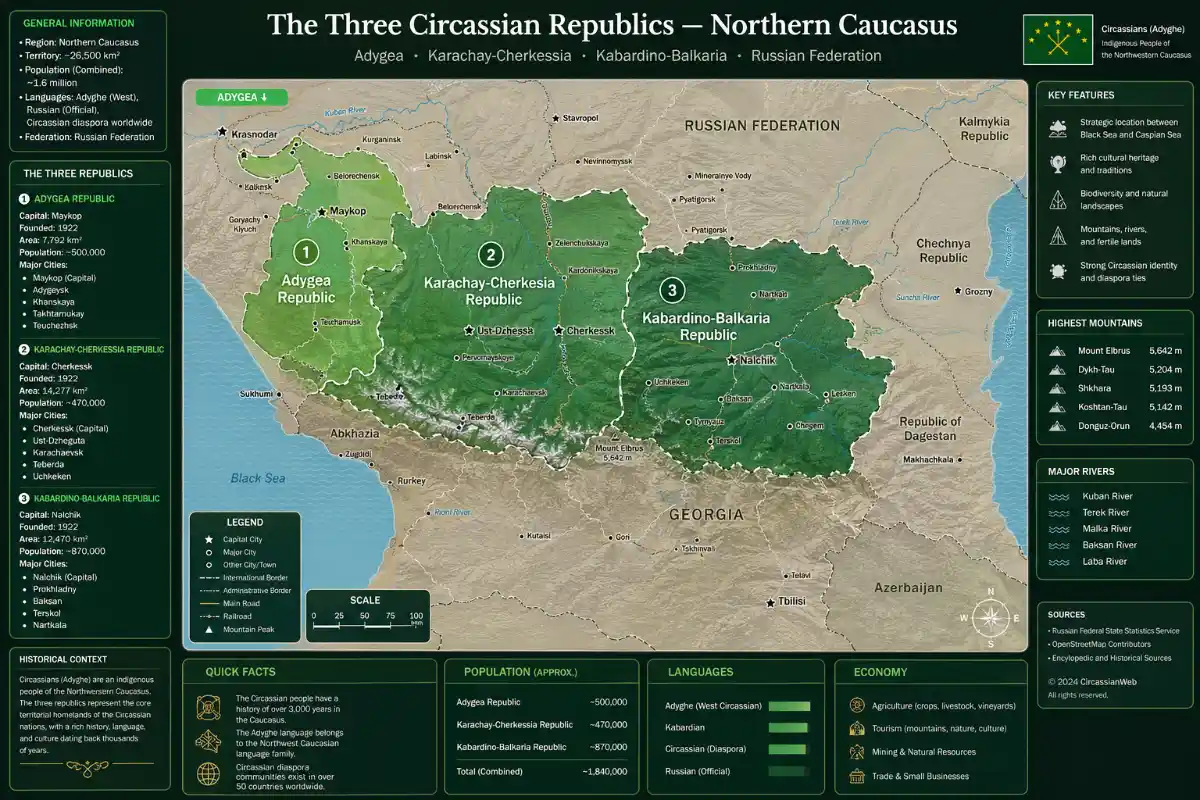
The three Circassian republics — separated from each other and collectively holding just 14% of the world's Circassian population
The Circassian homeland is centered in several key regions of the North Caucasus, where Circassians continue to live, work, and maintain their identity today.
Nalchik (Kabardino-Balkaria)
Nalchik is one of the most important centers of Circassian life today. It has a strong Circassian population, active cultural institutions, and plays a major role in preserving language, traditions, and community identity in daily life.
Maikop (Adygea)
Maikop serves as a cultural and administrative center for Circassians in Adygea. It is especially known for efforts in language preservation, education, and maintaining cultural heritage through schools, media, and local institutions.
Cherkessk (Karachay-Cherkessia)
Cherkessk represents a more diverse regional environment, where Circassians live alongside other ethnic groups. Despite this, Circassian identity remains present through community life, traditions, and cultural expression.
Together, these regions form the modern Circassian homeland, where identity is not only remembered — but actively lived in everyday life.
Daily Life in the Circassian Homeland
Daily life in the Circassian homeland is shaped by strong family structures, respect, and cultural traditions that continue to guide behavior in modern society.
Family plays a central role in Circassian life. Respect for elders is deeply rooted, and younger generations are raised to follow clear social values based on discipline, honor, and responsibility. These principles are visible not only in the home, but also in public interactions and community life.
Hospitality is another defining feature of daily life. Guests are treated with high respect, and welcoming others is considered an important cultural responsibility. Whether in cities like Nalchik and Maikop or in smaller communities, this tradition remains active today.
Community gatherings are also an important part of everyday life. Social events, family visits, and shared celebrations help maintain strong connections between people and reinforce cultural identity across generations.
Traditional values continue to guide behavior in daily situations. These values are often connected to Adyghe Xabze, the traditional Circassian code of conduct, which influences communication, respect, and social expectations.
In the Circassian homeland, culture is not only preserved — it is actively practiced in daily life.
Language in the Circassian Homeland Today
The Circassian (Adyghe) language remains a central part of identity in the homeland and continues to be used in daily life across the North Caucasus.
In regions such as Nalchik and Maikop, the language is present in education, local media, and family life. It is taught in schools and universities, used in television and radio, and spoken at home, especially within Circassian communities.
At the same time, like many native languages, Circassian faces challenges in the modern world. Younger generations often rely more on dominant languages in everyday communication, particularly in urban environments.
Because of this, the homeland plays a critical role in preserving the language. Education systems, cultural institutions, and media platforms all contribute to maintaining its use. Schools and universities offer instruction in Adyghe and Kabardian dialects, while museums, research centers, and cultural organizations work to document and protect linguistic heritage.
Media and broadcasting also play an important role, with television, radio, and print content helping to keep the language visible in public life.
Without the homeland, the Circassian language would face significantly greater risks. For diaspora communities, maintaining the language is more difficult, which makes the homeland essential as a living center of linguistic continuity.
The continued use of the language in the homeland remains one of the strongest foundations for preserving Circassian culture today.
Cultural institutions and researchers in the North Caucasus continue to support Circassian language and identity.Culture & Traditions in Modern Life
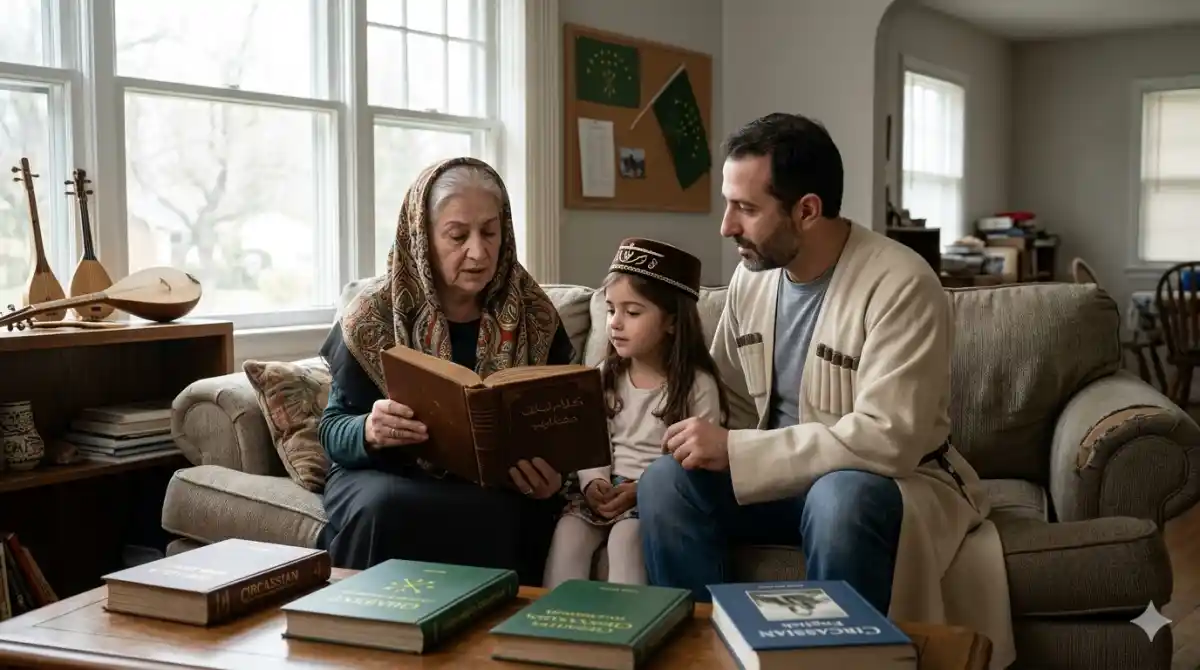
Culture & Traditions in Modern Life
Circassian culture is not limited to history — it is actively practiced in modern life across the homeland.
In regions such as Nalchik, Maikop, and Cherkessia, traditional dance remains an important part of social life. It is performed at celebrations, community events, and cultural gatherings, where younger generations continue to learn and participate.
Weddings are one of the strongest expressions of Circassian identity. They follow structured traditions, including music, dance, and formal social roles, reflecting values of respect, honor, and community.
Traditional clothing is also preserved, especially during special occasions and cultural events. While modern dress is common in daily life, traditional outfits are still worn to represent identity and heritage.
Music plays a central role as well. Circassian instruments and rhythms continue to be used in celebrations, performances, and cultural programs, helping maintain a strong connection between past traditions and present life.
In the Circassian homeland, culture is not something remembered — it is something actively lived and passed between generations.
Challenges in the Circassian Homeland
Life in the Circassian homeland also comes with challenges that affect cultural continuity and identity in the modern world.
One of the main concerns is the gradual decline in the use of the Circassian language. While it is still spoken in the homeland, younger generations often rely more on dominant languages in education, work, and daily communication.
Migration is another challenge. Many young people leave regions such as Nalchik and Maikop in search of better economic opportunities, which can weaken the connection between new generations and their cultural roots.
Modernization also creates pressure on traditional values. As lifestyles change, maintaining a balance between tradition and contemporary life becomes more difficult, especially in urban environments.
Economic realities play a role as well. Limited opportunities in some areas can impact community stability and reduce participation in cultural and social life.
Despite these challenges, Circassians in the homeland continue to preserve their identity through language, traditions, and strong community values.meland & Diaspora
The relationship between the Circassian homeland and the global diaspora remains strong.
visits from Turkey / Jordan / Syria
emotional connection
identity link
For many Circassians abroad, the homeland represents a place of origin, belonging, and cultural truth.
Why the Homeland Still Matters Today
The Circassian homeland remains essential for preserving identity, language, and culture in the modern world.
For many Circassians, the homeland represents more than a geographic location. It is the source of cultural roots, a place of belonging, and a foundation for maintaining traditions across generations.
Even as Circassians live across a global diaspora, the homeland continues to provide a real connection to language, customs, and shared identity. It plays a key role in ensuring continuity, allowing culture to remain active rather than fading over time.
The strength of the Circassian identity today is closely tied to the continued presence of the homeland and the communities that sustain it.
Kabardino-Balkaria and Nalchik: The Cultural Core
Kabardino-Balkaria is one of the most important regions of the Circassian homeland, and its capital, Nalchik, remains a central hub of Circassian cultural and social life today.
Nalchik is known for its strong preservation of Adyghe traditions, including language, dance, and social customs. The Circassian language is taught in schools and universities, while cultural institutions actively organize events, festivals, and programs that keep heritage visible in modern life.
Traditional dances such as Islamey and Kabardinka continue to be performed at celebrations and community gatherings. These are not treated as historical traditions, but as living expressions of identity that are passed from one generation to the next.
The region also reflects a balance between modern urban life and deeply rooted cultural values. Cafes, universities, and public spaces exist alongside long-standing traditions, creating an environment where Circassian identity continues to adapt while remaining strongly preserved.
In Nalchik today, Circassian culture is not separate from daily life — it is part of how people live, communicate, and express their identity.
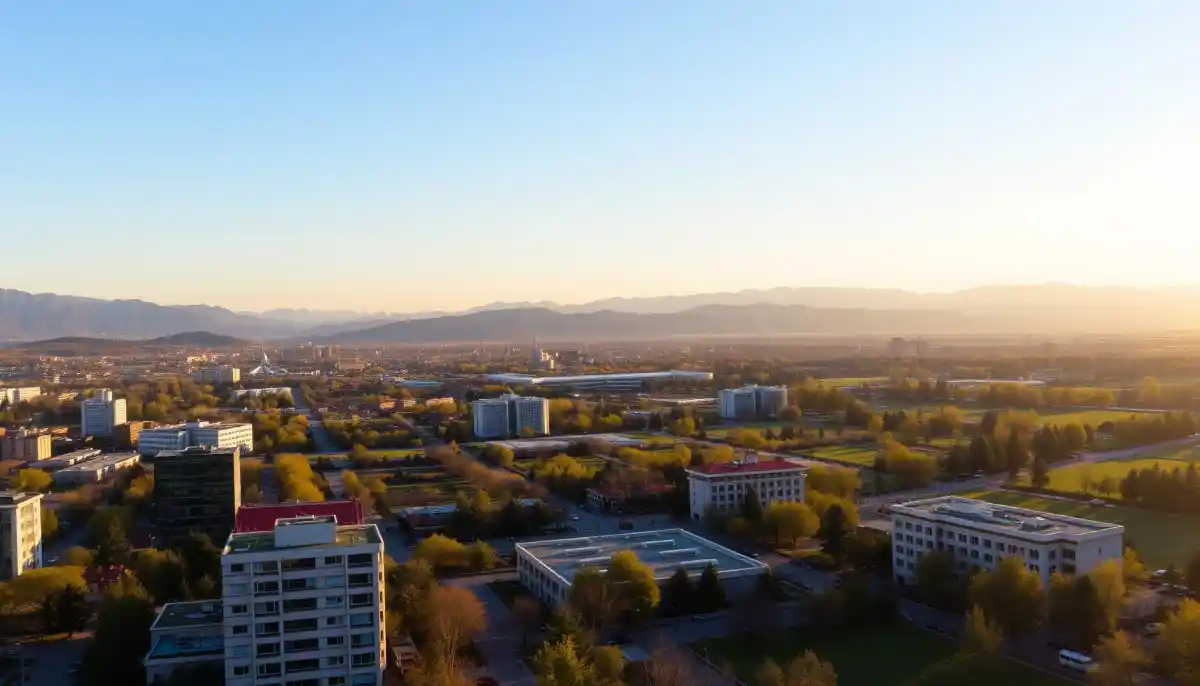
Adygea and Maikop: The Western Homeland
The Republic of Adygea represents the western part of the Circassian homeland, and its capital, Maikop, remains an important center of Circassian cultural life today.
Maikop is surrounded by forests, rivers, and mountains that continue to shape the environment in which Circassian communities live. Today, the region plays a key role in preserving the Adyghe language and maintaining cultural traditions in everyday life.
Cultural festivals, traditional clothing, and community gatherings remain active across the region. These are not occasional events, but ongoing practices that help reinforce identity and strengthen connections between generations.
Education and local media in Adygea also contribute to cultural preservation, supporting the use of the Circassian language and promoting awareness among younger generations.
In Maikop today, Circassian identity continues to develop within a modern environment, where cultural heritage remains an active and visible part of daily life.
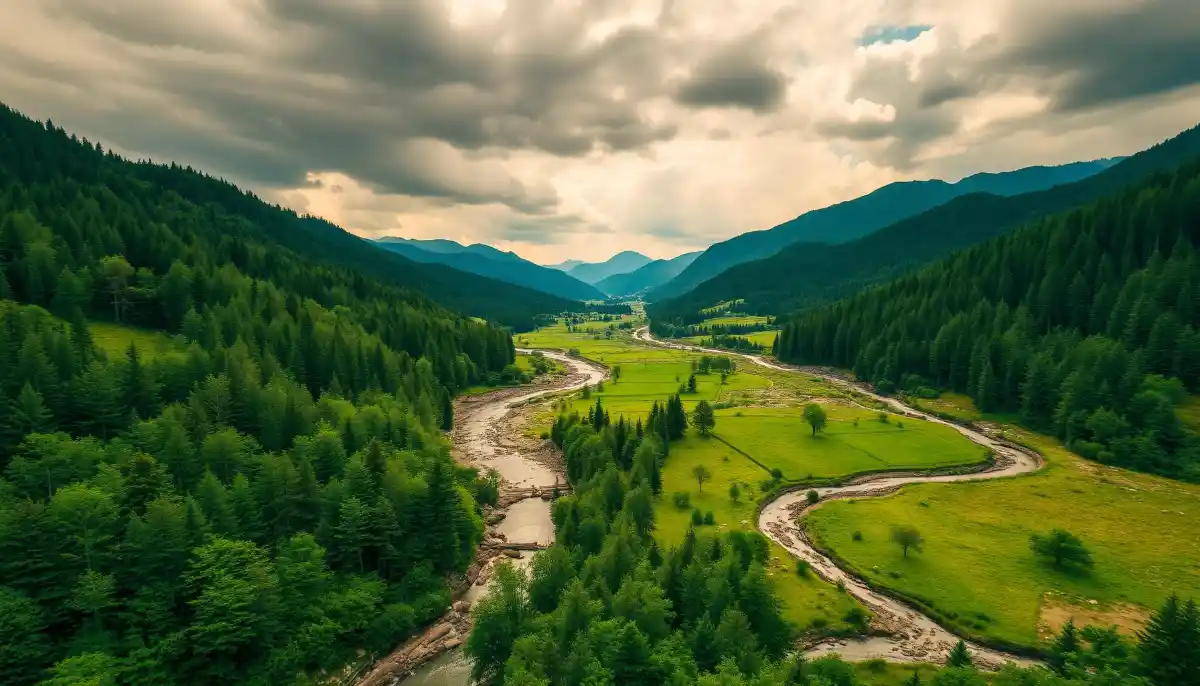
Karachay-Cherkessia: Diversity and Identity
Karachay-Cherkessia is an important part of the Circassian homeland, where Circassians live alongside other ethnic groups in a diverse regional environment.
In this republic, the Circassian population continues to maintain its language, traditions, and cultural identity in daily life. Despite demographic and social challenges, communities remain active in preserving their heritage across generations.
Cherkessk, the capital, serves as a local center for political and cultural activity. It supports community life through institutions, events, and public spaces where identity is expressed and maintained.
The region reflects the broader diversity of the Caucasus, where multiple cultures coexist. At the same time, Circassian identity remains distinct, supported by strong community values and continued cultural practice.
In Karachay-Cherkessia today, Circassian identity is preserved not in isolation, but within a multicultural environment where it continues to adapt and remain visible.
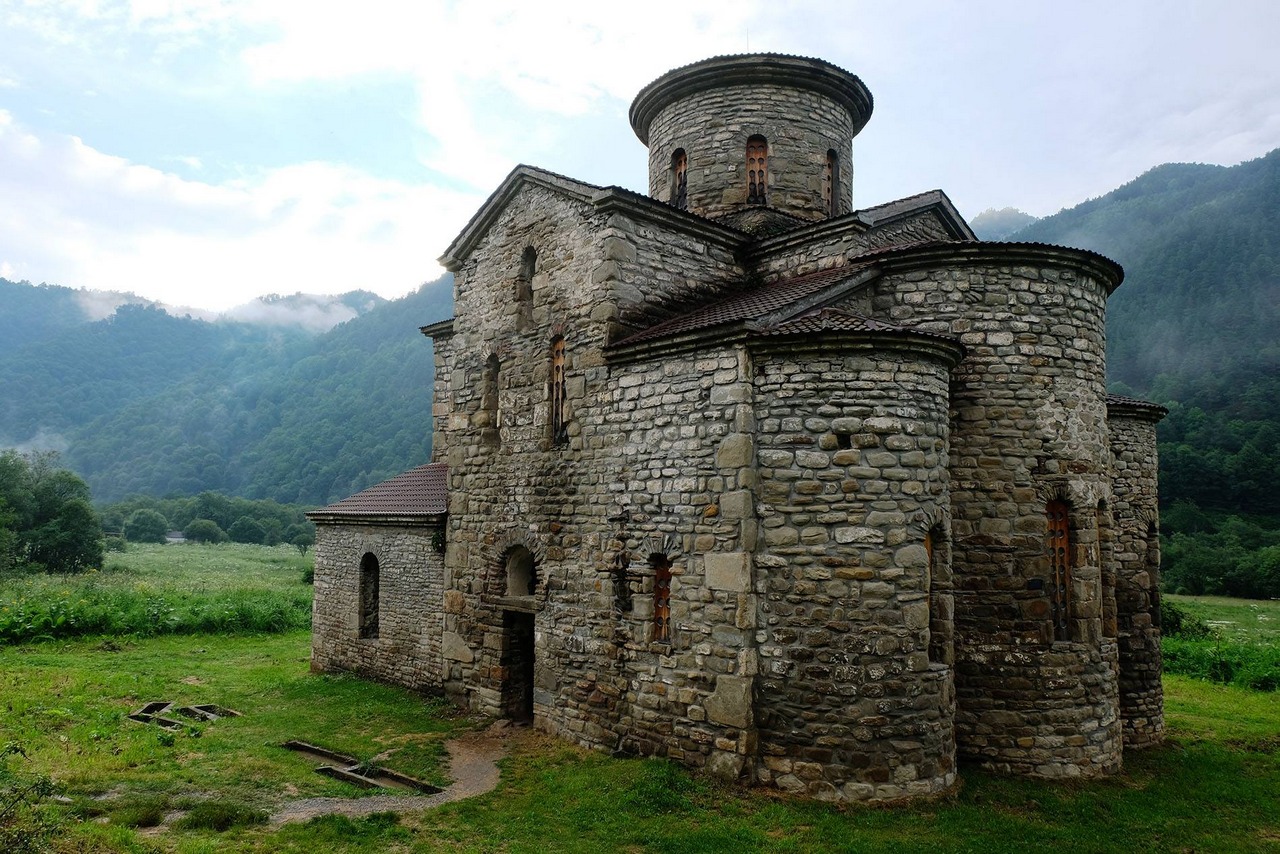
Modern Life: Between Tradition and Change
Circassians in the homeland live in a balance between modern life and long-standing traditions.
In urban centers such as Nalchik and Maikop, people have access to education, careers, and modern technology. At the same time, traditional values remain present in daily life, especially in family structures, social behavior, and community expectations.
In smaller towns and rural areas, customs such as hospitality, respect for elders, and strong social structure continue to be more visibly preserved. The principles of Adyghe Xabze, the traditional Circassian code of conduct, still guide everyday interactions — from how elders are respected to how guests are welcomed.
Younger generations are navigating identity in a globalized world, balancing modern lifestyles with cultural expectations. While change is inevitable, many remain strongly connected to their roots and traditions.
Social media has also created new opportunities for cultural expression. Circassians today share traditional music, dance, and storytelling online, helping their culture reach global audiences and strengthening connections between the homeland and the diaspora.
In the Circassian homeland today, identity continues to evolve while remaining firmly connected to tradition.
Homeland and Diaspora Connection
The relationship between the Circassian homeland and the global diaspora remains strong and deeply emotional.
Many Circassians from countries such as Turkey, Jordan, and across Europe visit regions like Nalchik and Maikop to reconnect with their heritage. Some choose to stay for longer periods or return permanently, strengthening the connection between the homeland and diaspora communities.
For many, the homeland represents more than a location. It acts as a cultural anchor where language, traditions, and customs are preserved in their original environment. It also serves as a source of identity, allowing Circassians around the world to stay connected to their roots and ancestral lands.
At the same time, the homeland functions as a unifying symbol. It brings together Circassians from different countries and backgrounds, creating a shared sense of belonging across generations.
Today, the connection between homeland and diaspora continues to grow, supported by travel, communication, and cultural exchange.
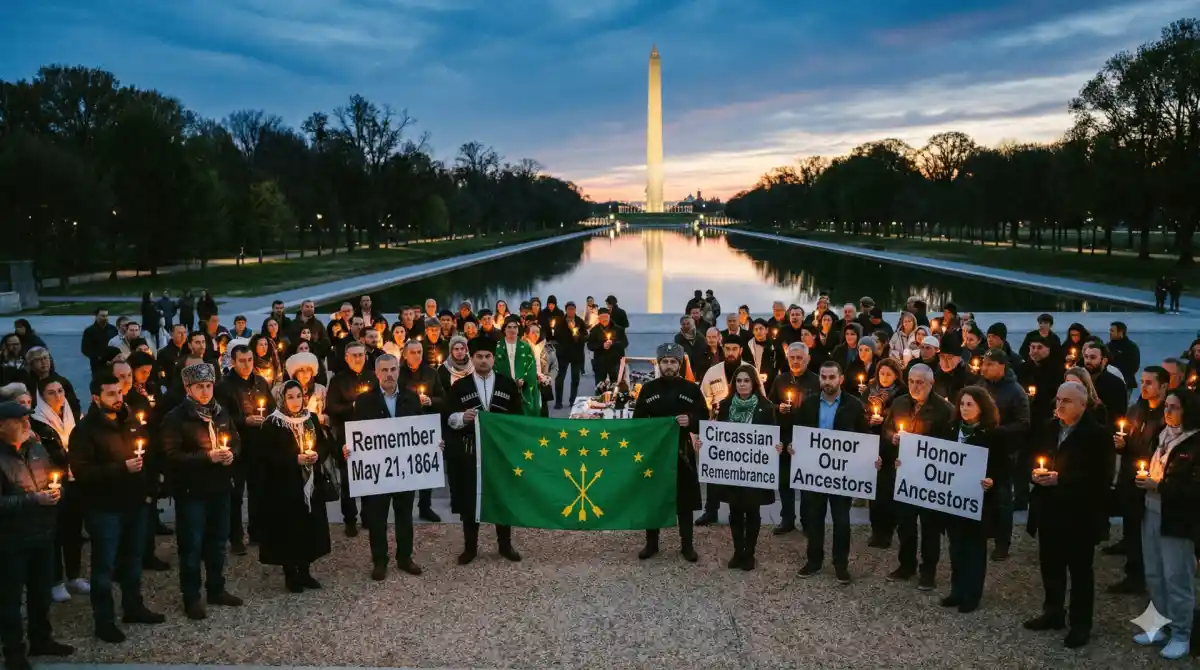
Reflections on the Homeland
For many Circassians in the diaspora, the connection to the homeland is deeply personal and often difficult to describe in simple terms.
Some describe the experience as something felt rather than explained — a sense of recognition when visiting the Caucasus for the first time, even after being born and raised abroad.
“I was born and raised in Amman, and it will always be part of me. But when I stood on the mountains of Adygea and looked across the valleys, I finally understood what my family meant when they spoke about ‘home.’”
Others describe the homeland as more than geography, but as a connection to memory, language, and ancestry.
“The homeland is not just a place. It is in the names of rivers, in the land our ancestors lived on, and in the traditions that still exist today. You feel it before you fully understand it.”
These reflections show how the idea of the homeland continues to shape identity, even for those who have lived their entire lives outside the Caucasus.
Frequently Asked Questions
Where is the Circassian homeland?
The Circassian homeland is located in the northwestern Caucasus region of modern-day Russia. It includes the republics of Adygea, Kabardino-Balkaria, and Karachay-Cherkessia, as well as nearby areas of Krasnodar and Stavropol Krai.
Can diaspora Circassians return to the homeland?
There are limited repatriation opportunities for some Circassians, particularly those coming from conflict regions such as Syria. However, large-scale return remains a complex issue and is an ongoing topic of discussion within the global Circassian diaspora.
How many Circassians live in the homeland today?
Estimates vary depending on the source and classification, but hundreds of thousands of Circassians live in the homeland across the North Caucasus. The global diaspora is significantly larger, with several million Circassians living outside the region.
Conclusion
The Circassian homeland in the Caucasus is more than a place — it remains the foundation of identity, culture, and continuity for Circassians today.
Nalchik, Maikop, and Cherkessia continue to serve as living centers where language, traditions, and community life are actively maintained. Despite modern challenges, the homeland remains a dynamic environment where culture evolves while staying deeply rooted.
For Circassians around the world, the homeland continues to represent a lasting connection to identity, belonging, and shared heritage.
Sources & References
King, Charles. The Ghost of Freedom: A History of the Caucasus. Oxford University Press, 2008.
Richmond, Walter. The Northwest Caucasus: Past, Present, Future. Routledge, 2008.
Jaimoukha, Amjad. The Circassians: A Handbook. Palgrave Macmillan, 2001.
Bell, James Stanislaus. Journal of a Residence in Circassia. London, 1840